







 Chat with AI

Deck 20: Organic and Biological Molecules: the Compounds of Life
Full screen (f)

Question
Aspirin has the chemical structure shown below. Which of the noted functional groups are found in the molecule? 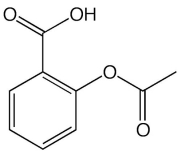
A)only an alcohol
B)only a carboxylic acid
C)both an alcohol and a carboxylic acid
D)only an ester
E)both a carboxylic acid and an ester
A)only an alcohol
B)only a carboxylic acid
C)both an alcohol and a carboxylic acid
D)only an ester
E)both a carboxylic acid and an ester

Question
Which functional group is found in the following molecule? 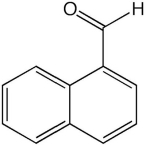
A)aldehyde
B)carboxylic acid
C)ester
D)ether
E)ketone
A)aldehyde
B)carboxylic acid
C)ester
D)ether
E)ketone
Question
Naproxen has the chemical structure shown below. Which of the noted functional groups are found in the molecule? 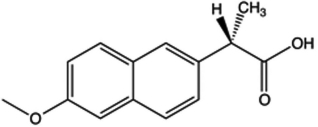
A)only an ether
B)both an ester and a carboxylic acid
C)both an ether and a carboxylic acid
D)only an ester
E)both an ether and an ester
A)only an ether
B)both an ester and a carboxylic acid
C)both an ether and a carboxylic acid
D)only an ester
E)both an ether and an ester
Question
Which structure contains the ketone functional group?
A)
B)
C)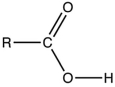
D)
E)
A)
B)
C)
D)
E)
Question
Which structure contains the alkyne functional group?
A)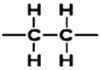
B)
C)
D)
E)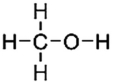
A)
B)
C)
D)
E)
Question
Question
Which of the noted functional group(s) is/are found in the following molecule? 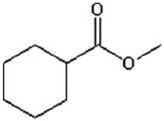
A)only a carboxylic acid
B)only an ester
C)only an ether
D)only a ketone
E)both an ether and a ketone
A)only a carboxylic acid
B)only an ester
C)only an ether
D)only a ketone
E)both an ether and a ketone
Question
Which structure contains the ester functional group?
A)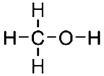
B)
C)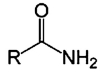
D)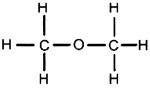
E)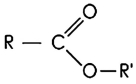
A)
B)
C)
D)
E)
Question
Which functional group is found in the following molecule? 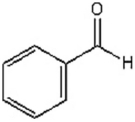
A)aldehyde
B)carboxylic acid
C)ester
D)ether
E)ketone
A)aldehyde
B)carboxylic acid
C)ester
D)ether
E)ketone
Question
Which structure contains the ester functional group?
A)
B)
C)
D)
E)
A)
B)
C)
D)
E)
Question
Question
Fluvalinate is a pesticide used to control mite populations in honeybee colonies. Identify the ether functional group in fluvalinate. 
A)I
B)II
C)III
D)IV
E)V
A)I
B)II
C)III
D)IV
E)V
Question
Which structure contains the aldehyde functional group?
A)
B)
C)
D)
E)All of the above illustrate the aldehyde functional group.
A)
B)
C)
D)
E)All of the above illustrate the aldehyde functional group.
Question
Which structure contains the ketone functional group?
A)
B)
C)
D)
E)All of the above illustrate the ketone functional group.
A)
B)
C)
D)
E)All of the above illustrate the ketone functional group.
Question
Which of the noted functional group(s) is/are found in the following molecule? 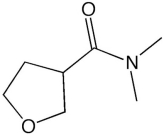
A)only an amide
B)only an ether
C)both a ketone and an ether
D)contains an amine, ether, and a ketone
E)both an ether and an amide
A)only an amide
B)only an ether
C)both a ketone and an ether
D)contains an amine, ether, and a ketone
E)both an ether and an amide
Question
Which structure contains the ether functional group?
A)
B)
C)
D)
E)
A)
B)
C)
D)
E)
Question
Question
Which of these molecules are structural isomers of n-octane (C8H18)? 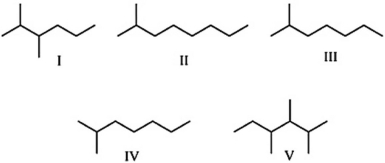
A)I, III, and IV
B)II and V
C)only II has 8 carbon atoms in a chain
D)III and IV
E)I, II, III, IV, and V
A)I, III, and IV
B)II and V
C)only II has 8 carbon atoms in a chain
D)III and IV
E)I, II, III, IV, and V
Question
Ranitidine, with a trade name of Zantac, is a drug that inhibits stomach acid production, preventing heartburn and acid indigestion. Identify the amine functional group(s) in ranitidine. 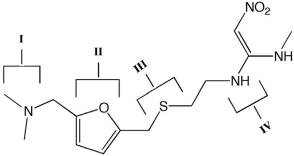
A)I
B)II
C)III
D)IV
E)I and IV
A)I
B)II
C)III
D)IV
E)I and IV
Question
Indometacin is a nonsteroidal antiinflammatory drug, often used to treat tendinitis or gout in patients. Identify the carboxylic acid functional group(s) in indometacin. 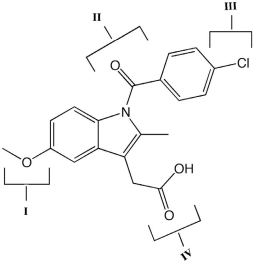
A)I
B)II
C)III
D)IV
E)III and IV
A)I
B)II
C)III
D)IV
E)III and IV
Question
This molecule is ________ 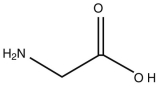
A)a lipid.
B)a fatty acid.
C)an amino acid.
D)a nucleic acid.
E)a saccharide.
A)a lipid.
B)a fatty acid.
C)an amino acid.
D)a nucleic acid.
E)a saccharide.
Question
Which of the following are not amino acids?
I.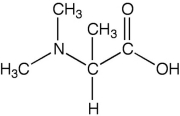
II.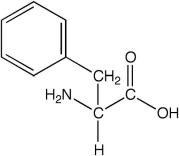
III.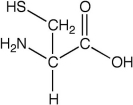
IV.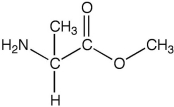
A)III and IV
B)I and II
C)I and IV
D)II and III only
E)II and IV only
I.
II.
III.
IV.
A)III and IV
B)I and II
C)I and IV
D)II and III only
E)II and IV only
Question
Which of the following is/are amino acids?
I.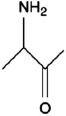
II.
III.
IV.
A)III and IV
B)I and II
C)I only
D)II only
E)III only
I.
II.
III.
IV.
A)III and IV
B)I and II
C)I only
D)II only
E)III only
Question
A derivative of glycopyrollate, a medication often administered before a patient's surgery, is shown below. How many chiral centers are there in the molecule? 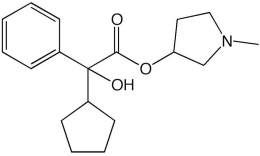
A)0
B)1
C)2
D)3
E)4
A)0
B)1
C)2
D)3
E)4
Question
Which of the following molecules is/are chiral? 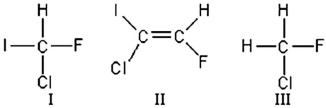
A)I only
B)II only
C)III only
D)I and II
E)II and III
A)I only
B)II only
C)III only
D)I and II
E)II and III
Question
Which of the following compounds is an -amino acid?
A)
B)
C)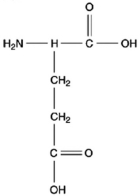
D)
A)
B)
C)
D)
Question
Question
Question
Question
Question
Question
For each of the bonds in the figure below, identify whether the bond is cis, trans, or neither cis nor trans. 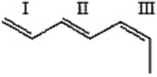
A)I-cis; II-trans; III-cis
B)I-trans; II-cis; III-trans
C)I-neither; II-trans; III-cis
D)I-neither; II-cis; III-trans
E)I-neither; II-cis; III-cis
A)I-cis; II-trans; III-cis
B)I-trans; II-cis; III-trans
C)I-neither; II-trans; III-cis
D)I-neither; II-cis; III-trans
E)I-neither; II-cis; III-cis
Question
Which statement best describes how these three molecules are related? 
A)They are not related, they are different molecules.
B)They are structural isomers.
C)They are stereoisomers.
D)They illustrate cis-trans isomerization.
E)They are the same compound.
A)They are not related, they are different molecules.
B)They are structural isomers.
C)They are stereoisomers.
D)They illustrate cis-trans isomerization.
E)They are the same compound.
Question
Which one of the following is not an amino acid?
A)
B)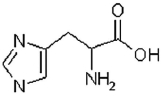
C)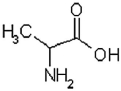
D)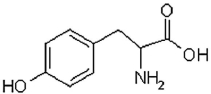
E)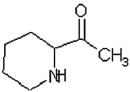
A)
B)
C)
D)
E)
Question
Question
How many chiral centers are there in the following molecule? 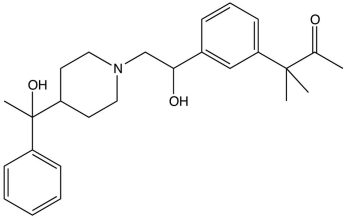
A)0
B)1
C)2
D)3
E)4
A)0
B)1
C)2
D)3
E)4
Question
Which one of the following is an example of an amino acid?
A)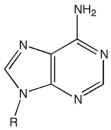
B)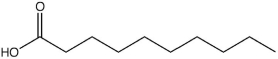
C)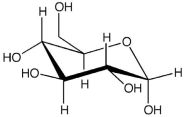
D)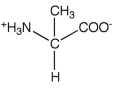
E)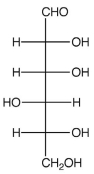
A)
B)
C)
D)
E)
Question
Does this molecule have both cis and trans isomers? 
A)Yes, this is the cis isomer.
B)Yes, this is the trans isomer.
C)No, it has only the cis isomer.
D)No, it has only the trans isomer.
E)No, this molecule does not have cis-trans isomerism.
A)Yes, this is the cis isomer.
B)Yes, this is the trans isomer.
C)No, it has only the cis isomer.
D)No, it has only the trans isomer.
E)No, this molecule does not have cis-trans isomerism.
Question
How many chiral centers are there in the following molecule? 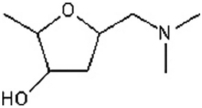
A)0
B)1
C)2
D)3
E)4
A)0
B)1
C)2
D)3
E)4
Question
For each of the bonds in the following unsaturated fatty acid shown below, identify whether the bond is cis, trans, or neither cis nor trans. 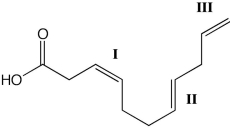
A)I-cis; II-trans; III-cis
B)I-trans; II-cis; III-trans
C)I-neither; II-trans; III-cis
D)I-cis; II-trans; III-neither
E)I-trans; II-cis; III-neither
A)I-cis; II-trans; III-cis
B)I-trans; II-cis; III-trans
C)I-neither; II-trans; III-cis
D)I-cis; II-trans; III-neither
E)I-trans; II-cis; III-neither
Question
Question
Question
Question
Question
Which one of the following molecules is chiral?
A)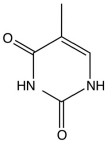
B)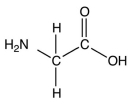
C)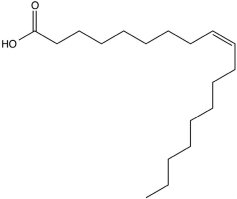
D)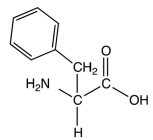
E)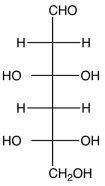
A)
B)
C)
D)
E)
Question
Question
The molecule drawn below is an example of ________ 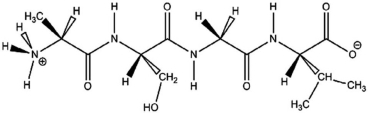
A)a nucleic acid base.
B)a peptide.
C)a carbohydrate.
D)a fatty acid.
E)an amino acid.
A)a nucleic acid base.
B)a peptide.
C)a carbohydrate.
D)a fatty acid.
E)an amino acid.
Question
At a physiological pH of 7.4, which of the following would be an accurate representation of the structure of the amino acid serine?
A)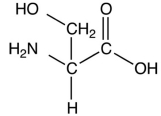
B)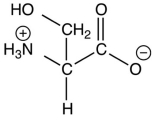
C)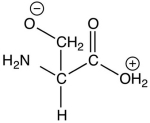
D)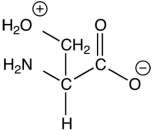
E)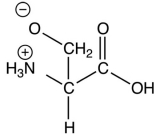
A)
B)
C)
D)
E)
Question
Which of the following is the correct structure of alanine at its isoelectric point?
A)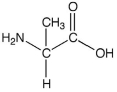
B)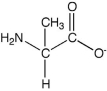
C)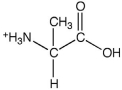
D)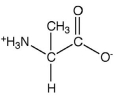
A)
B)
C)
D)
Question
Question
Question
The following reaction produces a peptide. Which statement about this reaction is not correct? 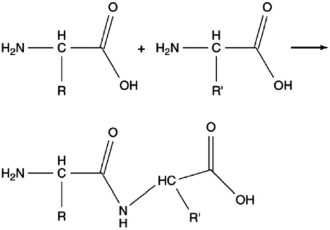
A)The peptide shown is the only product produced by this reaction.
B)This condensation reaction produces a peptide bond.
C)An amide group is formed in this reaction.
D)An amino group reacts with a carboxylic acid group.
E)Two amino acids are linked together by this reaction.
A)The peptide shown is the only product produced by this reaction.
B)This condensation reaction produces a peptide bond.
C)An amide group is formed in this reaction.
D)An amino group reacts with a carboxylic acid group.
E)Two amino acids are linked together by this reaction.
Question
Question
Question
Which of the following are not amino acids? 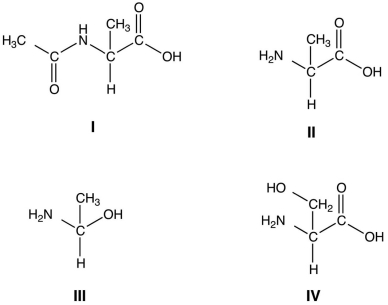
A)I and III
B)II and III
C)I and IV
D)II and III only
E)II and IV only
A)I and III
B)II and III
C)I and IV
D)II and III only
E)II and IV only
Question
Question
Question
Question
Identify the peptide bond in a derivative of aspartame, a popular artificial sweetener with the trade name NutraSweet. 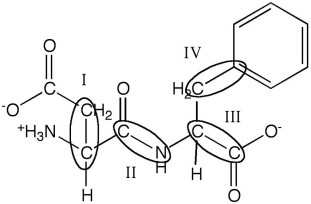
A)I
B)II
C)III
D)IV
A)I
B)II
C)III
D)IV
Question
Which one of the following molecules is chiral?
A)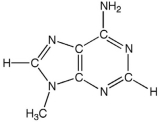
B)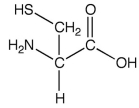
C)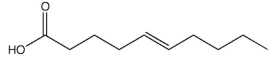
D)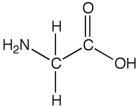
E)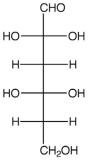
A)
B)
C)
D)
E)
Question
Question
Question
The molecule drawn below is an example of ________ 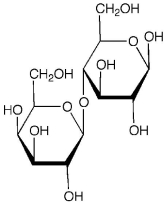
A)a nucleic acid base.
B)an amino acid.
C)a carbohydrate.
D)a fatty acid.
E)a lipid.
A)a nucleic acid base.
B)an amino acid.
C)a carbohydrate.
D)a fatty acid.
E)a lipid.
Question
Question
Question
Question
Question
Question
Which of the following molecular formulas identifies a carbohydrate?
A)CH2O
B)C6H12O6
C)C12H22O11
D)
E)C12H6O12
A)CH2O
B)C6H12O6
C)C12H22O11
D)
E)C12H6O12
Question
Question
The molecule drawn below is an example of ________ 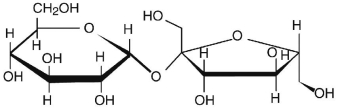
A)a nucleic acid base.
B)an amino acid.
C)a disaccharide.
D)a fatty acid.
E)a lipid.
A)a nucleic acid base.
B)an amino acid.
C)a disaccharide.
D)a fatty acid.
E)a lipid.
Question
Question
Question
Question
Question
Which one of the following is an example of a monosaccharide?
A)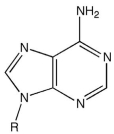
B)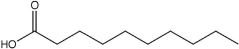
C)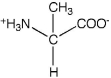
D)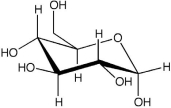
A)
B)
C)
D)
Question
Question
Question
Question

Unlock Deck
Sign up to unlock the cards in this deck!
Unlock Deck
Unlock Deck
1/168

Play

Full screen (f)
Deck 20: Organic and Biological Molecules: the Compounds of Life
1
Aspirin has the chemical structure shown below. Which of the noted functional groups are found in the molecule?
A)only an alcohol
B)only a carboxylic acid
C)both an alcohol and a carboxylic acid
D)only an ester
E)both a carboxylic acid and an ester
A)only an alcohol
B)only a carboxylic acid
C)both an alcohol and a carboxylic acid
D)only an ester
E)both a carboxylic acid and an ester
both a carboxylic acid and an ester
2
Which functional group is found in the following molecule?
A)aldehyde
B)carboxylic acid
C)ester
D)ether
E)ketone
A)aldehyde
B)carboxylic acid
C)ester
D)ether
E)ketone
aldehyde
3
Naproxen has the chemical structure shown below. Which of the noted functional groups are found in the molecule?
A)only an ether
B)both an ester and a carboxylic acid
C)both an ether and a carboxylic acid
D)only an ester
E)both an ether and an ester
A)only an ether
B)both an ester and a carboxylic acid
C)both an ether and a carboxylic acid
D)only an ester
E)both an ether and an ester
both an ether and a carboxylic acid
4
Which structure contains the ketone functional group?
A)
B)
C)
D)
E)
A)
B)
C)
D)
E)
Unlock Deck
Unlock for access to all 168 flashcards in this deck.
Unlock Deck
k this deck
5
Which structure contains the alkyne functional group?
A)
B)
C)
D)
E)
A)
B)
C)
D)
E)
Unlock Deck
Unlock for access to all 168 flashcards in this deck.
Unlock Deck
k this deck
6
Which of these functional groups does not contain a carbonyl group?
A)aldehyde
B)carboxylic acid
C)ester
D)ether
E)ketone
A)aldehyde
B)carboxylic acid
C)ester
D)ether
E)ketone
Unlock Deck
Unlock for access to all 168 flashcards in this deck.
Unlock Deck
k this deck
7
Which of the noted functional group(s) is/are found in the following molecule?
A)only a carboxylic acid
B)only an ester
C)only an ether
D)only a ketone
E)both an ether and a ketone
A)only a carboxylic acid
B)only an ester
C)only an ether
D)only a ketone
E)both an ether and a ketone
Unlock Deck
Unlock for access to all 168 flashcards in this deck.
Unlock Deck
k this deck
8
Which structure contains the ester functional group?
A)
B)
C)
D)
E)
A)
B)
C)
D)
E)
Unlock Deck
Unlock for access to all 168 flashcards in this deck.
Unlock Deck
k this deck
9
Which functional group is found in the following molecule?
A)aldehyde
B)carboxylic acid
C)ester
D)ether
E)ketone
A)aldehyde
B)carboxylic acid
C)ester
D)ether
E)ketone
Unlock Deck
Unlock for access to all 168 flashcards in this deck.
Unlock Deck
k this deck
10
Which structure contains the ester functional group?
A)
B)
C)
D)
E)
A)
B)
C)
D)
E)
Unlock Deck
Unlock for access to all 168 flashcards in this deck.
Unlock Deck
k this deck
11
A subunit of an organic compound that confers particular chemical and physical properties is termed ________
A)a monomer.
B)an oligomer.
C)a functional group.
D)a synthetic unit.
E)an isomer.
A)a monomer.
B)an oligomer.
C)a functional group.
D)a synthetic unit.
E)an isomer.
Unlock Deck
Unlock for access to all 168 flashcards in this deck.
Unlock Deck
k this deck
12
Fluvalinate is a pesticide used to control mite populations in honeybee colonies. Identify the ether functional group in fluvalinate.
A)I
B)II
C)III
D)IV
E)V
A)I
B)II
C)III
D)IV
E)V
Unlock Deck
Unlock for access to all 168 flashcards in this deck.
Unlock Deck
k this deck
13
Which structure contains the aldehyde functional group?
A)
B)
C)
D)
E)All of the above illustrate the aldehyde functional group.
A)
B)
C)
D)
E)All of the above illustrate the aldehyde functional group.
Unlock Deck
Unlock for access to all 168 flashcards in this deck.
Unlock Deck
k this deck
14
Which structure contains the ketone functional group?
A)
B)
C)
D)
E)All of the above illustrate the ketone functional group.
A)
B)
C)
D)
E)All of the above illustrate the ketone functional group.
Unlock Deck
Unlock for access to all 168 flashcards in this deck.
Unlock Deck
k this deck
15
Which of the noted functional group(s) is/are found in the following molecule?
A)only an amide
B)only an ether
C)both a ketone and an ether
D)contains an amine, ether, and a ketone
E)both an ether and an amide
A)only an amide
B)only an ether
C)both a ketone and an ether
D)contains an amine, ether, and a ketone
E)both an ether and an amide
Unlock Deck
Unlock for access to all 168 flashcards in this deck.
Unlock Deck
k this deck
16
Which structure contains the ether functional group?
A)
B)
C)
D)
E)
A)
B)
C)
D)
E)
Unlock Deck
Unlock for access to all 168 flashcards in this deck.
Unlock Deck
k this deck
17
The functional group -COOH is characteristic of ________
A)a carboxylic acid.
B)an amide.
C)an alkane.
D)an alcohol.
E)an ester.
A)a carboxylic acid.
B)an amide.
C)an alkane.
D)an alcohol.
E)an ester.
Unlock Deck
Unlock for access to all 168 flashcards in this deck.
Unlock Deck
k this deck
18
Which of these molecules are structural isomers of n-octane (C8H18)?
A)I, III, and IV
B)II and V
C)only II has 8 carbon atoms in a chain
D)III and IV
E)I, II, III, IV, and V
A)I, III, and IV
B)II and V
C)only II has 8 carbon atoms in a chain
D)III and IV
E)I, II, III, IV, and V
Unlock Deck
Unlock for access to all 168 flashcards in this deck.
Unlock Deck
k this deck
19
Ranitidine, with a trade name of Zantac, is a drug that inhibits stomach acid production, preventing heartburn and acid indigestion. Identify the amine functional group(s) in ranitidine.
A)I
B)II
C)III
D)IV
E)I and IV
A)I
B)II
C)III
D)IV
E)I and IV
Unlock Deck
Unlock for access to all 168 flashcards in this deck.
Unlock Deck
k this deck
20
Indometacin is a nonsteroidal antiinflammatory drug, often used to treat tendinitis or gout in patients. Identify the carboxylic acid functional group(s) in indometacin.
A)I
B)II
C)III
D)IV
E)III and IV
A)I
B)II
C)III
D)IV
E)III and IV
Unlock Deck
Unlock for access to all 168 flashcards in this deck.
Unlock Deck
k this deck
21
This molecule is ________
A)a lipid.
B)a fatty acid.
C)an amino acid.
D)a nucleic acid.
E)a saccharide.
A)a lipid.
B)a fatty acid.
C)an amino acid.
D)a nucleic acid.
E)a saccharide.
Unlock Deck
Unlock for access to all 168 flashcards in this deck.
Unlock Deck
k this deck
22
Which of the following are not amino acids?
I.
II.
III.
IV.
A)III and IV
B)I and II
C)I and IV
D)II and III only
E)II and IV only
I.
II.
III.
IV.
A)III and IV
B)I and II
C)I and IV
D)II and III only
E)II and IV only
Unlock Deck
Unlock for access to all 168 flashcards in this deck.
Unlock Deck
k this deck
23
Which of the following is/are amino acids?
I.
II.
III.
IV.
A)III and IV
B)I and II
C)I only
D)II only
E)III only
I.
II.
III.
IV.
A)III and IV
B)I and II
C)I only
D)II only
E)III only
Unlock Deck
Unlock for access to all 168 flashcards in this deck.
Unlock Deck
k this deck
24
A derivative of glycopyrollate, a medication often administered before a patient's surgery, is shown below. How many chiral centers are there in the molecule?
A)0
B)1
C)2
D)3
E)4
A)0
B)1
C)2
D)3
E)4
Unlock Deck
Unlock for access to all 168 flashcards in this deck.
Unlock Deck
k this deck
25
Which of the following molecules is/are chiral?
A)I only
B)II only
C)III only
D)I and II
E)II and III
A)I only
B)II only
C)III only
D)I and II
E)II and III
Unlock Deck
Unlock for access to all 168 flashcards in this deck.
Unlock Deck
k this deck
26
Which of the following compounds is an -amino acid?
A)
B)
C)
D)
A)
B)
C)
D)
Unlock Deck
Unlock for access to all 168 flashcards in this deck.
Unlock Deck
k this deck
27
Consider the 1,2-dichloro derivative of ethylene, in which one of the hydrogen atoms on each of the carbon atoms in ethylene is substituted with a chlorine atom, giving the structural formula CHClCHCl. Does this molecule have geometrical isomers? Remember that ethylene does not.
A)Yes, because the chlorines can be placed on the same or opposite sides of the double bond.
B)Yes, because the chlorines can be placed on either one or both of the carbons.
C)No, because both the formula and bonds are the same in all skeletal structures.
D)No, because the two structures can interconvert through bond rotation.
E)No, because there are less than four atoms bound to each carbon.
A)Yes, because the chlorines can be placed on the same or opposite sides of the double bond.
B)Yes, because the chlorines can be placed on either one or both of the carbons.
C)No, because both the formula and bonds are the same in all skeletal structures.
D)No, because the two structures can interconvert through bond rotation.
E)No, because there are less than four atoms bound to each carbon.
Unlock Deck
Unlock for access to all 168 flashcards in this deck.
Unlock Deck
k this deck
28
An -amino acid is one in which the amine group and the carboxylic acid group are attached to ________
A)different carbon atoms.
B)different nitrogen atoms.
C)the same carbon atom.
D)the first and third carbon of the molecule.
E)neighboring carbon atoms.
A)different carbon atoms.
B)different nitrogen atoms.
C)the same carbon atom.
D)the first and third carbon of the molecule.
E)neighboring carbon atoms.
Unlock Deck
Unlock for access to all 168 flashcards in this deck.
Unlock Deck
k this deck
29
The human body can synthesize 12 of the 20 amino acids necessary for survival, but the other 8 must be obtained from food. These amino acids are called ________ amino acids.
A)critical
B)essential
C)external
D)vital
E)necessary
A)critical
B)essential
C)external
D)vital
E)necessary
Unlock Deck
Unlock for access to all 168 flashcards in this deck.
Unlock Deck
k this deck
30
How many structural isomers (also called constitutional isomers) are there for butene, and why?
A)two, because of resonance
B)two, because of geometrical isomerism and two of the structures can be superimposed
C)two, because the double bond can be in either one of two locations
D)three, because of geometrical isomerism and the double bond can be in different locations
E)three, because of resonance and the double bond can be in different locations
A)two, because of resonance
B)two, because of geometrical isomerism and two of the structures can be superimposed
C)two, because the double bond can be in either one of two locations
D)three, because of geometrical isomerism and the double bond can be in different locations
E)three, because of resonance and the double bond can be in different locations
Unlock Deck
Unlock for access to all 168 flashcards in this deck.
Unlock Deck
k this deck
31
An amino acid is composed of ________
A)ammonia and a carboxylic acid group.
B)an amine and a carboxylic acid group.
C)an amine and an alcohol group.
D)an amine and a sulfonic acid group.
E)an amide and a hydrochloric acid group.
A)ammonia and a carboxylic acid group.
B)an amine and a carboxylic acid group.
C)an amine and an alcohol group.
D)an amine and a sulfonic acid group.
E)an amide and a hydrochloric acid group.
Unlock Deck
Unlock for access to all 168 flashcards in this deck.
Unlock Deck
k this deck
32
For each of the bonds in the figure below, identify whether the bond is cis, trans, or neither cis nor trans.
A)I-cis; II-trans; III-cis
B)I-trans; II-cis; III-trans
C)I-neither; II-trans; III-cis
D)I-neither; II-cis; III-trans
E)I-neither; II-cis; III-cis
A)I-cis; II-trans; III-cis
B)I-trans; II-cis; III-trans
C)I-neither; II-trans; III-cis
D)I-neither; II-cis; III-trans
E)I-neither; II-cis; III-cis
Unlock Deck
Unlock for access to all 168 flashcards in this deck.
Unlock Deck
k this deck
33
Which statement best describes how these three molecules are related?
A)They are not related, they are different molecules.
B)They are structural isomers.
C)They are stereoisomers.
D)They illustrate cis-trans isomerization.
E)They are the same compound.
A)They are not related, they are different molecules.
B)They are structural isomers.
C)They are stereoisomers.
D)They illustrate cis-trans isomerization.
E)They are the same compound.
Unlock Deck
Unlock for access to all 168 flashcards in this deck.
Unlock Deck
k this deck
34
Which one of the following is not an amino acid?
A)
B)
C)
D)
E)
A)
B)
C)
D)
E)
Unlock Deck
Unlock for access to all 168 flashcards in this deck.
Unlock Deck
k this deck
35
Consider the 1,2-dichloro derivative of ethylene, in which one of the hydrogen atoms on each of the carbon atoms in ethylene is substituted with a chlorine atom, giving the condensed structure CHClCHCl. Which of the following is true?
A)The cis isomer is more polar.
B)The trans isomer is more polar.
C)Neither cis nor trans isomers are polar.
D)Both cis and trans isomers are equally polar.
E)There are no isomers for this molecule.
A)The cis isomer is more polar.
B)The trans isomer is more polar.
C)Neither cis nor trans isomers are polar.
D)Both cis and trans isomers are equally polar.
E)There are no isomers for this molecule.
Unlock Deck
Unlock for access to all 168 flashcards in this deck.
Unlock Deck
k this deck
36
How many chiral centers are there in the following molecule?
A)0
B)1
C)2
D)3
E)4
A)0
B)1
C)2
D)3
E)4
Unlock Deck
Unlock for access to all 168 flashcards in this deck.
Unlock Deck
k this deck
37
Which one of the following is an example of an amino acid?
A)
B)
C)
D)
E)
A)
B)
C)
D)
E)
Unlock Deck
Unlock for access to all 168 flashcards in this deck.
Unlock Deck
k this deck
38
Does this molecule have both cis and trans isomers?
A)Yes, this is the cis isomer.
B)Yes, this is the trans isomer.
C)No, it has only the cis isomer.
D)No, it has only the trans isomer.
E)No, this molecule does not have cis-trans isomerism.
A)Yes, this is the cis isomer.
B)Yes, this is the trans isomer.
C)No, it has only the cis isomer.
D)No, it has only the trans isomer.
E)No, this molecule does not have cis-trans isomerism.
Unlock Deck
Unlock for access to all 168 flashcards in this deck.
Unlock Deck
k this deck
39
How many chiral centers are there in the following molecule?
A)0
B)1
C)2
D)3
E)4
A)0
B)1
C)2
D)3
E)4
Unlock Deck
Unlock for access to all 168 flashcards in this deck.
Unlock Deck
k this deck
40
For each of the bonds in the following unsaturated fatty acid shown below, identify whether the bond is cis, trans, or neither cis nor trans.
A)I-cis; II-trans; III-cis
B)I-trans; II-cis; III-trans
C)I-neither; II-trans; III-cis
D)I-cis; II-trans; III-neither
E)I-trans; II-cis; III-neither
A)I-cis; II-trans; III-cis
B)I-trans; II-cis; III-trans
C)I-neither; II-trans; III-cis
D)I-cis; II-trans; III-neither
E)I-trans; II-cis; III-neither
Unlock Deck
Unlock for access to all 168 flashcards in this deck.
Unlock Deck
k this deck
41
Aspartame exists as a zwitterion with a ________ amine group and a ________ carboxylic acid group.
A)deprotonated; protonated
B)protonated; deprotonated
C)protonated; protonated
D)deprotonated; deprotonated
E)functionalized; defunctionalized
A)deprotonated; protonated
B)protonated; deprotonated
C)protonated; protonated
D)deprotonated; deprotonated
E)functionalized; defunctionalized
Unlock Deck
Unlock for access to all 168 flashcards in this deck.
Unlock Deck
k this deck
42
Which one of the following is best associated with proteins?
A)amino acids
B)saccharides
C)hydrocarbon chains
D)phosphate linkages
E)hydrocarbon rings
A)amino acids
B)saccharides
C)hydrocarbon chains
D)phosphate linkages
E)hydrocarbon rings
Unlock Deck
Unlock for access to all 168 flashcards in this deck.
Unlock Deck
k this deck
43
Which statement about amino acid enantiomers is not correct?
A)An enantiomer cannot be superimposed on its mirror image.
B)Enantiomers are examples of stereoisomers.
C)A solution of an enantiomer rotates the plane of polarized light.
D)Enantiomers are designated by the prefixes D and L.
E)All the chiral amino acids in our bodies are mixtures of enantiomers.
A)An enantiomer cannot be superimposed on its mirror image.
B)Enantiomers are examples of stereoisomers.
C)A solution of an enantiomer rotates the plane of polarized light.
D)Enantiomers are designated by the prefixes D and L.
E)All the chiral amino acids in our bodies are mixtures of enantiomers.
Unlock Deck
Unlock for access to all 168 flashcards in this deck.
Unlock Deck
k this deck
44
At a physiological pH of 7.4, amino acids exist as zwitterions. At a very low pH (in an acid solution), both the amine group and the carboxylic acid group on an amino acid are protonated. Which acid group is the stronger acid?
A)(-NH2)
B)(-NH3+)
C)(-COOH)
D)(-COO-
E)(-H3O+)
A)(-NH2)
B)(-NH3+)
C)(-COOH)
D)(-COO-
E)(-H3O+)
Unlock Deck
Unlock for access to all 168 flashcards in this deck.
Unlock Deck
k this deck
45
Which one of the following molecules is chiral?
A)
B)
C)
D)
E)
A)
B)
C)
D)
E)
Unlock Deck
Unlock for access to all 168 flashcards in this deck.
Unlock Deck
k this deck
46
At a physiological pH of 7.4, amino acids exist as zwitterions because the pKa of the -NH3+ group is ________ 7.4, and the pKa of the -COOH group is ________ 7.4.
A)greater than; less than
B)less than; greater than
C)greater than; greater than
D)less than; less than
E)equal to; equal to
A)greater than; less than
B)less than; greater than
C)greater than; greater than
D)less than; less than
E)equal to; equal to
Unlock Deck
Unlock for access to all 168 flashcards in this deck.
Unlock Deck
k this deck
47
The molecule drawn below is an example of ________
A)a nucleic acid base.
B)a peptide.
C)a carbohydrate.
D)a fatty acid.
E)an amino acid.
A)a nucleic acid base.
B)a peptide.
C)a carbohydrate.
D)a fatty acid.
E)an amino acid.
Unlock Deck
Unlock for access to all 168 flashcards in this deck.
Unlock Deck
k this deck
48
At a physiological pH of 7.4, which of the following would be an accurate representation of the structure of the amino acid serine?
A)
B)
C)
D)
E)
A)
B)
C)
D)
E)
Unlock Deck
Unlock for access to all 168 flashcards in this deck.
Unlock Deck
k this deck
49
Which of the following is the correct structure of alanine at its isoelectric point?
A)
B)
C)
D)
A)
B)
C)
D)
Unlock Deck
Unlock for access to all 168 flashcards in this deck.
Unlock Deck
k this deck
50
Which statement is not correct? A chiral molecule ________
A)is an enantiomer.
B)rotates the plane of polarized light.
C)has four different groups bonded to the same carbon atom.
D)has properties different from those of its mirror image.
E)can be superimposed on its mirror image.
A)is an enantiomer.
B)rotates the plane of polarized light.
C)has four different groups bonded to the same carbon atom.
D)has properties different from those of its mirror image.
E)can be superimposed on its mirror image.
Unlock Deck
Unlock for access to all 168 flashcards in this deck.
Unlock Deck
k this deck
51
An oligopeptide consists of up to ________ amino acids that bond together.
A)5
B)20
C)10
D)15
E)50
A)5
B)20
C)10
D)15
E)50
Unlock Deck
Unlock for access to all 168 flashcards in this deck.
Unlock Deck
k this deck
52
The following reaction produces a peptide. Which statement about this reaction is not correct?
A)The peptide shown is the only product produced by this reaction.
B)This condensation reaction produces a peptide bond.
C)An amide group is formed in this reaction.
D)An amino group reacts with a carboxylic acid group.
E)Two amino acids are linked together by this reaction.
A)The peptide shown is the only product produced by this reaction.
B)This condensation reaction produces a peptide bond.
C)An amide group is formed in this reaction.
D)An amino group reacts with a carboxylic acid group.
E)Two amino acids are linked together by this reaction.
Unlock Deck
Unlock for access to all 168 flashcards in this deck.
Unlock Deck
k this deck
53
Which statement about chirality is not correct?
A)A molecule is chiral if it has a carbon atom bonded to four different groups.
B)A molecule is chiral if it cannot be superimposed on its mirror image.
C)Almost all amino acids are chiral.
D)In an amino acid, the -carbon is the chiral center.
E)Chiral amino acids each have three enantiomers.
A)A molecule is chiral if it has a carbon atom bonded to four different groups.
B)A molecule is chiral if it cannot be superimposed on its mirror image.
C)Almost all amino acids are chiral.
D)In an amino acid, the -carbon is the chiral center.
E)Chiral amino acids each have three enantiomers.
Unlock Deck
Unlock for access to all 168 flashcards in this deck.
Unlock Deck
k this deck
54
Amino acids bond together via ________ bonds.
A)ionic
B)coordinate covalent
C)hydrogen
D)peptide
E)van der Waals
A)ionic
B)coordinate covalent
C)hydrogen
D)peptide
E)van der Waals
Unlock Deck
Unlock for access to all 168 flashcards in this deck.
Unlock Deck
k this deck
55
Which of the following are not amino acids?
A)I and III
B)II and III
C)I and IV
D)II and III only
E)II and IV only
A)I and III
B)II and III
C)I and IV
D)II and III only
E)II and IV only
Unlock Deck
Unlock for access to all 168 flashcards in this deck.
Unlock Deck
k this deck
56
Isomers that cannot be superimposed on their mirror images are called ________
A)geometric isomers.
B)structural isomers.
C)enantiomers.
D)isotopes.
E)constitutional isomers.
A)geometric isomers.
B)structural isomers.
C)enantiomers.
D)isotopes.
E)constitutional isomers.
Unlock Deck
Unlock for access to all 168 flashcards in this deck.
Unlock Deck
k this deck
57
At a physiological pH of 7.4, amino acids exist as zwitterions. At a very low pH (in an acid solution), both the amine group and the carboxylic acid group on an amino acid are protonated. Therefore, the following must be true: the pKa of the ________ group is larger than the pKa of the ________ group.
A)protonated amine; carboxylic acid
B)carboxylic acid; protonated amine
C)amine; carbonate
D)hydronium ion; hydroxyl ion
E)carbonate; amine
A)protonated amine; carboxylic acid
B)carboxylic acid; protonated amine
C)amine; carbonate
D)hydronium ion; hydroxyl ion
E)carbonate; amine
Unlock Deck
Unlock for access to all 168 flashcards in this deck.
Unlock Deck
k this deck
58
A peptide bond is the result of a condensation reaction between ________
A)two carboxylic acid groups on different amino acids.
B)an amino group on one amino acid and the carboxylic acid group on another.
C)two amino groups on different amino acids.
D)an amino group and a carboxylic acid group on the same amino acid.
E)an amino group and a carboxylic acid group, producing a zwitterion.
A)two carboxylic acid groups on different amino acids.
B)an amino group on one amino acid and the carboxylic acid group on another.
C)two amino groups on different amino acids.
D)an amino group and a carboxylic acid group on the same amino acid.
E)an amino group and a carboxylic acid group, producing a zwitterion.
Unlock Deck
Unlock for access to all 168 flashcards in this deck.
Unlock Deck
k this deck
59
Identify the peptide bond in a derivative of aspartame, a popular artificial sweetener with the trade name NutraSweet.
A)I
B)II
C)III
D)IV
A)I
B)II
C)III
D)IV
Unlock Deck
Unlock for access to all 168 flashcards in this deck.
Unlock Deck
k this deck
60
Which one of the following molecules is chiral?
A)
B)
C)
D)
E)
A)
B)
C)
D)
E)
Unlock Deck
Unlock for access to all 168 flashcards in this deck.
Unlock Deck
k this deck
61
Glucose is to starch as ________
A)pure gold is to 14-karat gold.
B)a link is to a chain.
C)a leaf is to a tree.
D)a trumpet is to a tuba.
E)a tomato is to a potato.
A)pure gold is to 14-karat gold.
B)a link is to a chain.
C)a leaf is to a tree.
D)a trumpet is to a tuba.
E)a tomato is to a potato.
Unlock Deck
Unlock for access to all 168 flashcards in this deck.
Unlock Deck
k this deck
62
Which of the following molecular formulas identifies a monosaccharide?
A)CH2O
B)C6H10O5
C)C12H22O11
D)C2H4O2
E)C6H12O6
A)CH2O
B)C6H10O5
C)C12H22O11
D)C2H4O2
E)C6H12O6
Unlock Deck
Unlock for access to all 168 flashcards in this deck.
Unlock Deck
k this deck
63
The molecule drawn below is an example of ________
A)a nucleic acid base.
B)an amino acid.
C)a carbohydrate.
D)a fatty acid.
E)a lipid.
A)a nucleic acid base.
B)an amino acid.
C)a carbohydrate.
D)a fatty acid.
E)a lipid.
Unlock Deck
Unlock for access to all 168 flashcards in this deck.
Unlock Deck
k this deck
64
A carbohydrate has an empirical formula of ________
A)CH2O.
B)C6H12O6.
C)C12H22O11.
D)C2H4O2.
E)C3H6O3.
A)CH2O.
B)C6H12O6.
C)C12H22O11.
D)C2H4O2.
E)C3H6O3.
Unlock Deck
Unlock for access to all 168 flashcards in this deck.
Unlock Deck
k this deck
65
Which of the following is not a monosaccharide?
A)fructose
B)glucose
C)dextrose
D)cellulose
E)( -fructose)
A)fructose
B)glucose
C)dextrose
D)cellulose
E)( -fructose)
Unlock Deck
Unlock for access to all 168 flashcards in this deck.
Unlock Deck
k this deck
66
Inhibitors can operate by
I.decreasing the concentration of a substrate.
II.binding at the enzyme active site, blocking reaction with substrate.
III.inducing a change in the protein structure by binding at a remote site.
IV.increasing the activation energy for a reaction.
A)I and IV only
B)I and III only
C)II and III only
D)II, III, and IV only
E)All are correct.
I.decreasing the concentration of a substrate.
II.binding at the enzyme active site, blocking reaction with substrate.
III.inducing a change in the protein structure by binding at a remote site.
IV.increasing the activation energy for a reaction.
A)I and IV only
B)I and III only
C)II and III only
D)II, III, and IV only
E)All are correct.
Unlock Deck
Unlock for access to all 168 flashcards in this deck.
Unlock Deck
k this deck
67
The -helix and -pleated sheet are examples of ________
A)primary structure.
B)secondary structure.
C)tertiary structure.
D)arrangement structure.
E)quaternary structure.
A)primary structure.
B)secondary structure.
C)tertiary structure.
D)arrangement structure.
E)quaternary structure.
Unlock Deck
Unlock for access to all 168 flashcards in this deck.
Unlock Deck
k this deck
68
Which of the following is not a potential function of a protein?
A)signaling molecule
B)transport
C)enzyme catalyst
D)structural unit
E)all of the above are protein functions
A)signaling molecule
B)transport
C)enzyme catalyst
D)structural unit
E)all of the above are protein functions
Unlock Deck
Unlock for access to all 168 flashcards in this deck.
Unlock Deck
k this deck
69
Which of the following molecular formulas identifies a carbohydrate?
A)CH2O
B)C6H12O6
C)C12H22O11
D)
E)C12H6O12
A)CH2O
B)C6H12O6
C)C12H22O11
D)
E)C12H6O12
Unlock Deck
Unlock for access to all 168 flashcards in this deck.
Unlock Deck
k this deck
70
The ordering of subunits, such as amino acids, in a polymer, is called ________
A)the primary structure.
B)the secondary structure.
C)the tertiary structure.
D)the ordering structure.
E)the quaternary structure.
A)the primary structure.
B)the secondary structure.
C)the tertiary structure.
D)the ordering structure.
E)the quaternary structure.
Unlock Deck
Unlock for access to all 168 flashcards in this deck.
Unlock Deck
k this deck
71
The molecule drawn below is an example of ________
A)a nucleic acid base.
B)an amino acid.
C)a disaccharide.
D)a fatty acid.
E)a lipid.
A)a nucleic acid base.
B)an amino acid.
C)a disaccharide.
D)a fatty acid.
E)a lipid.
Unlock Deck
Unlock for access to all 168 flashcards in this deck.
Unlock Deck
k this deck
72
Which one of the following is best associated with carbohydrates?
A)amino acids
B)saccharides
C)hydrocarbon chains
D)phosphate linkages
E)hydrocarbon rings
A)amino acids
B)saccharides
C)hydrocarbon chains
D)phosphate linkages
E)hydrocarbon rings
Unlock Deck
Unlock for access to all 168 flashcards in this deck.
Unlock Deck
k this deck
73
Which of the following is a monosaccharide?
A)sucrose
B)glucose
C)starch
D)cellulose
E)cellobiose
A)sucrose
B)glucose
C)starch
D)cellulose
E)cellobiose
Unlock Deck
Unlock for access to all 168 flashcards in this deck.
Unlock Deck
k this deck
74
Which functional group links amino acids together to form proteins?
A)amide
B)ester
C)ether
D)amine
E)phosphate
A)amide
B)ester
C)ether
D)amine
E)phosphate
Unlock Deck
Unlock for access to all 168 flashcards in this deck.
Unlock Deck
k this deck
75
Which of the following is not a description of the secondary structure of a protein?
A)( -helix)
B)( -pleated sheets)
C)random coil
D)sequence of amino acids in the protein
E)geometric patterns formed by amino acids
A)( -helix)
B)( -pleated sheets)
C)random coil
D)sequence of amino acids in the protein
E)geometric patterns formed by amino acids
Unlock Deck
Unlock for access to all 168 flashcards in this deck.
Unlock Deck
k this deck
76
Which one of the following is an example of a monosaccharide?
A)
B)
C)
D)
A)
B)
C)
D)
Unlock Deck
Unlock for access to all 168 flashcards in this deck.
Unlock Deck
k this deck
77
A disaccharide has a molecular formula of ________
A)CH2O.
B)C6H10O5.
C)C12H22O11.
D)C2H4O2.
E)C12H24O12.
A)CH2O.
B)C6H10O5.
C)C12H22O11.
D)C2H4O2.
E)C12H24O12.
Unlock Deck
Unlock for access to all 168 flashcards in this deck.
Unlock Deck
k this deck
78
The primary structure of a protein is ________
A)the sequence of amino acids in the protein.
B)the -helix structure of the protein.
C)the -pleated sheet structure of the protein.
D)a list of the amino acids in the protein along with the number of times each occurs.
E)the arrangement of -helices and -pleated sheets in the protein.
A)the sequence of amino acids in the protein.
B)the -helix structure of the protein.
C)the -pleated sheet structure of the protein.
D)a list of the amino acids in the protein along with the number of times each occurs.
E)the arrangement of -helices and -pleated sheets in the protein.
Unlock Deck
Unlock for access to all 168 flashcards in this deck.
Unlock Deck
k this deck
79
The assembly and interaction of coils and sheets in a polypeptide to produce the overall three-dimensional shape are described by the term ________
A)primary structure.
B)secondary structure.
C)tertiary structure.
D)long-range structure.
E)quaternary structure.
A)primary structure.
B)secondary structure.
C)tertiary structure.
D)long-range structure.
E)quaternary structure.
Unlock Deck
Unlock for access to all 168 flashcards in this deck.
Unlock Deck
k this deck
80
Which of the following statements is not true about enzyme catalysis?
A)The reactant in an enzymatic reaction is called a substrate.
B)The lock-and-key model of enzyme catalysis relies on a perfect fit between enzyme and reactant to promote reaction.
C)The active site is the region of the protein that binds the reactant.
D)Inhibitors can bind only at the enzyme-active site to prevent reaction from occurring.
E)The induced fit model assumes that subtle changes mediated by reactant binding in the enzyme-active site lower the barrier for the desired reaction.
A)The reactant in an enzymatic reaction is called a substrate.
B)The lock-and-key model of enzyme catalysis relies on a perfect fit between enzyme and reactant to promote reaction.
C)The active site is the region of the protein that binds the reactant.
D)Inhibitors can bind only at the enzyme-active site to prevent reaction from occurring.
E)The induced fit model assumes that subtle changes mediated by reactant binding in the enzyme-active site lower the barrier for the desired reaction.
Unlock Deck
Unlock for access to all 168 flashcards in this deck.
Unlock Deck
k this deck
Unlock Deck
Unlock for access to all 168 flashcards in this deck.






