







 Chat with AI

Deck 49: The Anthropocene: Humans As a Planetary Force
Full screen (f)

Question
Examine Figure 49.1 below illustrating human population growth. What pattern of growth are we currently exhibiting? 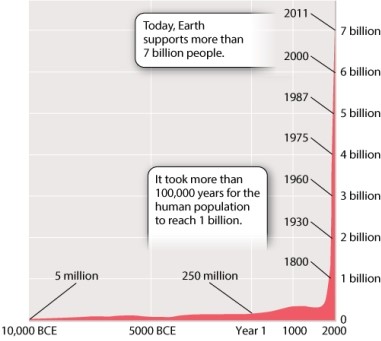
A)exponential growth
B)logistic growth
C)intrinsic growth
D)geometric growth
E)None of the answer options is correct.
A)exponential growth
B)logistic growth
C)intrinsic growth
D)geometric growth
E)None of the answer options is correct.

Question
Question
Question
Question
Question
Question
Question
Question
Examine Figure 49.2 below. According to this figure, _____ are the top two energy consuming countries per capita, for the countries shown, whereas _____ are the bottom two. 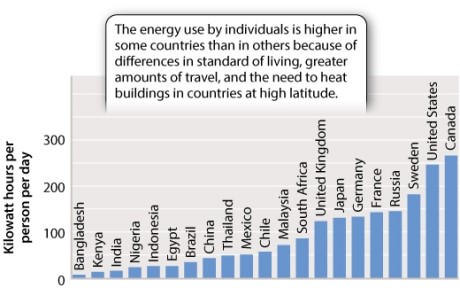
A)Canada and the United States; Bangladesh and Kenya
B)Kuwait and the United Arab Emirates; Mozambique and Sierra Leone
C)Bangladesh and Kenya; the United States and Canada
D)Mozambique and Malawi; Australia and the United States
E)None of the answer options is correct.
A)Canada and the United States; Bangladesh and Kenya
B)Kuwait and the United Arab Emirates; Mozambique and Sierra Leone
C)Bangladesh and Kenya; the United States and Canada
D)Mozambique and Malawi; Australia and the United States
E)None of the answer options is correct.
Question
Question
Figure 49.7 shows observed temperature changes versus those predicted for natural causes of increased temperature and natural plus anthropogenic causes of increased temperature. How would the lines be different if humans were predicted to have no impact on global temperatures? 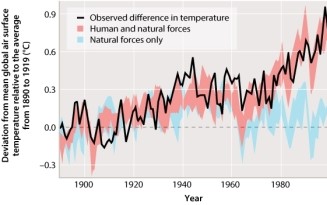
A)The line for natural causes would be the same as that for anthropogenic plus natural causes.
B)All three lines on the graph would be identical.
C)Observed data would match the zero line on the graph, and the natural causes and anthropogenic plus natural causes lines would fluctuate above the zero line.
D)The line for natural causes would be above the zero line, and the line for natural plus anthropogenic causes would be below the zero line on the graph.
A)The line for natural causes would be the same as that for anthropogenic plus natural causes.
B)All three lines on the graph would be identical.
C)Observed data would match the zero line on the graph, and the natural causes and anthropogenic plus natural causes lines would fluctuate above the zero line.
D)The line for natural causes would be above the zero line, and the line for natural plus anthropogenic causes would be below the zero line on the graph.
Question
Question
Per capita use of energy is highest in the United States versus other countries, and is thought to be caused by differences in standard of living. The chart below shows total energy use by country. Which of the following statements explains why the United States is NOT first and second on the chart? 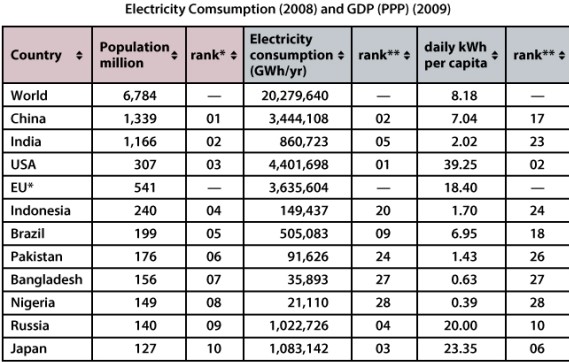
A)Overall energy consumption in a country is related to its population size.
B)The United States has a smaller power (electricity)supply than other countries.
C)The United States provides better data than other countries.
D)The United States has underreported population sizes compared to other countries.
A)Overall energy consumption in a country is related to its population size.
B)The United States has a smaller power (electricity)supply than other countries.
C)The United States provides better data than other countries.
D)The United States has underreported population sizes compared to other countries.
Question
Question
Question
Question
Question
Question
Question
Question
Question
Question
Question
Question
Examine Figure 49.7 below and compare the projected change in temperature in central South America and central Africa at the equator (draw an imaginary line across the globe at its widest point and examine a spot in the middle of each continent along that line). Which of the following BEST describes the predicted changes? 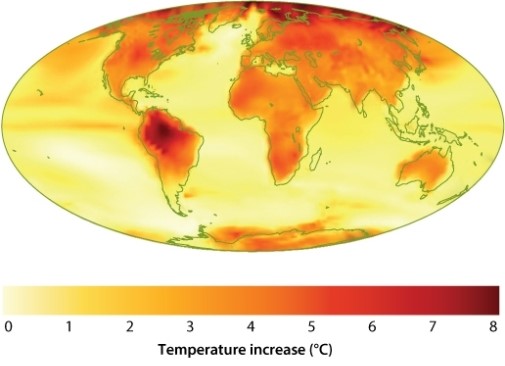
A)Central South America will warm by an average of 7-8 degrees; central Africa will warm by around 3-4 degrees.
B)Central South America will warm by an average of more than 8 degrees; central Africa will warm by 1-2 degrees.
C)Central South America will remain about the same; central Africa will warm by 7-8 degrees.
D)Central South America will warm by 2-3 degrees; central Africa will not change.
E)Both central South America and central Africa will warm by 4-5 degrees.
A)Central South America will warm by an average of 7-8 degrees; central Africa will warm by around 3-4 degrees.
B)Central South America will warm by an average of more than 8 degrees; central Africa will warm by 1-2 degrees.
C)Central South America will remain about the same; central Africa will warm by 7-8 degrees.
D)Central South America will warm by 2-3 degrees; central Africa will not change.
E)Both central South America and central Africa will warm by 4-5 degrees.
Question
Question
Question
Question
Question
Question
Question
Question
Question
Question
Examine Figure 49.5 below. According to this figure, mean temperature changes from 1940-1980 and 1999-2008 have been GREATEST: 
A)in Australia.
B)in southern Africa.
C)near the equator.
D)in South America.
E)in the northern hemisphere.
A)in Australia.
B)in southern Africa.
C)near the equator.
D)in South America.
E)in the northern hemisphere.
Question
Question
Question
Question
Question
Question
Question
Question
Question
Question
Question
Question
Question
Question
Question
Question
Question
Question
Question
Question
Question
Question
Question
Question
Question
Question
Question
Question
Question
Question
Question
Question
Question
Question
Question
Question
Question
Question
Question
Question
Question
Question
Question
Question
Question

Unlock Deck
Sign up to unlock the cards in this deck!
Unlock Deck
Unlock Deck
1/192

Play

Full screen (f)
Deck 49: The Anthropocene: Humans As a Planetary Force
1
Examine Figure 49.1 below illustrating human population growth. What pattern of growth are we currently exhibiting?
A)exponential growth
B)logistic growth
C)intrinsic growth
D)geometric growth
E)None of the answer options is correct.
A)exponential growth
B)logistic growth
C)intrinsic growth
D)geometric growth
E)None of the answer options is correct.
A
2
The ecological footprint is an attempt to quantify the amount of land required to provide _____ for its citizens.
A)energy
B)food
C)materials
D)services
E)None of the answer options is correct.
A)energy
B)food
C)materials
D)services
E)None of the answer options is correct.
A, B, C, D
3
Which of the following would result in a DECREASE in the size of your ecological footprint?
A)purchasing produce from local farmers instead of produce shipped from overseas
B)constructing a new home from brick and stone
C)setting the thermostat to 68 degrees in the winter instead of 66 degrees
D)only purchasing clothing that was made overseas
E)None of the answer options is correct.
A)purchasing produce from local farmers instead of produce shipped from overseas
B)constructing a new home from brick and stone
C)setting the thermostat to 68 degrees in the winter instead of 66 degrees
D)only purchasing clothing that was made overseas
E)None of the answer options is correct.
A
4
If we examine the standard of living in Australia, Saudi Arabia, and India, we find that Australia has the highest standard of living, India has the lowest standard of living, and Saudi Arabia has an intermediate standard of living. Based on this information, which of following shows the correct listing of these countries from largest to smallest in terms of ecological footprint?
A)Australia, Saudi Arabia, India
B)Australia, India, Saudi Arabia
C)India, Saudi Arabia, Australia
D)Saudi Arabia, India, Australia
E)India, Australia, Saudi Arabia
A)Australia, Saudi Arabia, India
B)Australia, India, Saudi Arabia
C)India, Saudi Arabia, Australia
D)Saudi Arabia, India, Australia
E)India, Australia, Saudi Arabia
Unlock Deck
Unlock for access to all 192 flashcards in this deck.
Unlock Deck
k this deck
5
You are interested in reducing the overall ecological impact of your college/university. Which of the following would IMMEDIATELY contribute to your goal?
A)lower enrollment and a reduced college workforce
B)decreased energy use in buildings
C)installation of solar energy in some buildings
A)lower enrollment and a reduced college workforce
B)decreased energy use in buildings
C)installation of solar energy in some buildings
Unlock Deck
Unlock for access to all 192 flashcards in this deck.
Unlock Deck
k this deck
6
In general, what is the relationship between a country's ecological footprint and its overall standard of living?
A)As the standard of living increases, so does the ecological footprint.
B)As the standard of living decreases, the ecological footprint increases.
C)It depends on country-in developed countries, the ecological footprint and standard of living are positively correlated; in developing countries, they are negatively correlated.
D)It depends on the country-in developing countries, the ecological footprint and standard of living are positively correlated; in developed countries, they are negatively correlated.
E)None of the answer options is correct.
A)As the standard of living increases, so does the ecological footprint.
B)As the standard of living decreases, the ecological footprint increases.
C)It depends on country-in developed countries, the ecological footprint and standard of living are positively correlated; in developing countries, they are negatively correlated.
D)It depends on the country-in developing countries, the ecological footprint and standard of living are positively correlated; in developed countries, they are negatively correlated.
E)None of the answer options is correct.
Unlock Deck
Unlock for access to all 192 flashcards in this deck.
Unlock Deck
k this deck
7
Approximately how long did it take for the human population to reach 1 billion?
A)more than 100,000 years
B)more than 1 million years
C)more than 2 million years
D)more than 5 million years
E)more than 10 million years
A)more than 100,000 years
B)more than 1 million years
C)more than 2 million years
D)more than 5 million years
E)more than 10 million years
Unlock Deck
Unlock for access to all 192 flashcards in this deck.
Unlock Deck
k this deck
8
Energy use by individuals varies among countries primarily because of differences in:
A)standard of living.
B)the need to heat buildings in countries at high latitude.
C)amount of travel.
D)the type of food consumed.
A)standard of living.
B)the need to heat buildings in countries at high latitude.
C)amount of travel.
D)the type of food consumed.
Unlock Deck
Unlock for access to all 192 flashcards in this deck.
Unlock Deck
k this deck
9
Examine Figure 49.2 below. According to this figure, _____ are the top two energy consuming countries per capita, for the countries shown, whereas _____ are the bottom two.
A)Canada and the United States; Bangladesh and Kenya
B)Kuwait and the United Arab Emirates; Mozambique and Sierra Leone
C)Bangladesh and Kenya; the United States and Canada
D)Mozambique and Malawi; Australia and the United States
E)None of the answer options is correct.
A)Canada and the United States; Bangladesh and Kenya
B)Kuwait and the United Arab Emirates; Mozambique and Sierra Leone
C)Bangladesh and Kenya; the United States and Canada
D)Mozambique and Malawi; Australia and the United States
E)None of the answer options is correct.
Unlock Deck
Unlock for access to all 192 flashcards in this deck.
Unlock Deck
k this deck
10
An individual's ecological footprint is equivalent to the:
A)amount of land required to provide all the resources used by that individual.
B)total amount of energy used by that individual.
C)total amount of food consumed by that individual.
D)total amount of carbon emissions from that individual's car.
E)All of these choices are correct.
A)amount of land required to provide all the resources used by that individual.
B)total amount of energy used by that individual.
C)total amount of food consumed by that individual.
D)total amount of carbon emissions from that individual's car.
E)All of these choices are correct.
Unlock Deck
Unlock for access to all 192 flashcards in this deck.
Unlock Deck
k this deck
11
Figure 49.7 shows observed temperature changes versus those predicted for natural causes of increased temperature and natural plus anthropogenic causes of increased temperature. How would the lines be different if humans were predicted to have no impact on global temperatures?
A)The line for natural causes would be the same as that for anthropogenic plus natural causes.
B)All three lines on the graph would be identical.
C)Observed data would match the zero line on the graph, and the natural causes and anthropogenic plus natural causes lines would fluctuate above the zero line.
D)The line for natural causes would be above the zero line, and the line for natural plus anthropogenic causes would be below the zero line on the graph.
A)The line for natural causes would be the same as that for anthropogenic plus natural causes.
B)All three lines on the graph would be identical.
C)Observed data would match the zero line on the graph, and the natural causes and anthropogenic plus natural causes lines would fluctuate above the zero line.
D)The line for natural causes would be above the zero line, and the line for natural plus anthropogenic causes would be below the zero line on the graph.
Unlock Deck
Unlock for access to all 192 flashcards in this deck.
Unlock Deck
k this deck
12
Scientists increasingly refer to the modern era as the _____ Period to emphasize the dominant impact of humans on the Earth.
Unlock Deck
Unlock for access to all 192 flashcards in this deck.
Unlock Deck
k this deck
13
Per capita use of energy is highest in the United States versus other countries, and is thought to be caused by differences in standard of living. The chart below shows total energy use by country. Which of the following statements explains why the United States is NOT first and second on the chart?
A)Overall energy consumption in a country is related to its population size.
B)The United States has a smaller power (electricity)supply than other countries.
C)The United States provides better data than other countries.
D)The United States has underreported population sizes compared to other countries.
A)Overall energy consumption in a country is related to its population size.
B)The United States has a smaller power (electricity)supply than other countries.
C)The United States provides better data than other countries.
D)The United States has underreported population sizes compared to other countries.
Unlock Deck
Unlock for access to all 192 flashcards in this deck.
Unlock Deck
k this deck
14
What is the approximate size of the human population today?
A)7 billion people
B)2 billion people
C)5 billion people
D)10 billion people
E)25 billion people
A)7 billion people
B)2 billion people
C)5 billion people
D)10 billion people
E)25 billion people
Unlock Deck
Unlock for access to all 192 flashcards in this deck.
Unlock Deck
k this deck
15
A college student spends the week hiking on the Appalachian Trail and then spends Friday night walking around New York City's Times Square. What is her ecological footprint during the week compared to Friday night?
A)Her ecological footprint was small in the natural environment and high in the man-made environment.
B)Her ecological footprint was large in the natural environment (because she was the only human)and small in the man-made environment (because there are lots of humans).
C)Her ecological footprint was the same in both environments because ecological footprints are only calculated over long (at least a year)periods of time for entire human populations.
D)More information is needed about what resources the student used in both environments to determine her ecological footprint.
A)Her ecological footprint was small in the natural environment and high in the man-made environment.
B)Her ecological footprint was large in the natural environment (because she was the only human)and small in the man-made environment (because there are lots of humans).
C)Her ecological footprint was the same in both environments because ecological footprints are only calculated over long (at least a year)periods of time for entire human populations.
D)More information is needed about what resources the student used in both environments to determine her ecological footprint.
Unlock Deck
Unlock for access to all 192 flashcards in this deck.
Unlock Deck
k this deck
16
A college student spent the week hiking on the Appalachian Trail and he saw only one other hiker the entire time. Now he is walking in New York City's Times Square on a Friday night. The streets are packed with people and the skyscrapers are lit by thousands of lights. In which environment are humans having a significant impact and why?
A)in New York City because the population density of humans is very high compared with other visible types of life
B)in New York City because of the scarcity of the natural environment compared to man-made structures
C)in both New York City and on the Appalachian Trail because the student was present in both places and thus impacted the environment
D)in both New York City and on the Appalachian Trail because the large ecological footprint of humans affects the entire planet
E)in both New York City and on the Appalachian Trail because, at some point in history, both areas have been inhabited by humans
A)in New York City because the population density of humans is very high compared with other visible types of life
B)in New York City because of the scarcity of the natural environment compared to man-made structures
C)in both New York City and on the Appalachian Trail because the student was present in both places and thus impacted the environment
D)in both New York City and on the Appalachian Trail because the large ecological footprint of humans affects the entire planet
E)in both New York City and on the Appalachian Trail because, at some point in history, both areas have been inhabited by humans
Unlock Deck
Unlock for access to all 192 flashcards in this deck.
Unlock Deck
k this deck
17
In which countries do people have the largest ecological footprint?
A)Middle Eastern countries
B)North American countries
C)China
D)India
E)African countries
A)Middle Eastern countries
B)North American countries
C)China
D)India
E)African countries
Unlock Deck
Unlock for access to all 192 flashcards in this deck.
Unlock Deck
k this deck
18
Nearly everything we use requires both _____ and energy.
Unlock Deck
Unlock for access to all 192 flashcards in this deck.
Unlock Deck
k this deck
19
The "Anthropocene Period":
A)is so named to reflect the impact of humans on the planet.
B)is Latin for "modern era."
C)refers specifically to the period of time following the industrial revolution.
D)is so named to reflect increasing global surface temperatures.
E)refers to the period when the earliest primate ancestors appeared in the fossil record.
A)is so named to reflect the impact of humans on the planet.
B)is Latin for "modern era."
C)refers specifically to the period of time following the industrial revolution.
D)is so named to reflect increasing global surface temperatures.
E)refers to the period when the earliest primate ancestors appeared in the fossil record.
Unlock Deck
Unlock for access to all 192 flashcards in this deck.
Unlock Deck
k this deck
20
A college student walks down New York City's Fifth Avenue at 8:00 AM. She is late for class so she catches the bus for the last 2 miles of her commute. Did she have a larger ecological footprint when she was walking or when she was on the bus?
A)on the bus, because it is using energy to move
B)on the bus, because the road took more energy to build than the sidewalk
C)walking, because she is using energy that must be replaced by eating foods that are not locally grown
D)walking, because she is moving on a sidewalk that took energy and raw materials to build
E)More information is needed about, for example, the number of people on the bus and its fuel source, to accurately determine her ecological footprint in both situations.
A)on the bus, because it is using energy to move
B)on the bus, because the road took more energy to build than the sidewalk
C)walking, because she is using energy that must be replaced by eating foods that are not locally grown
D)walking, because she is moving on a sidewalk that took energy and raw materials to build
E)More information is needed about, for example, the number of people on the bus and its fuel source, to accurately determine her ecological footprint in both situations.
Unlock Deck
Unlock for access to all 192 flashcards in this deck.
Unlock Deck
k this deck
21
If you were studying the effects of climate change on the geographic ranges of species living in the mountains and your climate records showed that mean temperatures were increasing, which species would you be MOST concerned about from a conservation standpoint?
A)a species that is a habitat generalist and lives at low elevations
B)a species that is a habitat specialist and lives at the highest elevations
C)a species that is a habitat specialist and lives at low elevations
D)a species that is a habitat generalist and lives at middle elevations
E)a species that is a habitat specialist and lives at middle elevations
A)a species that is a habitat generalist and lives at low elevations
B)a species that is a habitat specialist and lives at the highest elevations
C)a species that is a habitat specialist and lives at low elevations
D)a species that is a habitat generalist and lives at middle elevations
E)a species that is a habitat specialist and lives at middle elevations
Unlock Deck
Unlock for access to all 192 flashcards in this deck.
Unlock Deck
k this deck
22
A number of plant species have declined in abundance around Boston, Massachusetts, since Thoreau's time. These tend to be the plants that:
A)are least able to change their flowering time.
B)have changed their flowering time the most.
C)have the earliest flowering time.
D)have the latest flowering time.
E)None of the answer options is correct.
A)are least able to change their flowering time.
B)have changed their flowering time the most.
C)have the earliest flowering time.
D)have the latest flowering time.
E)None of the answer options is correct.
Unlock Deck
Unlock for access to all 192 flashcards in this deck.
Unlock Deck
k this deck
23
Using records taken by Henry David Thoreau in the 1840s, scientists have documented what pattern of change in flowering plants around Boston, Massachusetts?
A)As temperatures have warmed, flowering occurs earlier in many species.
B)As temperatures have warmed, flowering occurs later in many species.
C)As temperatures have become more variable, flowering occurs earlier in many species.
D)As temperatures have become more variable, flowering occurs later in many species.
E)As extreme weather events have become more common, flowering occurs earlier in many species.
A)As temperatures have warmed, flowering occurs earlier in many species.
B)As temperatures have warmed, flowering occurs later in many species.
C)As temperatures have become more variable, flowering occurs earlier in many species.
D)As temperatures have become more variable, flowering occurs later in many species.
E)As extreme weather events have become more common, flowering occurs earlier in many species.
Unlock Deck
Unlock for access to all 192 flashcards in this deck.
Unlock Deck
k this deck
24
When the ecological footprints of every human on Earth are summed, this number corresponds exactly to the land area of Earth.
Unlock Deck
Unlock for access to all 192 flashcards in this deck.
Unlock Deck
k this deck
25
Examine Figure 49.7 below and compare the projected change in temperature in central South America and central Africa at the equator (draw an imaginary line across the globe at its widest point and examine a spot in the middle of each continent along that line). Which of the following BEST describes the predicted changes?
A)Central South America will warm by an average of 7-8 degrees; central Africa will warm by around 3-4 degrees.
B)Central South America will warm by an average of more than 8 degrees; central Africa will warm by 1-2 degrees.
C)Central South America will remain about the same; central Africa will warm by 7-8 degrees.
D)Central South America will warm by 2-3 degrees; central Africa will not change.
E)Both central South America and central Africa will warm by 4-5 degrees.
A)Central South America will warm by an average of 7-8 degrees; central Africa will warm by around 3-4 degrees.
B)Central South America will warm by an average of more than 8 degrees; central Africa will warm by 1-2 degrees.
C)Central South America will remain about the same; central Africa will warm by 7-8 degrees.
D)Central South America will warm by 2-3 degrees; central Africa will not change.
E)Both central South America and central Africa will warm by 4-5 degrees.
Unlock Deck
Unlock for access to all 192 flashcards in this deck.
Unlock Deck
k this deck
26
Humans have a nearly ubiquitous influence on physical environments throughout the world. Looking back through geologic history, which type of organism can claim a comparable impact on physical environments?
A)cyanobacteria
B)trilobites
C)dinosaurs
D)birds
A)cyanobacteria
B)trilobites
C)dinosaurs
D)birds
Unlock Deck
Unlock for access to all 192 flashcards in this deck.
Unlock Deck
k this deck
27
Carbon dioxide combines with water to form a weak _____; this has caused the pH of seawater to go _____.
A)acid; down
B)acid; up
C)base; down
D)base; up
E)antioxidant; up
A)acid; down
B)acid; up
C)base; down
D)base; up
E)antioxidant; up
Unlock Deck
Unlock for access to all 192 flashcards in this deck.
Unlock Deck
k this deck
28
Geoengineering consists of a suite of widely debated proposals to mitigate global warming by actively managing Earth's radiation budget or greenhouse gas concentrations. Nobel laureate Paul Crutzen has proposed injecting sulfate aerosols into the stratosphere, which would reflect more incoming solar radiation away from the Earth, decreasing surface temperatures. Imagine we adopted this strategy for 100 years and then stopped. How would climate react at the end of the experiment?
A)Cooler surface temperatures achieved during the experiment would be maintained over long time intervals.
B)Cooler temperatures would continue, but only until CO2 regained its level in the atmosphere prior to the experiment..
C)Temperature would quickly return to the increasing trajectory established before the experiment started.
D)This question can't be answered without additional information.
A)Cooler surface temperatures achieved during the experiment would be maintained over long time intervals.
B)Cooler temperatures would continue, but only until CO2 regained its level in the atmosphere prior to the experiment..
C)Temperature would quickly return to the increasing trajectory established before the experiment started.
D)This question can't be answered without additional information.
Unlock Deck
Unlock for access to all 192 flashcards in this deck.
Unlock Deck
k this deck
29
Giant sequoia trees (Sequoiadendron giganteum) are among the largest and longest-living organisms on Earth. These trees grow in weight by up to 1000 pounds of wood per year. As these trees are growing, they:
A)incorporate CO2 into their biomass (wood, roots, and needles).
B)are probably a net sink of CO2.
C)generate some CO2 through cellular respiration.
D)All of these choices are correct.
A)incorporate CO2 into their biomass (wood, roots, and needles).
B)are probably a net sink of CO2.
C)generate some CO2 through cellular respiration.
D)All of these choices are correct.
Unlock Deck
Unlock for access to all 192 flashcards in this deck.
Unlock Deck
k this deck
30
About _____ of the CO2 produced by humans during the past century has been absorbed by the ocean.
A)one-quarter
B)one-third
C)one-half
D)one-eighth
E)one-sixteenth
A)one-quarter
B)one-third
C)one-half
D)one-eighth
E)one-sixteenth
Unlock Deck
Unlock for access to all 192 flashcards in this deck.
Unlock Deck
k this deck
31
As oceans acidify, carbonate ions in the ocean:
A)become more abundant and more available to organisms that build calcium carbonate skeletons.
B)become less abundant and less available to organisms that build calcium carbonate skeletons.
C)become more abundant, but less bioavailable to organisms that build calcium carbonate skeletons.
D)become less abundant, but more bioavailable to organisms that build calcium carbonate skeletons.
E)remain as available to organisms that build calcium carbonate skeletons as they were before oceans acidified.
A)become more abundant and more available to organisms that build calcium carbonate skeletons.
B)become less abundant and less available to organisms that build calcium carbonate skeletons.
C)become more abundant, but less bioavailable to organisms that build calcium carbonate skeletons.
D)become less abundant, but more bioavailable to organisms that build calcium carbonate skeletons.
E)remain as available to organisms that build calcium carbonate skeletons as they were before oceans acidified.
Unlock Deck
Unlock for access to all 192 flashcards in this deck.
Unlock Deck
k this deck
32
Researchers have found that:
A)marine organisms are unable to regulate the ionic composition of their internal fluids to counter ocean acidification and continue to build calcium carbonate skeletons.
B)some marine organisms are able to regulate the ionic composition of their internal fluids to counter ocean acidification and continue to build calcium carbonate skeletons; corals are among those that can.
C)some marine organisms are able to regulate the ionic composition of their internal fluids to counter ocean acidification and continue to build calcium carbonate skeletons; corals are among those that cannot.
D)most marine organisms, including corals, are completely unaffected by ocean acidification.
E)some coral species are able to regulate the ionic composition of their internal fluids to counter ocean acidification and continue to build calcium carbonate skeletons; others are not.
A)marine organisms are unable to regulate the ionic composition of their internal fluids to counter ocean acidification and continue to build calcium carbonate skeletons.
B)some marine organisms are able to regulate the ionic composition of their internal fluids to counter ocean acidification and continue to build calcium carbonate skeletons; corals are among those that can.
C)some marine organisms are able to regulate the ionic composition of their internal fluids to counter ocean acidification and continue to build calcium carbonate skeletons; corals are among those that cannot.
D)most marine organisms, including corals, are completely unaffected by ocean acidification.
E)some coral species are able to regulate the ionic composition of their internal fluids to counter ocean acidification and continue to build calcium carbonate skeletons; others are not.
Unlock Deck
Unlock for access to all 192 flashcards in this deck.
Unlock Deck
k this deck
33
Oceans are about _____% more acidic than they were in the 1960s.
A)10
B)20
C)25
D)30
E)40
A)10
B)20
C)25
D)30
E)40
Unlock Deck
Unlock for access to all 192 flashcards in this deck.
Unlock Deck
k this deck
34
Which of the following statements about the growth of the human population is CORRECT?
A)The human population first reached 1 billion in the twentieth century.
B)The human population has been growing at the same rate since 1800.
C)The human population quadruples in size every century.
D)The human population has doubled in size in the past 10 years.
E)None of the answer options is correct.
A)The human population first reached 1 billion in the twentieth century.
B)The human population has been growing at the same rate since 1800.
C)The human population quadruples in size every century.
D)The human population has doubled in size in the past 10 years.
E)None of the answer options is correct.
Unlock Deck
Unlock for access to all 192 flashcards in this deck.
Unlock Deck
k this deck
35
Examine Figure 49.5 below. According to this figure, mean temperature changes from 1940-1980 and 1999-2008 have been GREATEST:
A)in Australia.
B)in southern Africa.
C)near the equator.
D)in South America.
E)in the northern hemisphere.
A)in Australia.
B)in southern Africa.
C)near the equator.
D)in South America.
E)in the northern hemisphere.
Unlock Deck
Unlock for access to all 192 flashcards in this deck.
Unlock Deck
k this deck
36
Which of the following statements about the concept of an ecological footprint is FALSE?
A)Countries with the largest population sizes have the largest ecological footprints.
B)It is an estimate of how much land is required to provide the resources used by an individual.
C)The total ecological footprint for humanity is greater than the actual surface area of Earth.
D)It encompasses the energy used to produce goods and the energy used to ship those goods to a store.
E)Undeveloped countries have smaller ecological footprints than developed countries.
A)Countries with the largest population sizes have the largest ecological footprints.
B)It is an estimate of how much land is required to provide the resources used by an individual.
C)The total ecological footprint for humanity is greater than the actual surface area of Earth.
D)It encompasses the energy used to produce goods and the energy used to ship those goods to a store.
E)Undeveloped countries have smaller ecological footprints than developed countries.
Unlock Deck
Unlock for access to all 192 flashcards in this deck.
Unlock Deck
k this deck
37
There is a giant sequoia (Sequoiadendron giganteum) named Washington (after George Washington) that was believed to be the second largest tree in the world (253.7 ft. in height!) until it was struck by lightning in 2003. The lightning strike caused a fire at the top of the tree that reduced Washington's height to about 229 feet. Carbon released from the tree due to that fire could have:
A)been incorporated into the wood of a nearby sequoia through the process of photosynthesis.
B)been incorporated into the wood of a nearby sequoia through the process of cellular respiration.
C)been incorporated into the cells of a human through the process of cellular respiration.
D)traveled through the atmosphere and eventually dissolved into the ocean.
A)been incorporated into the wood of a nearby sequoia through the process of photosynthesis.
B)been incorporated into the wood of a nearby sequoia through the process of cellular respiration.
C)been incorporated into the cells of a human through the process of cellular respiration.
D)traveled through the atmosphere and eventually dissolved into the ocean.
Unlock Deck
Unlock for access to all 192 flashcards in this deck.
Unlock Deck
k this deck
38
If a person wanted to change Earth's climate and came up with a way to add copious amounts of water vapor to the atmosphere, how would the climate be affected?
A)As water vapor is a greenhouse gas, Earth's temperature will increase.
B)Unlike methane or CO2, water vapor is not a greenhouse gas and will have no effect on Earth's climate.
C)The only effect of adding water vapor to the atmosphere will be an increase in sea levels.
D)By adding water vapor to the air, the evil scientist could change Earth's weather patterns.
E)Both answers A and D are correct.
A)As water vapor is a greenhouse gas, Earth's temperature will increase.
B)Unlike methane or CO2, water vapor is not a greenhouse gas and will have no effect on Earth's climate.
C)The only effect of adding water vapor to the atmosphere will be an increase in sea levels.
D)By adding water vapor to the air, the evil scientist could change Earth's weather patterns.
E)Both answers A and D are correct.
Unlock Deck
Unlock for access to all 192 flashcards in this deck.
Unlock Deck
k this deck
39
A group of scientists in Alaska notices that not only have atmospheric CO2 levels increased at their sampling site but so too have methane levels. What could account for this increase in methane levels?
A)The melting of permafrost accompanied by the thawing of methane-producing bacteria.
B)A decrease in beef production near the researchers' sampling area.
C)The release of methane from thawed permafrost.
D)The failure of rice paddies to be established in Alaska, given its climate.
E)None of the answer options is correct.
A)The melting of permafrost accompanied by the thawing of methane-producing bacteria.
B)A decrease in beef production near the researchers' sampling area.
C)The release of methane from thawed permafrost.
D)The failure of rice paddies to be established in Alaska, given its climate.
E)None of the answer options is correct.
Unlock Deck
Unlock for access to all 192 flashcards in this deck.
Unlock Deck
k this deck
40
Which of the following statements about patterns of energy use among countries is NOT true?
A)Individuals in larger countries use more energy than individuals in smaller countries.
B)Individuals in high-latitude countries use more energy than individuals in equatorial countries in part because of the need to heat buildings.
C)Countries where individuals travel more frequently have higher levels of energy use than countries where individuals travel less frequently.
D)Individuals in countries with higher standards of living use more energy than countries with lower standards of living.
E)Energy use is distributed unevenly among countries.
A)Individuals in larger countries use more energy than individuals in smaller countries.
B)Individuals in high-latitude countries use more energy than individuals in equatorial countries in part because of the need to heat buildings.
C)Countries where individuals travel more frequently have higher levels of energy use than countries where individuals travel less frequently.
D)Individuals in countries with higher standards of living use more energy than countries with lower standards of living.
E)Energy use is distributed unevenly among countries.
Unlock Deck
Unlock for access to all 192 flashcards in this deck.
Unlock Deck
k this deck
41
Which of the following is NOT a cause of increased levels of greenhouse gases?
A)thawing of the permafrost in the tundra
B)burning of fossil fuels
C)increasing cattle populations
D)expansion of rice paddies
E)All of these choices are correct.
A)thawing of the permafrost in the tundra
B)burning of fossil fuels
C)increasing cattle populations
D)expansion of rice paddies
E)All of these choices are correct.
Unlock Deck
Unlock for access to all 192 flashcards in this deck.
Unlock Deck
k this deck
42
Most climate models predict that, during the 21st century, mean global temperature will increase by:
A)2-5°C.
B)1-3°C.
C)5-7°C.
D)7-10°C.
E)12-15°C.
A)2-5°C.
B)1-3°C.
C)5-7°C.
D)7-10°C.
E)12-15°C.
Unlock Deck
Unlock for access to all 192 flashcards in this deck.
Unlock Deck
k this deck
43
Natural gas is a form of fossil fuel, but many scientists prefer to use it rather than coal in meeting societal needs. What advantage does natural gas have, relative to coal?
A)Burning natural gas does not add CO2 to the atmosphere.
B)Burning natural gas releases less CO2 per kilowatt of energy obtained than burning coal does.
C)Natural gas is available in unlimited supply.
D)Development of natural gas fields via fracking has no potential consequences for the environment.
A)Burning natural gas does not add CO2 to the atmosphere.
B)Burning natural gas releases less CO2 per kilowatt of energy obtained than burning coal does.
C)Natural gas is available in unlimited supply.
D)Development of natural gas fields via fracking has no potential consequences for the environment.
Unlock Deck
Unlock for access to all 192 flashcards in this deck.
Unlock Deck
k this deck
44
Which of the following statements about coral bleaching is TRUE?
A)Bleached corals die more rapidly than unbleached corals.
B)Coral bleaching results from the loss of algal symbionts from the coral tissue.
C)Corals appear white after bleaching because their white calcium carbonate skeletons are visible through their translucent tissue.
D)Increased seawater temperature is one cause of coral bleaching.
E)All of these choices are correct.
A)Bleached corals die more rapidly than unbleached corals.
B)Coral bleaching results from the loss of algal symbionts from the coral tissue.
C)Corals appear white after bleaching because their white calcium carbonate skeletons are visible through their translucent tissue.
D)Increased seawater temperature is one cause of coral bleaching.
E)All of these choices are correct.
Unlock Deck
Unlock for access to all 192 flashcards in this deck.
Unlock Deck
k this deck
45
In addition to burning fossil fuels, humans return CO2 to the atmosphere faster than it can be removed by:
A)clearing forests for agriculture.
B)polluting the oceans.
C)generating nutrient pollution.
D)expanding rice production.
E)expanding beef production.
A)clearing forests for agriculture.
B)polluting the oceans.
C)generating nutrient pollution.
D)expanding rice production.
E)expanding beef production.
Unlock Deck
Unlock for access to all 192 flashcards in this deck.
Unlock Deck
k this deck
46
What steps can humans take to reduce the amount of (man-made) CO2 released into the atmosphere?
A)increase reforestation efforts
B)invest in wind or nuclear power
C)employ "scrubbers" for smokestacks
D)reduce the consumption of fossil fuels
E)All of these choices are correct.
A)increase reforestation efforts
B)invest in wind or nuclear power
C)employ "scrubbers" for smokestacks
D)reduce the consumption of fossil fuels
E)All of these choices are correct.
Unlock Deck
Unlock for access to all 192 flashcards in this deck.
Unlock Deck
k this deck
47
There is a giant sequoia (Sequoiadendron giganteum) named Washington (after George Washington) that was believed to be the second largest tree in the world (253.7 ft. in height!) until it was struck by lightning in 2003. The lightning strike caused a fire at the top of the tree that reduced Washington's height to about 229 feet. The fire released carbon that had been sequestered in wood into the environment in the form of:
A)CO2.
B)heat.
C)sugar.
D)ash.
E)air.
A)CO2.
B)heat.
C)sugar.
D)ash.
E)air.
Unlock Deck
Unlock for access to all 192 flashcards in this deck.
Unlock Deck
k this deck
48
Which of the following are suspected environmental impacts of fracking?
A)methane leakage into the atmosphere
B)increased incidence of earthquakes
C)water table contamination
D)increasing levels of water in streams
A)methane leakage into the atmosphere
B)increased incidence of earthquakes
C)water table contamination
D)increasing levels of water in streams
Unlock Deck
Unlock for access to all 192 flashcards in this deck.
Unlock Deck
k this deck
49
Approximately how long would it take for CO2 levels to return to nineteenth-century levels if we cut emissions by 90% immediately?
A)hundreds or thousands of years
B)1 month
C)6-12 months
D)10 years
E)100 years
A)hundreds or thousands of years
B)1 month
C)6-12 months
D)10 years
E)100 years
Unlock Deck
Unlock for access to all 192 flashcards in this deck.
Unlock Deck
k this deck
50
On which part of the carbon cycle have humans had the GREATEST impact?
A)return of CO2 to the atmosphere by oxidation of ancient organic matter
B)capture of atmospheric CO2 by chemical weathering of rocks
C)storage of CO2 through biomineralization in the oceans
D)deposition of organic carbon in deep-sea sediments
E)All of these choices are correct.
A)return of CO2 to the atmosphere by oxidation of ancient organic matter
B)capture of atmospheric CO2 by chemical weathering of rocks
C)storage of CO2 through biomineralization in the oceans
D)deposition of organic carbon in deep-sea sediments
E)All of these choices are correct.
Unlock Deck
Unlock for access to all 192 flashcards in this deck.
Unlock Deck
k this deck
51
You are given 100 acres of land and asked to use the land for long-term reduction of atmospheric CO2 levels. Which of the following is the BEST use of the land for this purpose?
A)Plant a rapidly growing grass that can be harvested every year and used to make ethanol that is added to gasoline.
B)Plant slow-growing, bristle-cone pine trees that are known to live for thousands of years and reach a height of about 6 feet.
C)Plant corn that is used to feed pigs that are then harvested for sausage meat that is sold at the grocery store.
D)Plant a regular lawn and use the land as a park to encourage the local population to exercise more.
E)Plant trees that grow rapidly, reach a large size, and live for a long time.
A)Plant a rapidly growing grass that can be harvested every year and used to make ethanol that is added to gasoline.
B)Plant slow-growing, bristle-cone pine trees that are known to live for thousands of years and reach a height of about 6 feet.
C)Plant corn that is used to feed pigs that are then harvested for sausage meat that is sold at the grocery store.
D)Plant a regular lawn and use the land as a park to encourage the local population to exercise more.
E)Plant trees that grow rapidly, reach a large size, and live for a long time.
Unlock Deck
Unlock for access to all 192 flashcards in this deck.
Unlock Deck
k this deck
52
In addition to carbon dioxide, which of the following are also considered to be greenhouse gases?
A)water vapor and methane
B)methane
C)oxygen
D)water vapor
E)methane and oxygen
A)water vapor and methane
B)methane
C)oxygen
D)water vapor
E)methane and oxygen
Unlock Deck
Unlock for access to all 192 flashcards in this deck.
Unlock Deck
k this deck
53
Given models of population growth, which model would be the BEST to use for determining estimated sustainable yield?
A)logistic
B)exponential
C)a combination of both
A)logistic
B)exponential
C)a combination of both
Unlock Deck
Unlock for access to all 192 flashcards in this deck.
Unlock Deck
k this deck
54
What is one "low-tech" method currently available to actively remove CO2 from the air?
A)reforestation of previously cleared landscapes
B)capturing CO2 in smokestacks (using smokestack scrubbers)
C)using iron and other supplements to fertilize the ocean (increase phytoplankton biomass)
D)expansion of rice farming
E)None of the answer options is correct.
A)reforestation of previously cleared landscapes
B)capturing CO2 in smokestacks (using smokestack scrubbers)
C)using iron and other supplements to fertilize the ocean (increase phytoplankton biomass)
D)expansion of rice farming
E)None of the answer options is correct.
Unlock Deck
Unlock for access to all 192 flashcards in this deck.
Unlock Deck
k this deck
55
Alternatives to fossil fuel-based energy-wind, sun, tidal energy, and nuclear power-offer what potential benefits?
A)They reduce the amount of CO2 emitted per kilowatt hour of energy produced.
B)They conserve finite resources.
C)They help contain the cost of energy production.
D)They directly conserve biodiversity.
E)They can reverse the effects of global climate change.
A)They reduce the amount of CO2 emitted per kilowatt hour of energy produced.
B)They conserve finite resources.
C)They help contain the cost of energy production.
D)They directly conserve biodiversity.
E)They can reverse the effects of global climate change.
Unlock Deck
Unlock for access to all 192 flashcards in this deck.
Unlock Deck
k this deck
56
Carbon dioxide in the atmosphere absorbs heat energy and emits it in all directions, making it a(n) _____.
Unlock Deck
Unlock for access to all 192 flashcards in this deck.
Unlock Deck
k this deck
57
Which of the following statements is TRUE regarding the process of eutrophication?
A)It is the result of the natural accumulation of nitrogen in bodies of water.
B)It increases the species diversity and health of bodies of water.
C)It can result in "dead zones" devoid of aquatic animal life.
D)It increases the oxygen content of water by promoting bacterial growth.
E)All of these choices are correct.
A)It is the result of the natural accumulation of nitrogen in bodies of water.
B)It increases the species diversity and health of bodies of water.
C)It can result in "dead zones" devoid of aquatic animal life.
D)It increases the oxygen content of water by promoting bacterial growth.
E)All of these choices are correct.
Unlock Deck
Unlock for access to all 192 flashcards in this deck.
Unlock Deck
k this deck
58
Which of the following is a result of excess greenhouse gases added to the atmosphere by human activities?
A)an increase in Earth's surface temperature
B)an decrease in the pH of Earth's oceans
C)changes in Earth's precipitation patterns
D)changes in the behavior of different plant/animal species
E)All of these choices are correct.
A)an increase in Earth's surface temperature
B)an decrease in the pH of Earth's oceans
C)changes in Earth's precipitation patterns
D)changes in the behavior of different plant/animal species
E)All of these choices are correct.
Unlock Deck
Unlock for access to all 192 flashcards in this deck.
Unlock Deck
k this deck
59
Remember that, as a rule, temperatures decrease with an increase in altitude. If you were studying the effects of climate change on the geographic ranges of species living in the mountains and your climate records showed that mean temperatures were increasing, you would predict that species ranges would show a shift toward:
A)higher elevations.
B)lower elevations.
C)intermediate elevations.
D)unpredictable elevations-the precise response would depend on individual species, with no clear trends or averages.
E)None of the answer options is correct.
A)higher elevations.
B)lower elevations.
C)intermediate elevations.
D)unpredictable elevations-the precise response would depend on individual species, with no clear trends or averages.
E)None of the answer options is correct.
Unlock Deck
Unlock for access to all 192 flashcards in this deck.
Unlock Deck
k this deck
60
Greenhouse gases:
A)prevent average surface temperatures from dropping below freezing.
B)absorb heat energy and emit it in all directions.
C)include carbon dioxide and methane.
D)make life on Earth's surface possible.
E)All of these choices are correct.
A)prevent average surface temperatures from dropping below freezing.
B)absorb heat energy and emit it in all directions.
C)include carbon dioxide and methane.
D)make life on Earth's surface possible.
E)All of these choices are correct.
Unlock Deck
Unlock for access to all 192 flashcards in this deck.
Unlock Deck
k this deck
61
Which of the following statements about the physiological responses of plants to increasing temperatures and carbon dioxide levels is NOT true?
A)Many plants devote more resources to reproduction under these conditions.
B)Many plants produce flowers earlier in response to increased temperatures.
C)Many plants produce leaves earlier in response to increased temperatures.
D)The amount of nitrogen in plant tissues declines in response to increased CO2.
E)All of the answer choices are true.
A)Many plants devote more resources to reproduction under these conditions.
B)Many plants produce flowers earlier in response to increased temperatures.
C)Many plants produce leaves earlier in response to increased temperatures.
D)The amount of nitrogen in plant tissues declines in response to increased CO2.
E)All of the answer choices are true.
Unlock Deck
Unlock for access to all 192 flashcards in this deck.
Unlock Deck
k this deck
62
Human impact on the nitrogen and phosphorus cycles happens primarily through our use of:
A)fossil fuels.
B)fertilizer.
C)groundwater.
D)marine resources.
E)minerals.
A)fossil fuels.
B)fertilizer.
C)groundwater.
D)marine resources.
E)minerals.
Unlock Deck
Unlock for access to all 192 flashcards in this deck.
Unlock Deck
k this deck
63
Which of the following will help SLOW the rate of increase of atmospheric CO2?
A)turning off the light in an empty room
B)using solar power instead of fossil fuels to help conserve finite natural resources
C)using nuclear power to reduce the cost of energy production
D)driving more fuel-efficient cars
E)All of these choices are correct.
A)turning off the light in an empty room
B)using solar power instead of fossil fuels to help conserve finite natural resources
C)using nuclear power to reduce the cost of energy production
D)driving more fuel-efficient cars
E)All of these choices are correct.
Unlock Deck
Unlock for access to all 192 flashcards in this deck.
Unlock Deck
k this deck
64
One of the major obstacles to decreasing atmospheric CO2 is that natural processes that sequester carbon occur at much longer time scales than human processes that add CO2 to the atmosphere.
Unlock Deck
Unlock for access to all 192 flashcards in this deck.
Unlock Deck
k this deck
65
Which of the following statements about ocean acidification is NOT true?
A)Ocean acidification increases the availability of carbonate ions in seawater.
B)Increasing levels of CO2 in the ocean cause a decrease in the pH of seawater.
C)The pH of surface oceans has dropped by 0.1 units in the past 40 years.
D)Ocean acidification makes it more difficult for corals to secrete their skeletons.
E)Ocean acidification is predicted to get worse as atmospheric CO2 levels rise.
A)Ocean acidification increases the availability of carbonate ions in seawater.
B)Increasing levels of CO2 in the ocean cause a decrease in the pH of seawater.
C)The pH of surface oceans has dropped by 0.1 units in the past 40 years.
D)Ocean acidification makes it more difficult for corals to secrete their skeletons.
E)Ocean acidification is predicted to get worse as atmospheric CO2 levels rise.
Unlock Deck
Unlock for access to all 192 flashcards in this deck.
Unlock Deck
k this deck
66
So-called "dead zones" in coastal oceans are associated with nutrient runoff and oxygen-depleted bottom waters. What causes the oxygen depletion?
A)Nutrient runoff causes population growth of cyanobacteria and algae, which consume oxygen via aerobic respiration.
B)Nutrient runoff causes population growth of cyanobacteria and algae which, in turn, support the growth of fish populations. Fish consume oxygen via aerobic respiration.
C)Nutrient runoff causes population growth of algae, which consume oxygen via aerobic respiration.
D)Nutrient runoff causes algae and cyanobacteria populations to grow. When they die, they are consumed by heterotrophic bacteria that consume oxygen via aerobic respiration.
E)Nutrient runoff causes the waters to warm, which causes them to lose oxygen.
A)Nutrient runoff causes population growth of cyanobacteria and algae, which consume oxygen via aerobic respiration.
B)Nutrient runoff causes population growth of cyanobacteria and algae which, in turn, support the growth of fish populations. Fish consume oxygen via aerobic respiration.
C)Nutrient runoff causes population growth of algae, which consume oxygen via aerobic respiration.
D)Nutrient runoff causes algae and cyanobacteria populations to grow. When they die, they are consumed by heterotrophic bacteria that consume oxygen via aerobic respiration.
E)Nutrient runoff causes the waters to warm, which causes them to lose oxygen.
Unlock Deck
Unlock for access to all 192 flashcards in this deck.
Unlock Deck
k this deck
67
In response to global climate change, it is likely that some plant species will survive while others will go extinct. All of the following are explanations of this pattern EXCEPT:
A)greenhouse gases are toxic, so increasing levels of these gases will cause some plants to go extinct.
B)plants differ in their abilities to respond physiologically to persistent environmental change, and some will survive increased temperatures.
C)temperatures may increase more rapidly than some species can adapt, which will lead to their extinction.
D)some plants are able to migrate more effectively than others and can move into areas with more favorable conditions for survival.
E)All of these choices are correct.
A)greenhouse gases are toxic, so increasing levels of these gases will cause some plants to go extinct.
B)plants differ in their abilities to respond physiologically to persistent environmental change, and some will survive increased temperatures.
C)temperatures may increase more rapidly than some species can adapt, which will lead to their extinction.
D)some plants are able to migrate more effectively than others and can move into areas with more favorable conditions for survival.
E)All of these choices are correct.
Unlock Deck
Unlock for access to all 192 flashcards in this deck.
Unlock Deck
k this deck
68
About how much of the nitrogen added to croplands ends up in food?
A)10%
B)25%
C)45%
D)60%
E)85%
A)10%
B)25%
C)45%
D)60%
E)85%
Unlock Deck
Unlock for access to all 192 flashcards in this deck.
Unlock Deck
k this deck
69
An abundance of nitrogen (N) and phosphorus (P) in an aquatic environment leads to _____ levels of dissolved oxygen due to _____.
A)high; the oxidation of water
B)high; the abundance of anaerobic bacteria
C)low; reduction of oxygen
D)low; high aerobic respiration
A)high; the oxidation of water
B)high; the abundance of anaerobic bacteria
C)low; reduction of oxygen
D)low; high aerobic respiration
Unlock Deck
Unlock for access to all 192 flashcards in this deck.
Unlock Deck
k this deck
70
Nutrients from croplands are carried by the Mississippi River into the Gulf of Mexico. If nutrients are good for growth, why are scientists concerned about this nutrient influx?
A)Higher productivity may support greater numbers of sharks.
B)Higher productivity may support greater diversity of phytoplankton species.
C)Higher productivity may result in increased respiration on sinking algal material, depleting oxygen within gulf waters.
D)The nutrient runoff depletes nitrate, which cannot be made industrially.
A)Higher productivity may support greater numbers of sharks.
B)Higher productivity may support greater diversity of phytoplankton species.
C)Higher productivity may result in increased respiration on sinking algal material, depleting oxygen within gulf waters.
D)The nutrient runoff depletes nitrate, which cannot be made industrially.
Unlock Deck
Unlock for access to all 192 flashcards in this deck.
Unlock Deck
k this deck
71
Which of the following statements about global warming is CORRECT?
A)Higher latitudes have warmed more than equatorial regions.
B)Overall, Earth's mean surface temperature has increased by only 0.5 degrees.
C)A comparison of temperature data collected between 1999 and 2008 to temperature data collected between 1940 and 1980 shows that all environments on Earth have experienced an increase in mean annual temperature.
D)Oceanic environments have warmed more than terrestrial environments.
E)None of the answer options is correct.
A)Higher latitudes have warmed more than equatorial regions.
B)Overall, Earth's mean surface temperature has increased by only 0.5 degrees.
C)A comparison of temperature data collected between 1999 and 2008 to temperature data collected between 1940 and 1980 shows that all environments on Earth have experienced an increase in mean annual temperature.
D)Oceanic environments have warmed more than terrestrial environments.
E)None of the answer options is correct.
Unlock Deck
Unlock for access to all 192 flashcards in this deck.
Unlock Deck
k this deck
72
What is the evidence that human activity is causing increased atmospheric CO2 levels?
A)The isotopic composition of atmospheric CO2 can be measured and shows that CO2 being added to the air now comes from combustion of fossil fuels.
B)There is a correlation between the increase of overall CO2 levels and human activity since the Industrial Revolution.
C)There is no direct evidence; CO2 levels fluctuate naturally and it may just be coincidence that higher CO2 levels correspond to this period of human activity.
D)There is no direct evidence; it is impossible to know what CO2 levels were like in the past, so there is no standard for comparison.
E)Since forests are being cut down by humans, CO2 levels must be rising because there are fewer plants that remove CO2 through photosynthesis.
A)The isotopic composition of atmospheric CO2 can be measured and shows that CO2 being added to the air now comes from combustion of fossil fuels.
B)There is a correlation between the increase of overall CO2 levels and human activity since the Industrial Revolution.
C)There is no direct evidence; CO2 levels fluctuate naturally and it may just be coincidence that higher CO2 levels correspond to this period of human activity.
D)There is no direct evidence; it is impossible to know what CO2 levels were like in the past, so there is no standard for comparison.
E)Since forests are being cut down by humans, CO2 levels must be rising because there are fewer plants that remove CO2 through photosynthesis.
Unlock Deck
Unlock for access to all 192 flashcards in this deck.
Unlock Deck
k this deck
73
The United States experienced one of the worst droughts in its history in 2012. By itself, this severe drought is strong evidence for climate change.
Unlock Deck
Unlock for access to all 192 flashcards in this deck.
Unlock Deck
k this deck
74
Dead zones have been documented in many areas. These dead zones are increasing in size each year. Which of the following would be one of the ways to decrease the size of these dead zones?
A)Plant more crops so that more of the nitrogen in the fertilizers will be taken up.
B)Decrease the volume of nitrogen used in agricultural areas near dead zones.
C)Increase population sizes of cyanobacteria in coastal waters near dead zones.
D)Increase populations of decomposers in coastal water areas near dead zones.
A)Plant more crops so that more of the nitrogen in the fertilizers will be taken up.
B)Decrease the volume of nitrogen used in agricultural areas near dead zones.
C)Increase population sizes of cyanobacteria in coastal waters near dead zones.
D)Increase populations of decomposers in coastal water areas near dead zones.
Unlock Deck
Unlock for access to all 192 flashcards in this deck.
Unlock Deck
k this deck
75
The results of the coccolithophorid experiment done by Riebesell and colleagues showed that:
A)increasing CO2 levels lead to incomplete or poorly formed calcium carbonate scales of coccolithophorids.
B)increasing pH levels lead to decreased calcification of coccolithophorid scales.
C)decreasing CO2 levels lead to deformed coccolithophorid scales.
D)decreasing pH levels lead to significantly reduced growth rates.
E)None of the answer options is correct.
A)increasing CO2 levels lead to incomplete or poorly formed calcium carbonate scales of coccolithophorids.
B)increasing pH levels lead to decreased calcification of coccolithophorid scales.
C)decreasing CO2 levels lead to deformed coccolithophorid scales.
D)decreasing pH levels lead to significantly reduced growth rates.
E)None of the answer options is correct.
Unlock Deck
Unlock for access to all 192 flashcards in this deck.
Unlock Deck
k this deck
76
You track aquatic coastal levels of nitrogen and phosphorus at high latitudes and notice a sharp increase in the winter and then again in the spring. What do you expect the effect of these nutrient increases will be on the plankton populations?
A)sharp spikes in population levels at essentially the same time (or, in phase)with the spikes in nutrients
B)sharp spikes in population levels some time after (or, out of phase)with the spikes in nutrients
C)a sharp spike in population levels in the spring, when light levels are higher; not much of a response in winter
D)no effect of the changes in nutrient concentration on the plankton populations in either winter or spring
A)sharp spikes in population levels at essentially the same time (or, in phase)with the spikes in nutrients
B)sharp spikes in population levels some time after (or, out of phase)with the spikes in nutrients
C)a sharp spike in population levels in the spring, when light levels are higher; not much of a response in winter
D)no effect of the changes in nutrient concentration on the plankton populations in either winter or spring
Unlock Deck
Unlock for access to all 192 flashcards in this deck.
Unlock Deck
k this deck
77
The source of nitrogen in nitrogen fertilizer manufacture is:
A)nitrogen gas.
B)ammonia.
C)nitrate.
D)nitrite.
E)None of the answer options is correct.
A)nitrogen gas.
B)ammonia.
C)nitrate.
D)nitrite.
E)None of the answer options is correct.
Unlock Deck
Unlock for access to all 192 flashcards in this deck.
Unlock Deck
k this deck
78
Potential costs associated with increasing crop area include:
A)decreasing the biological storage capacity for carbon as forests are converted to cropland.
B)loss of biodiversity as natural habitat is converted to cropland.
C)the use of genetically modified organisms and the risks associated with them.
D)increased food costs as land prices escalate.
E)None of the answer options is correct.
A)decreasing the biological storage capacity for carbon as forests are converted to cropland.
B)loss of biodiversity as natural habitat is converted to cropland.
C)the use of genetically modified organisms and the risks associated with them.
D)increased food costs as land prices escalate.
E)None of the answer options is correct.
Unlock Deck
Unlock for access to all 192 flashcards in this deck.
Unlock Deck
k this deck
79
Compared with nitrogen, do we need to be concerned that we may run out of phosphates?
A)Yes. Nitrogen is obtained from nitrogen gas, which is in virtually infinite supply. Phosphate is mined from sedimentary rock and deposits are limited.
B)Yes. Nitrogen is obtained from ammonia, which is in virtually infinite supply. Phosphate is mined from sedimentary rock and deposits are limited.
C)No. Although phosphate is mined from sedimentary rock, deposits are extensive enough that we can consider them virtually unlimited, just like nitrogen gas.
D)No. Although phosphate is mined from sedimentary rock, deposits are virtually unlimited, just like the ammonia from which we derive our nitrogen.
E)No. Both phosphate and nitrogen are readily available as gas from the atmosphere.
A)Yes. Nitrogen is obtained from nitrogen gas, which is in virtually infinite supply. Phosphate is mined from sedimentary rock and deposits are limited.
B)Yes. Nitrogen is obtained from ammonia, which is in virtually infinite supply. Phosphate is mined from sedimentary rock and deposits are limited.
C)No. Although phosphate is mined from sedimentary rock, deposits are extensive enough that we can consider them virtually unlimited, just like nitrogen gas.
D)No. Although phosphate is mined from sedimentary rock, deposits are virtually unlimited, just like the ammonia from which we derive our nitrogen.
E)No. Both phosphate and nitrogen are readily available as gas from the atmosphere.
Unlock Deck
Unlock for access to all 192 flashcards in this deck.
Unlock Deck
k this deck
80
Which of the following statements about global warming and the greenhouse effect is CORRECT?
A)The greenhouse effect can lead to global warming.
B)Global warming and the greenhouse effect describe the same phenomenon.
C)Global warming and the greenhouse effect are not related.
D)The greenhouse effect refers to heat that escapes Earth's atmosphere, whereas global warming refers to heat that is trapped by Earth's atmosphere.
E)None of the answer options is correct.
A)The greenhouse effect can lead to global warming.
B)Global warming and the greenhouse effect describe the same phenomenon.
C)Global warming and the greenhouse effect are not related.
D)The greenhouse effect refers to heat that escapes Earth's atmosphere, whereas global warming refers to heat that is trapped by Earth's atmosphere.
E)None of the answer options is correct.
Unlock Deck
Unlock for access to all 192 flashcards in this deck.
Unlock Deck
k this deck
Unlock Deck
Unlock for access to all 192 flashcards in this deck.






