







 Chat with AI

Deck 16: Nuclear Magnetic Resonance Spectroscopy
Full screen (f)

Question
Protons Ha and Hb in the following compound are _________. 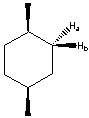
A) homotopic
B) enantiotopic
C) diastereotopic
D) mesotopic
E) none of these
A) homotopic
B) enantiotopic
C) diastereotopic
D) mesotopic
E) none of these

Question
Question
Protons Ha and Hb in the following compound are _________. 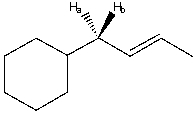
A) homotopic
B) enantiotopic
C) diastereotopic
D) mesotopic
E) none of these
A) homotopic
B) enantiotopic
C) diastereotopic
D) mesotopic
E) none of these
Question
Protons Ha and Hb in the following compound are _________. 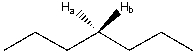
A) homotopic
B) enantiotopic
C) diastereotopic
D) mesotopic
E) none of these
A) homotopic
B) enantiotopic
C) diastereotopic
D) mesotopic
E) none of these
Question
Protons Ha and Hb in the following compound are _________. 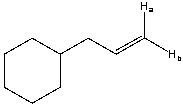
A) homotopic
B) enantiotopic
C) diastereotopic
D) mesotopic
E) none of these
A) homotopic
B) enantiotopic
C) diastereotopic
D) mesotopic
E) none of these
Question
Question
Question
Question
Protons Ha and Hb in the following compound are _________. 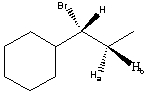
A) homotopic
B) enantiotopic
C) diastereotopic
D) mesotopic
E) none of these
A) homotopic
B) enantiotopic
C) diastereotopic
D) mesotopic
E) none of these
Question
Question
Protons Ha and Hb in the following compound are _________. 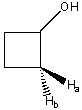
A) homotopic
B) enantiotopic
C) diastereotopic
D) mesotopic
E) none of these
A) homotopic
B) enantiotopic
C) diastereotopic
D) mesotopic
E) none of these
Question
Question
Question
Question
Question
Question
Question
Question
Question
Question
Question
How many signals would you expect in the 1H NMR spectrum of the following compound? 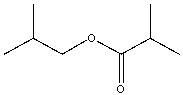
A) 4
B) 5
C) 6
D) 7
E) 8
A) 4
B) 5
C) 6
D) 7
E) 8
Question
Question
Protons Ha and Hb in the following compound are _________. 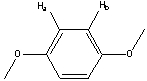
A) homotopic
B) enantiotopic
C) diastereotopic
D) mesotopic
E) none of these
A) homotopic
B) enantiotopic
C) diastereotopic
D) mesotopic
E) none of these
Question
How many signals would you expect in the 1H NMR spectrum of the following compound? 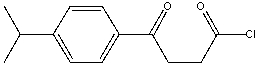
Question
Which of the following is the best prediction of the chemical shifts for the signals in the 1H NMR spectrum for the following compound? 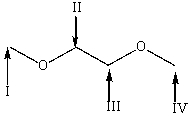
A) I=3.9 ppm, II=4.2 ppm, III=2.2 ppm, IV=3.4 ppm
B) I=3.4 ppm, II=2.2 ppm, III=2.2 ppm, IV=3.4 ppm
C) I=3.4 ppm, II=2.2 ppm, III=4.2 ppm, IV=3.4 ppm
D) I=3.4 ppm, II=4.2 ppm, III=4.2 ppm, IV=3.4 ppm
E) none of these
A) I=3.9 ppm, II=4.2 ppm, III=2.2 ppm, IV=3.4 ppm
B) I=3.4 ppm, II=2.2 ppm, III=2.2 ppm, IV=3.4 ppm
C) I=3.4 ppm, II=2.2 ppm, III=4.2 ppm, IV=3.4 ppm
D) I=3.4 ppm, II=4.2 ppm, III=4.2 ppm, IV=3.4 ppm
E) none of these
Question
Which of the indicated protons in the following compound would appear most downfield in the 1H NMR spectrum? 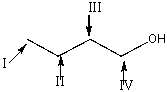
A) I
B) II
C) III
D) IV
A) I
B) II
C) III
D) IV
Question
How many signals would you expect in the 1H NMR spectrum of the following compound? 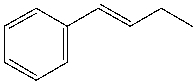
A) 4
B) 5
C) 6
D) 7
E) 8
A) 4
B) 5
C) 6
D) 7
E) 8
Question
Which of the indicated protons in the following compound would appear most downfield in the 1H NMR spectrum? 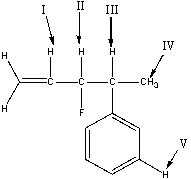
A) I
B) II
C) III
D) IV
E) V
A) I
B) II
C) III
D) IV
E) V
Question
Question
Which of the following is the best prediction of the chemical shifts for the signals in the 1H NMR spectrum for the following compound? 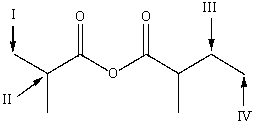
A) I=0.9 ppm, II=2.7 ppm, III=1.2 ppm, IV=0.9 ppm
B) I=1.1 ppm, II=3.2 ppm, III=1.4 ppm, IV=0.9 ppm
C) I=0.9 ppm, II=1.7 ppm, III=1.2 ppm, IV=1.1 ppm
D) I=0.9 ppm, II=1.9 ppm, III=3.4 ppm, IV=0.9 ppm
E) none of these
A) I=0.9 ppm, II=2.7 ppm, III=1.2 ppm, IV=0.9 ppm
B) I=1.1 ppm, II=3.2 ppm, III=1.4 ppm, IV=0.9 ppm
C) I=0.9 ppm, II=1.7 ppm, III=1.2 ppm, IV=1.1 ppm
D) I=0.9 ppm, II=1.9 ppm, III=3.4 ppm, IV=0.9 ppm
E) none of these
Question
How many signals would you expect in the 1H NMR spectrum of the following compound? 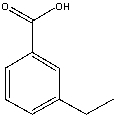
A) 4
B) 5
C) 6
D) 7
E) 9
A) 4
B) 5
C) 6
D) 7
E) 9
Question
Which of the following is the best prediction of the chemical shifts for the signals in the 1H NMR spectrum for the following compound? 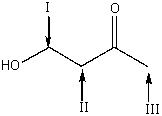
A) I=3.7 ppm, II=2.7 ppm, III=1.9 ppm
B) I=3.7 ppm, II=2.2 ppm, III=1.9 ppm
C) I=3.9 ppm, II=2.7 ppm, III=1.9 ppm
D) I=3.9 ppm, II=2.2 ppm, III=2.4 ppm
E) none of these
A) I=3.7 ppm, II=2.7 ppm, III=1.9 ppm
B) I=3.7 ppm, II=2.2 ppm, III=1.9 ppm
C) I=3.9 ppm, II=2.7 ppm, III=1.9 ppm
D) I=3.9 ppm, II=2.2 ppm, III=2.4 ppm
E) none of these
Question
Protons Ha and Hb in the following compound are _________. 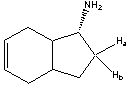
A) homotopic
B) enantiotopic
C) diastereotopic
D) mesotopic
E) none of these
A) homotopic
B) enantiotopic
C) diastereotopic
D) mesotopic
E) none of these
Question
Question
Which of the indicated protons in the following compound would appear most upfield in the 1H NMR spectrum? 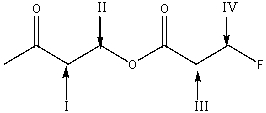
A) I
B) II
C) III
D) IV
E) I & III
A) I
B) II
C) III
D) IV
E) I & III
Question
How many signals would you expect in the 1H NMR spectrum of the following compound? 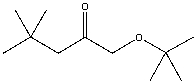
Question
Question
How many signals would you expect in the 1H NMR spectrum of the following compound? 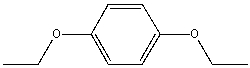
Question
Which of the following is the best prediction of the chemical shifts for the signals in the 1H NMR spectrum for the following compound? 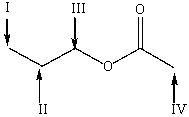
A) I=0.9 ppm, II=1.7 ppm, III=3.9 ppm, IV=2.4 ppm
B) I=0.9 ppm, II=1.2 ppm, III=3.7 ppm, IV=1.9 ppm
C) I=0.9 ppm, II=1.7 ppm, III=3.4 ppm, IV=2.4 ppm
D) I=0.9 ppm, II=1.7 ppm, III=3.4 ppm, IV=1.9 ppm
E) none of these
A) I=0.9 ppm, II=1.7 ppm, III=3.9 ppm, IV=2.4 ppm
B) I=0.9 ppm, II=1.2 ppm, III=3.7 ppm, IV=1.9 ppm
C) I=0.9 ppm, II=1.7 ppm, III=3.4 ppm, IV=2.4 ppm
D) I=0.9 ppm, II=1.7 ppm, III=3.4 ppm, IV=1.9 ppm
E) none of these
Question
Determine the multiplicity of each signal in the expected 1H NMR spectrum of the following compound. 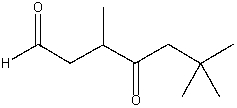
Question
Determine the multiplicity of each signal in the expected 1H NMR spectrum of the following compound. 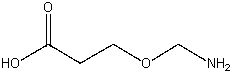
Question
Predict the chemical shifts for the signals in the 1H NMR spectrum for the following compound. 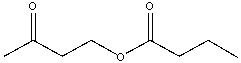
Question
Which of the following is the maximum multiplicity observed for Hb protons in the following compound? Assume that Jab and Jbc values are different. 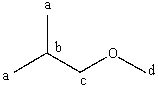
A) 9
B) 12
C) 21
D) 24
E) none of these
A) 9
B) 12
C) 21
D) 24
E) none of these
Question
Question
Determine the multiplicity of each signal in the expected 1H NMR spectrum of the following compound. 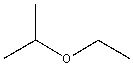
Question
Determine the multiplicity of each signal in the expected 1H NMR spectrum of the following compound. 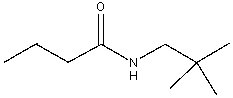
Question
Which of the following compounds will display only three singlets in its 1H NMR spectrum? 
A) I
B) II
C) III
D) IV
E) V
A) I
B) II
C) III
D) IV
E) V
Question
Question
Question
Determine the multiplicity of each signal in the expected 1H NMR spectrum of the following compound. 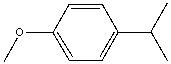
Question
Question
Which of the following protons appear most upfield in the 1H NMR spectrum? 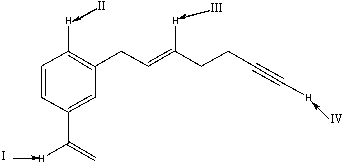
A) I
B) II
C) III
D) IV
E) none of these
A) I
B) II
C) III
D) IV
E) none of these
Question
Question
Which of the following is the maximum multiplicity observed for Hc protons in the following compound? Assume that Jcd and Jcb values are different. 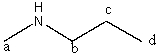
A) 5
B) 6
C) 8
D) 12
E) none of these
A) 5
B) 6
C) 8
D) 12
E) none of these
Question
Which of the following compounds will display only two singlets in its 1H NMR spectrum? 
A) I
B) II
C) III
D) IV
E) V
A) I
B) II
C) III
D) IV
E) V
Question
Predict the chemical shifts for the signals in the 1H NMR spectrum for the following compound. 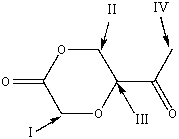
Question
Determine the multiplicity of each signal in the expected 1H NMR spectrum of the following compound. 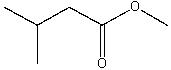
Question
Question
Question
Determine the multiplicity and predict the chemical shifts of each signal in the expected 1H NMR spectrum of the following compound. 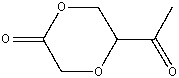
Question
Question
How would you use 1H NMR spectroscopy to distinguish between the following compounds? 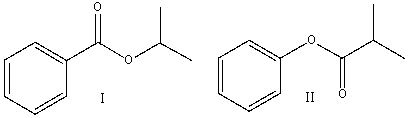
Question
How would you use 1H NMR spectroscopy to distinguish between the following compounds? 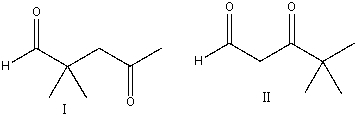
A) I=3 & II=2 signals
B) I=4 & II=3 signals
C) I=5 & II=3 signals
D) none of these
A) I=3 & II=2 signals
B) I=4 & II=3 signals
C) I=5 & II=3 signals
D) none of these
Question
How many signals would you expect to find in the 13C NMR spectrum of the following compound? 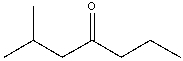
A) 6
B) 7
C) 8
D) 9
E) none of these
A) 6
B) 7
C) 8
D) 9
E) none of these
Question
How many signals would you expect to find in the 13C NMR spectrum of the following compound? 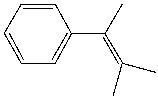
A) 6
B) 7
C) 8
D) 9
E) none of these
A) 6
B) 7
C) 8
D) 9
E) none of these
Question
Question
Question
Question
Question
How many signals would you expect to find in the 13C NMR spectrum of the following compound? 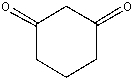
A) 2
B) 3
C) 4
D) 5
E) none of these
A) 2
B) 3
C) 4
D) 5
E) none of these
Question
Question
How would you use 1H NMR spectroscopy to distinguish between the following compounds? 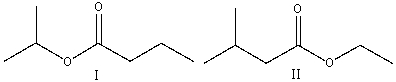
Question
Determine the multiplicity and predict the chemical shifts of each signal in the expected 1H NMR spectrum of the following compound. 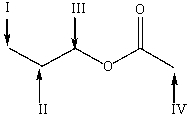
Question
Determine the multiplicity and predict the chemical shifts of each signal in the expected 1H NMR spectrum of the following compound. 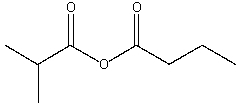
Question
A compound with a molecular formula C9H12 has the following 1H NMR spectrum. Which of the following structures is consistent with this spectrum? 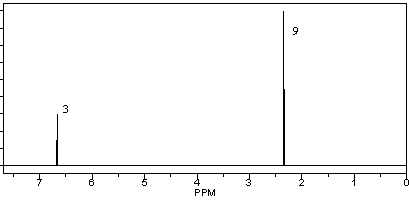
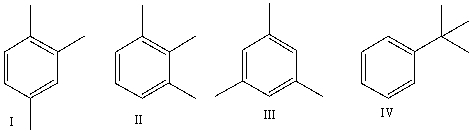
A) I
B) II
C) III
D) IV
E) none of these
A) I
B) II
C) III
D) IV
E) none of these
Question
Question
How many signals would you expect to find in the 13C NMR spectrum of the following compounds? 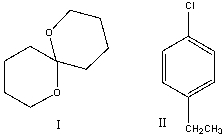
A) I-5, II-8
B) I-3, II-6
C) I-4, II-8
D) I-5, II-6
E) none of these
A) I-5, II-8
B) I-3, II-6
C) I-4, II-8
D) I-5, II-6
E) none of these
Question
Question
How would you use 1H NMR spectroscopy to distinguish between the following compounds? 

Unlock Deck
Sign up to unlock the cards in this deck!
Unlock Deck
Unlock Deck
1/114

Play

Full screen (f)
Deck 16: Nuclear Magnetic Resonance Spectroscopy
1
Protons Ha and Hb in the following compound are _________.
A) homotopic
B) enantiotopic
C) diastereotopic
D) mesotopic
E) none of these
A) homotopic
B) enantiotopic
C) diastereotopic
D) mesotopic
E) none of these
diastereotopic
2
Which of the following can not be probed by an NMR spectrometer?
A) nucleus with odd number of protons & odd number of neutrons
B) nucleus with odd number of protons &even number of neutrons
C) nucleus with even number of protons & odd number of neutrons
D) nucleus with even number of protons & even number of neutrons
E) none of these
A) nucleus with odd number of protons & odd number of neutrons
B) nucleus with odd number of protons &even number of neutrons
C) nucleus with even number of protons & odd number of neutrons
D) nucleus with even number of protons & even number of neutrons
E) none of these
nucleus with even number of protons & even number of neutrons
3
Protons Ha and Hb in the following compound are _________.
A) homotopic
B) enantiotopic
C) diastereotopic
D) mesotopic
E) none of these
A) homotopic
B) enantiotopic
C) diastereotopic
D) mesotopic
E) none of these
enantiotopic
4
Protons Ha and Hb in the following compound are _________.
A) homotopic
B) enantiotopic
C) diastereotopic
D) mesotopic
E) none of these
A) homotopic
B) enantiotopic
C) diastereotopic
D) mesotopic
E) none of these
Unlock Deck
Unlock for access to all 114 flashcards in this deck.
Unlock Deck
k this deck
5
Protons Ha and Hb in the following compound are _________.
A) homotopic
B) enantiotopic
C) diastereotopic
D) mesotopic
E) none of these
A) homotopic
B) enantiotopic
C) diastereotopic
D) mesotopic
E) none of these
Unlock Deck
Unlock for access to all 114 flashcards in this deck.
Unlock Deck
k this deck
6
The strength of the magnetic field is a determining factor for the range of _______that must be used for NMR spectrometer.
A) temperature
B) frequencies
C) tesla
D) spin states
E) none of these
A) temperature
B) frequencies
C) tesla
D) spin states
E) none of these
Unlock Deck
Unlock for access to all 114 flashcards in this deck.
Unlock Deck
k this deck
7
_______ protons experience a net magnetic field strength that is higher than the _____ protons.
A) Deshielded, shielded
B) Shielded, deshielded
C) Paramagnetic, diamagnetic
D) Shielded, diamagnetic
E) none of these
A) Deshielded, shielded
B) Shielded, deshielded
C) Paramagnetic, diamagnetic
D) Shielded, diamagnetic
E) none of these
Unlock Deck
Unlock for access to all 114 flashcards in this deck.
Unlock Deck
k this deck
8
How many nuclear spin states are possible for the 1H nucleus?
A) 1
B) 2
C) 4
D) 5
E) none of these
A) 1
B) 2
C) 4
D) 5
E) none of these
Unlock Deck
Unlock for access to all 114 flashcards in this deck.
Unlock Deck
k this deck
9
Protons Ha and Hb in the following compound are _________.
A) homotopic
B) enantiotopic
C) diastereotopic
D) mesotopic
E) none of these
A) homotopic
B) enantiotopic
C) diastereotopic
D) mesotopic
E) none of these
Unlock Deck
Unlock for access to all 114 flashcards in this deck.
Unlock Deck
k this deck
10
Which of the following type of protons are chemically equivalent?
A) homotopic
B) enantiotopic
C) diastereotopic
D) A & B
E) B & C
A) homotopic
B) enantiotopic
C) diastereotopic
D) A & B
E) B & C
Unlock Deck
Unlock for access to all 114 flashcards in this deck.
Unlock Deck
k this deck
11
Protons Ha and Hb in the following compound are _________.
A) homotopic
B) enantiotopic
C) diastereotopic
D) mesotopic
E) none of these
A) homotopic
B) enantiotopic
C) diastereotopic
D) mesotopic
E) none of these
Unlock Deck
Unlock for access to all 114 flashcards in this deck.
Unlock Deck
k this deck
12
Which of the following type of protons are chemically non-equivalent?
A) homotopic
B) enantiotopic
C) diastereotopic
D) A & B
E) B & C
A) homotopic
B) enantiotopic
C) diastereotopic
D) A & B
E) B & C
Unlock Deck
Unlock for access to all 114 flashcards in this deck.
Unlock Deck
k this deck
13
Which of the following is true about the location of signals in a 1H NMR spectrum?
A) it indicates the number of neighboring protons
B) it indicates the electronic environment of neighboring protons
C) it indicates the number of different protons
D) it indicates the electronic environment of absorbing protons
E) it indicates the number of protons in the signal
A) it indicates the number of neighboring protons
B) it indicates the electronic environment of neighboring protons
C) it indicates the number of different protons
D) it indicates the electronic environment of absorbing protons
E) it indicates the number of protons in the signal
Unlock Deck
Unlock for access to all 114 flashcards in this deck.
Unlock Deck
k this deck
14
Which of the following is true about the shape (multiplicity) of the signal in a 1H NMR spectrum?
A) it indicates the number of neighboring protons
B) it indicates the electronic environment of neighboring protons
C) it indicates the number of different protons
D) it indicates the electronic environment of absorbing protons
E) it indicates the number of protons in the signal
A) it indicates the number of neighboring protons
B) it indicates the electronic environment of neighboring protons
C) it indicates the number of different protons
D) it indicates the electronic environment of absorbing protons
E) it indicates the number of protons in the signal
Unlock Deck
Unlock for access to all 114 flashcards in this deck.
Unlock Deck
k this deck
15
Which of the following is true about the area under each signal in a 1H NMR spectrum?
A) it indicates the number of neighboring protons
B) it indicates the electronic environment of neighboring protons
C) it indicates the number of different protons
D) it indicates the electronic environment of absorbing protons
E) it indicates the relative number of protons in the signal
A) it indicates the number of neighboring protons
B) it indicates the electronic environment of neighboring protons
C) it indicates the number of different protons
D) it indicates the electronic environment of absorbing protons
E) it indicates the relative number of protons in the signal
Unlock Deck
Unlock for access to all 114 flashcards in this deck.
Unlock Deck
k this deck
16
Which of the following is not a common solvent used for acquiring a 1H NMR spectrum?
A) CDCl3
B) CCl4
C) CD3CN
D) CH3OH
E) D2O
A) CDCl3
B) CCl4
C) CD3CN
D) CH3OH
E) D2O
Unlock Deck
Unlock for access to all 114 flashcards in this deck.
Unlock Deck
k this deck
17
Which of the following electromagnetic radiation is used in NMR spectroscopy?
A) UV
B) IR
C) visible
D) -rays
E) radio wave
A) UV
B) IR
C) visible
D) -rays
E) radio wave
Unlock Deck
Unlock for access to all 114 flashcards in this deck.
Unlock Deck
k this deck
18
Which of the following is true about the relationship between the energy gap ( E) between the spin states for a 1H nucleus and the strength of the external magnetic field?.
A) they are inversely proportional
B) they are directly proportional
C) there is no relationship
D) the magnetic field is slightly less
E) none of these
A) they are inversely proportional
B) they are directly proportional
C) there is no relationship
D) the magnetic field is slightly less
E) none of these
Unlock Deck
Unlock for access to all 114 flashcards in this deck.
Unlock Deck
k this deck
19
Which of the following is true about the number of signals in a 1H NMR spectrum?
A) it indicates the number of neighboring protons
B) it indicates the electronic environment of neighboring protons
C) it indicates the number of different kinds of protons
D) it indicates the electronic environment of absorbing protons
E) it indicates the number of protons in the signal
A) it indicates the number of neighboring protons
B) it indicates the electronic environment of neighboring protons
C) it indicates the number of different kinds of protons
D) it indicates the electronic environment of absorbing protons
E) it indicates the number of protons in the signal
Unlock Deck
Unlock for access to all 114 flashcards in this deck.
Unlock Deck
k this deck
20
_______ protons experience a net magnetic field strength that is smaller than the applied magnetic field.
A) Deshielded
B) Shielded
C) Paramagnetic
D) Diamagnetic
E) none of these
A) Deshielded
B) Shielded
C) Paramagnetic
D) Diamagnetic
E) none of these
Unlock Deck
Unlock for access to all 114 flashcards in this deck.
Unlock Deck
k this deck
21
How many signals would you expect in the 1H NMR spectrum of CH3OCH2CH2OCH3?
A) 1
B) 2
C) 3
D) 4
E) 5
A) 1
B) 2
C) 3
D) 4
E) 5
Unlock Deck
Unlock for access to all 114 flashcards in this deck.
Unlock Deck
k this deck
22
How many signals would you expect in the 1H NMR spectrum of the following compound?
A) 4
B) 5
C) 6
D) 7
E) 8
A) 4
B) 5
C) 6
D) 7
E) 8
Unlock Deck
Unlock for access to all 114 flashcards in this deck.
Unlock Deck
k this deck
23
How many signals would you expect in the 1H NMR spectrum of (CH3)2CHCH2CH2CH3?
A) 1
B) 2
C) 3
D) 4
E) 5
A) 1
B) 2
C) 3
D) 4
E) 5
Unlock Deck
Unlock for access to all 114 flashcards in this deck.
Unlock Deck
k this deck
24
Protons Ha and Hb in the following compound are _________.
A) homotopic
B) enantiotopic
C) diastereotopic
D) mesotopic
E) none of these
A) homotopic
B) enantiotopic
C) diastereotopic
D) mesotopic
E) none of these
Unlock Deck
Unlock for access to all 114 flashcards in this deck.
Unlock Deck
k this deck
25
How many signals would you expect in the 1H NMR spectrum of the following compound?
Unlock Deck
Unlock for access to all 114 flashcards in this deck.
Unlock Deck
k this deck
26
Which of the following is the best prediction of the chemical shifts for the signals in the 1H NMR spectrum for the following compound?
A) I=3.9 ppm, II=4.2 ppm, III=2.2 ppm, IV=3.4 ppm
B) I=3.4 ppm, II=2.2 ppm, III=2.2 ppm, IV=3.4 ppm
C) I=3.4 ppm, II=2.2 ppm, III=4.2 ppm, IV=3.4 ppm
D) I=3.4 ppm, II=4.2 ppm, III=4.2 ppm, IV=3.4 ppm
E) none of these
A) I=3.9 ppm, II=4.2 ppm, III=2.2 ppm, IV=3.4 ppm
B) I=3.4 ppm, II=2.2 ppm, III=2.2 ppm, IV=3.4 ppm
C) I=3.4 ppm, II=2.2 ppm, III=4.2 ppm, IV=3.4 ppm
D) I=3.4 ppm, II=4.2 ppm, III=4.2 ppm, IV=3.4 ppm
E) none of these
Unlock Deck
Unlock for access to all 114 flashcards in this deck.
Unlock Deck
k this deck
27
Which of the indicated protons in the following compound would appear most downfield in the 1H NMR spectrum?
A) I
B) II
C) III
D) IV
A) I
B) II
C) III
D) IV
Unlock Deck
Unlock for access to all 114 flashcards in this deck.
Unlock Deck
k this deck
28
How many signals would you expect in the 1H NMR spectrum of the following compound?
A) 4
B) 5
C) 6
D) 7
E) 8
A) 4
B) 5
C) 6
D) 7
E) 8
Unlock Deck
Unlock for access to all 114 flashcards in this deck.
Unlock Deck
k this deck
29
Which of the indicated protons in the following compound would appear most downfield in the 1H NMR spectrum?
A) I
B) II
C) III
D) IV
E) V
A) I
B) II
C) III
D) IV
E) V
Unlock Deck
Unlock for access to all 114 flashcards in this deck.
Unlock Deck
k this deck
30
How many signals would you expect in the 1H NMR spectrum of HOCH2CH2CH2CH2OH?
A) 1
B) 2
C) 3
D) 4
E) 5
A) 1
B) 2
C) 3
D) 4
E) 5
Unlock Deck
Unlock for access to all 114 flashcards in this deck.
Unlock Deck
k this deck
31
Which of the following is the best prediction of the chemical shifts for the signals in the 1H NMR spectrum for the following compound?
A) I=0.9 ppm, II=2.7 ppm, III=1.2 ppm, IV=0.9 ppm
B) I=1.1 ppm, II=3.2 ppm, III=1.4 ppm, IV=0.9 ppm
C) I=0.9 ppm, II=1.7 ppm, III=1.2 ppm, IV=1.1 ppm
D) I=0.9 ppm, II=1.9 ppm, III=3.4 ppm, IV=0.9 ppm
E) none of these
A) I=0.9 ppm, II=2.7 ppm, III=1.2 ppm, IV=0.9 ppm
B) I=1.1 ppm, II=3.2 ppm, III=1.4 ppm, IV=0.9 ppm
C) I=0.9 ppm, II=1.7 ppm, III=1.2 ppm, IV=1.1 ppm
D) I=0.9 ppm, II=1.9 ppm, III=3.4 ppm, IV=0.9 ppm
E) none of these
Unlock Deck
Unlock for access to all 114 flashcards in this deck.
Unlock Deck
k this deck
32
How many signals would you expect in the 1H NMR spectrum of the following compound?
A) 4
B) 5
C) 6
D) 7
E) 9
A) 4
B) 5
C) 6
D) 7
E) 9
Unlock Deck
Unlock for access to all 114 flashcards in this deck.
Unlock Deck
k this deck
33
Which of the following is the best prediction of the chemical shifts for the signals in the 1H NMR spectrum for the following compound?
A) I=3.7 ppm, II=2.7 ppm, III=1.9 ppm
B) I=3.7 ppm, II=2.2 ppm, III=1.9 ppm
C) I=3.9 ppm, II=2.7 ppm, III=1.9 ppm
D) I=3.9 ppm, II=2.2 ppm, III=2.4 ppm
E) none of these
A) I=3.7 ppm, II=2.7 ppm, III=1.9 ppm
B) I=3.7 ppm, II=2.2 ppm, III=1.9 ppm
C) I=3.9 ppm, II=2.7 ppm, III=1.9 ppm
D) I=3.9 ppm, II=2.2 ppm, III=2.4 ppm
E) none of these
Unlock Deck
Unlock for access to all 114 flashcards in this deck.
Unlock Deck
k this deck
34
Protons Ha and Hb in the following compound are _________.
A) homotopic
B) enantiotopic
C) diastereotopic
D) mesotopic
E) none of these
A) homotopic
B) enantiotopic
C) diastereotopic
D) mesotopic
E) none of these
Unlock Deck
Unlock for access to all 114 flashcards in this deck.
Unlock Deck
k this deck
35
______is used as a reference for recording NMR spectra and is assigned a chemical shift value of zero.
Unlock Deck
Unlock for access to all 114 flashcards in this deck.
Unlock Deck
k this deck
36
Which of the indicated protons in the following compound would appear most upfield in the 1H NMR spectrum?
A) I
B) II
C) III
D) IV
E) I & III
A) I
B) II
C) III
D) IV
E) I & III
Unlock Deck
Unlock for access to all 114 flashcards in this deck.
Unlock Deck
k this deck
37
How many signals would you expect in the 1H NMR spectrum of the following compound?
Unlock Deck
Unlock for access to all 114 flashcards in this deck.
Unlock Deck
k this deck
38
How many signals would you expect in the 1H NMR spectrum of CH3OCH2CH3?
A) 1
B) 2
C) 3
D) 4
E) 5
A) 1
B) 2
C) 3
D) 4
E) 5
Unlock Deck
Unlock for access to all 114 flashcards in this deck.
Unlock Deck
k this deck
39
How many signals would you expect in the 1H NMR spectrum of the following compound?
Unlock Deck
Unlock for access to all 114 flashcards in this deck.
Unlock Deck
k this deck
40
Which of the following is the best prediction of the chemical shifts for the signals in the 1H NMR spectrum for the following compound?
A) I=0.9 ppm, II=1.7 ppm, III=3.9 ppm, IV=2.4 ppm
B) I=0.9 ppm, II=1.2 ppm, III=3.7 ppm, IV=1.9 ppm
C) I=0.9 ppm, II=1.7 ppm, III=3.4 ppm, IV=2.4 ppm
D) I=0.9 ppm, II=1.7 ppm, III=3.4 ppm, IV=1.9 ppm
E) none of these
A) I=0.9 ppm, II=1.7 ppm, III=3.9 ppm, IV=2.4 ppm
B) I=0.9 ppm, II=1.2 ppm, III=3.7 ppm, IV=1.9 ppm
C) I=0.9 ppm, II=1.7 ppm, III=3.4 ppm, IV=2.4 ppm
D) I=0.9 ppm, II=1.7 ppm, III=3.4 ppm, IV=1.9 ppm
E) none of these
Unlock Deck
Unlock for access to all 114 flashcards in this deck.
Unlock Deck
k this deck
41
Determine the multiplicity of each signal in the expected 1H NMR spectrum of the following compound.
Unlock Deck
Unlock for access to all 114 flashcards in this deck.
Unlock Deck
k this deck
42
Determine the multiplicity of each signal in the expected 1H NMR spectrum of the following compound.
Unlock Deck
Unlock for access to all 114 flashcards in this deck.
Unlock Deck
k this deck
43
Predict the chemical shifts for the signals in the 1H NMR spectrum for the following compound.
Unlock Deck
Unlock for access to all 114 flashcards in this deck.
Unlock Deck
k this deck
44
Which of the following is the maximum multiplicity observed for Hb protons in the following compound? Assume that Jab and Jbc values are different.
A) 9
B) 12
C) 21
D) 24
E) none of these
A) 9
B) 12
C) 21
D) 24
E) none of these
Unlock Deck
Unlock for access to all 114 flashcards in this deck.
Unlock Deck
k this deck
45
Which of the following compounds displays two triplets and a singlet in its 1H NMR spectrum?
A) CH3CH(OCH3)2
B) CH3OCH2CH2OCH3
C) CH3OCH2CH(OH)CH3
D) CH3OCH2CH2CH2CH2OCH3
E) none of these
A) CH3CH(OCH3)2
B) CH3OCH2CH2OCH3
C) CH3OCH2CH(OH)CH3
D) CH3OCH2CH2CH2CH2OCH3
E) none of these
Unlock Deck
Unlock for access to all 114 flashcards in this deck.
Unlock Deck
k this deck
46
Determine the multiplicity of each signal in the expected 1H NMR spectrum of the following compound.
Unlock Deck
Unlock for access to all 114 flashcards in this deck.
Unlock Deck
k this deck
47
Determine the multiplicity of each signal in the expected 1H NMR spectrum of the following compound.
Unlock Deck
Unlock for access to all 114 flashcards in this deck.
Unlock Deck
k this deck
48
Which of the following compounds will display only three singlets in its 1H NMR spectrum?
A) I
B) II
C) III
D) IV
E) V
A) I
B) II
C) III
D) IV
E) V
Unlock Deck
Unlock for access to all 114 flashcards in this deck.
Unlock Deck
k this deck
49
Determine the multiplicity of each signal in the expected 1H NMR spectrum of 2,3-dimethyl-2-pentanol.
Unlock Deck
Unlock for access to all 114 flashcards in this deck.
Unlock Deck
k this deck
50
How many 1H NMR signals does 2-chloro-3-methyl-2-butene exhibit?
A) 1
B) 2
C) 3
D) 4
E) none of these
A) 1
B) 2
C) 3
D) 4
E) none of these
Unlock Deck
Unlock for access to all 114 flashcards in this deck.
Unlock Deck
k this deck
51
Determine the multiplicity of each signal in the expected 1H NMR spectrum of the following compound.
Unlock Deck
Unlock for access to all 114 flashcards in this deck.
Unlock Deck
k this deck
52
Presence of which of the following protons is confirmed by D2O exchange?
A) OH
B) NH2
C) CH
D) A & B
E) none of these
A) OH
B) NH2
C) CH
D) A & B
E) none of these
Unlock Deck
Unlock for access to all 114 flashcards in this deck.
Unlock Deck
k this deck
53
Which of the following protons appear most upfield in the 1H NMR spectrum?
A) I
B) II
C) III
D) IV
E) none of these
A) I
B) II
C) III
D) IV
E) none of these
Unlock Deck
Unlock for access to all 114 flashcards in this deck.
Unlock Deck
k this deck
54
Aromatic protons produce signal in the range of 7-8 ppm, due to the _________effect of electrons
A) diamagnetic anisotropy
B) paramagnetic anisotropy
C) diamagnetic isotropy
D) paramagnetic isotropy
E) none of these
A) diamagnetic anisotropy
B) paramagnetic anisotropy
C) diamagnetic isotropy
D) paramagnetic isotropy
E) none of these
Unlock Deck
Unlock for access to all 114 flashcards in this deck.
Unlock Deck
k this deck
55
Which of the following is the maximum multiplicity observed for Hc protons in the following compound? Assume that Jcd and Jcb values are different.
A) 5
B) 6
C) 8
D) 12
E) none of these
A) 5
B) 6
C) 8
D) 12
E) none of these
Unlock Deck
Unlock for access to all 114 flashcards in this deck.
Unlock Deck
k this deck
56
Which of the following compounds will display only two singlets in its 1H NMR spectrum?
A) I
B) II
C) III
D) IV
E) V
A) I
B) II
C) III
D) IV
E) V
Unlock Deck
Unlock for access to all 114 flashcards in this deck.
Unlock Deck
k this deck
57
Predict the chemical shifts for the signals in the 1H NMR spectrum for the following compound.
Unlock Deck
Unlock for access to all 114 flashcards in this deck.
Unlock Deck
k this deck
58
Determine the multiplicity of each signal in the expected 1H NMR spectrum of the following compound.
Unlock Deck
Unlock for access to all 114 flashcards in this deck.
Unlock Deck
k this deck
59
Which of the following compounds will display a singlet, a triplet and a quartet in its 1H NMR spectrum?
A) 2-chloro-4-methylpentane
B) 3-chloro-2-methylpentane
C) 3-chloropentane
D) 1-chloro-2,2-dimethylbutane
E) 3-chloro-3-methylpentane
A) 2-chloro-4-methylpentane
B) 3-chloro-2-methylpentane
C) 3-chloropentane
D) 1-chloro-2,2-dimethylbutane
E) 3-chloro-3-methylpentane
Unlock Deck
Unlock for access to all 114 flashcards in this deck.
Unlock Deck
k this deck
60
Which of the following compounds gives a 1H NMR spectrum consisting of only a singlet?
A) 1,1-dichloropropane
B) 1,3-dichloropropane
C) 1,2-dichloropropane
D) 2,2-dichloropropane
E) none of these
A) 1,1-dichloropropane
B) 1,3-dichloropropane
C) 1,2-dichloropropane
D) 2,2-dichloropropane
E) none of these
Unlock Deck
Unlock for access to all 114 flashcards in this deck.
Unlock Deck
k this deck
61
Determine the multiplicity and predict the chemical shifts of each signal in the expected 1H NMR spectrum of the following compound.
Unlock Deck
Unlock for access to all 114 flashcards in this deck.
Unlock Deck
k this deck
62
The 1H NMR spectrum of ethaneamine(CH3CH2NH2) displays a singlet for the NH2 protons instead of a triplet. Explain why.
Unlock Deck
Unlock for access to all 114 flashcards in this deck.
Unlock Deck
k this deck
63
How would you use 1H NMR spectroscopy to distinguish between the following compounds?
Unlock Deck
Unlock for access to all 114 flashcards in this deck.
Unlock Deck
k this deck
64
How would you use 1H NMR spectroscopy to distinguish between the following compounds?
A) I=3 & II=2 signals
B) I=4 & II=3 signals
C) I=5 & II=3 signals
D) none of these
A) I=3 & II=2 signals
B) I=4 & II=3 signals
C) I=5 & II=3 signals
D) none of these
Unlock Deck
Unlock for access to all 114 flashcards in this deck.
Unlock Deck
k this deck
65
How many signals would you expect to find in the 13C NMR spectrum of the following compound?
A) 6
B) 7
C) 8
D) 9
E) none of these
A) 6
B) 7
C) 8
D) 9
E) none of these
Unlock Deck
Unlock for access to all 114 flashcards in this deck.
Unlock Deck
k this deck
66
How many signals would you expect to find in the 13C NMR spectrum of the following compound?
A) 6
B) 7
C) 8
D) 9
E) none of these
A) 6
B) 7
C) 8
D) 9
E) none of these
Unlock Deck
Unlock for access to all 114 flashcards in this deck.
Unlock Deck
k this deck
67
Propose a structure for a compound with molecular formula C8H14O3 that fits the following spectroscopic data.
IR:1820cm-1, 1760cm-1
1H NMR: 1.0 (triplet, I=6), 1.6 (sextet, I=4), 2.2 (triplet, I=4)
IR:1820cm-1, 1760cm-1
1H NMR: 1.0 (triplet, I=6), 1.6 (sextet, I=4), 2.2 (triplet, I=4)
Unlock Deck
Unlock for access to all 114 flashcards in this deck.
Unlock Deck
k this deck
68
The broadband decoupling in 13CNMR suppresses ________ splitting.
A) .12C-13C
B) .12C-1H
C). 13C-13C
D). 13C-1H
E) none of these
A) .12C-13C
B) .12C-1H
C). 13C-13C
D). 13C-1H
E) none of these
Unlock Deck
Unlock for access to all 114 flashcards in this deck.
Unlock Deck
k this deck
69
The off-resonance decoupling in 13CNMR allows for ________ splitting.
A). 12C-13C
B) .12C-1H
C) .13C-13C
D). 13C-1H
E) none of these
A). 12C-13C
B) .12C-1H
C) .13C-13C
D). 13C-1H
E) none of these
Unlock Deck
Unlock for access to all 114 flashcards in this deck.
Unlock Deck
k this deck
70
Propose a structure for a compound with molecular formula C10H12O that fits the following spectroscopic data.
IR:1680cm-1
1H NMR: 1.0 (triplet, I=3), 1.5 (sextet, I=2), 2.6 (triplet, I=2), 7.4 (triplet, I=2), 7.5 (triplet, I=1), 7.9 (doublet, I=2)
IR:1680cm-1
1H NMR: 1.0 (triplet, I=3), 1.5 (sextet, I=2), 2.6 (triplet, I=2), 7.4 (triplet, I=2), 7.5 (triplet, I=1), 7.9 (doublet, I=2)
Unlock Deck
Unlock for access to all 114 flashcards in this deck.
Unlock Deck
k this deck
71
How many signals would you expect to find in the 13C NMR spectrum of the following compound?
A) 2
B) 3
C) 4
D) 5
E) none of these
A) 2
B) 3
C) 4
D) 5
E) none of these
Unlock Deck
Unlock for access to all 114 flashcards in this deck.
Unlock Deck
k this deck
72
Propose a structure for a compound with molecular formula C5H11Cl, that fits the following spectroscopic data:
1H NMR: 0.9 (triplet, I=3), 1.3 (sextet, I=2), 1.5 (quartet, I=2), 1.6 (doublet, I=3), 3.6 (sextet, I=1)
1H NMR: 0.9 (triplet, I=3), 1.3 (sextet, I=2), 1.5 (quartet, I=2), 1.6 (doublet, I=3), 3.6 (sextet, I=1)
Unlock Deck
Unlock for access to all 114 flashcards in this deck.
Unlock Deck
k this deck
73
How would you use 1H NMR spectroscopy to distinguish between the following compounds?
Unlock Deck
Unlock for access to all 114 flashcards in this deck.
Unlock Deck
k this deck
74
Determine the multiplicity and predict the chemical shifts of each signal in the expected 1H NMR spectrum of the following compound.
Unlock Deck
Unlock for access to all 114 flashcards in this deck.
Unlock Deck
k this deck
75
Determine the multiplicity and predict the chemical shifts of each signal in the expected 1H NMR spectrum of the following compound.
Unlock Deck
Unlock for access to all 114 flashcards in this deck.
Unlock Deck
k this deck
76
A compound with a molecular formula C9H12 has the following 1H NMR spectrum. Which of the following structures is consistent with this spectrum?
A) I
B) II
C) III
D) IV
E) none of these
A) I
B) II
C) III
D) IV
E) none of these
Unlock Deck
Unlock for access to all 114 flashcards in this deck.
Unlock Deck
k this deck
77
The 1H NMR spectrum of alcohols displays a singlet for OH protons in the range of
2-5ppm. Explain how you will confirm the signal for OH protons..
2-5ppm. Explain how you will confirm the signal for OH protons..
Unlock Deck
Unlock for access to all 114 flashcards in this deck.
Unlock Deck
k this deck
78
How many signals would you expect to find in the 13C NMR spectrum of the following compounds?
A) I-5, II-8
B) I-3, II-6
C) I-4, II-8
D) I-5, II-6
E) none of these
A) I-5, II-8
B) I-3, II-6
C) I-4, II-8
D) I-5, II-6
E) none of these
Unlock Deck
Unlock for access to all 114 flashcards in this deck.
Unlock Deck
k this deck
79
The 1H NMR spectrum of 1-propanol displays a singlet for the OH proton instead of a triplet. Explain why.
Unlock Deck
Unlock for access to all 114 flashcards in this deck.
Unlock Deck
k this deck
80
How would you use 1H NMR spectroscopy to distinguish between the following compounds?
Unlock Deck
Unlock for access to all 114 flashcards in this deck.
Unlock Deck
k this deck
Unlock Deck
Unlock for access to all 114 flashcards in this deck.






