Ladybugs (Coccinella septempunctata) produce bad-tasting alkaloids as a chemical defense against predators. Researchers wanted to determine the costs of this chemical defense. They fed ladybugs either small or large amounts of food and measured alkaloid production and concentrations of carotenoids in the ladybug bodies. Carotenoids are the chemicals responsible for the red color of the ladybug, which advertises its unpalatability to predators. What do the results of this experiment, shown in the figure, indicate about costs of chemical defenses? 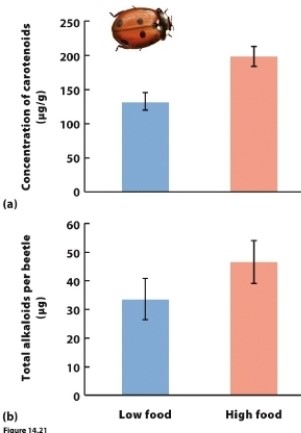
Correct Answer:

Verified
Q46: Which of the following chemical defenses makes
Q47: Which is a warning coloration?
A) Batesian coloration
B)
Q48: What does it mean when scientists set
Q49: The Indian gray mongoose (Herpestes edwardsii) is
Q50: Which of the following is an example
Q52: The nonpoisonous scarlet king snake (Lampropeltis elapsoides)
Q53: Describe the difference between Batesian Mimicry and
Q54: Alarm signals in primates are an example
Q55: The resemblance of poison dart frog species
Q56: The common wasp (Vespula vulgaris), the hover
Unlock this Answer For Free Now!
View this answer and more for free by performing one of the following actions

Scan the QR code to install the App and get 2 free unlocks

Unlock quizzes for free by uploading documents