Long-exposure color photographs of the night sky often show regions that glow red, such as the Rosette Nebula in Figure 13-8 in the text. This distinctive red color is caused by the 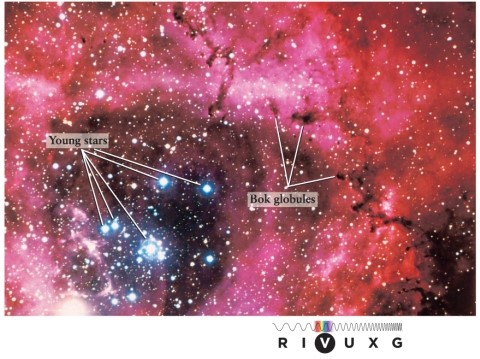
A) emission of red and infrared light by warm dust grains.
B) collective glow of many red giant stars in the region.
C) scattering of starlight by dust grains in the nebula.
D) ionization and subsequent recombination of hydrogen atoms.
Correct Answer:

Verified
Q137: T Tauri stars are at what stage
Q138: What is the relationship between a giant
Q139: A T Tauri star is a
A) protostar
Q140: What is a T Tauri star?
A) young
Q141: Where are emission nebulae (also known as
Q143: Why do many H II regions glow
Q144: A relatively fast star escapes an open
Q145: An astronomer plots the H-R diagram of
Q146: Which of these facts referring to stars
Q147: When plotted on an H-R diagram, the
Unlock this Answer For Free Now!
View this answer and more for free by performing one of the following actions

Scan the QR code to install the App and get 2 free unlocks

Unlock quizzes for free by uploading documents