A fixed amount of ideal gas goes through a process abc. In state a, the temperature of the gas is 152°C, its pressure is 1.25 atm, and it occupies a volume of 0.250 m3. It then undergoes an isothermal expansion to state b that doubles its volume, followed by an isobaric compression back to its original volume at state c. (Hint: First show this process on a pV diagram.) The ideal gas constant is 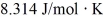 , and 1.00 atm = 1.01 × 10⁵ Pa.
(a) How many moles does this gas contain?
(b) What is the change in the internal energy of the gas between states a and b?
(c) What is the net work done on (or by) this gas during the entire process?
(d) What is the temperature of the gas in state c?
Correct Answer:

Verified
View Answer
Unlock this answer now
Get Access to more Verified Answers free of charge
Q17: How much work is done by 3.00
Q25: A system has a heat source supplying
Q38: During an adiabatic process,an ideal gas does
Q39: In an isochoric process,the internal (thermal)energy of
Q50: An ideal gas is allowed to expand
Q51: A cylinder contains 24.0 moles of an
Q79: The temperature of an ideal gas in
Q82: The figure shows the pV diagram for
Q86: A cylinder contains 1.2 moles of ideal
Q87: The pV diagram shown is for 7.50
Unlock this Answer For Free Now!
View this answer and more for free by performing one of the following actions

Scan the QR code to install the App and get 2 free unlocks

Unlock quizzes for free by uploading documents