A research scientist is comparing surface antigens X and Y that come from 2 different viruses. He obtains antibodies against antigen X from an animal previously exposed to the virus expressing this antigen. These antibodies are then attached to assay plates. Next, a fixed quantity of radiolabeled X antigen is added to the plates. Unlabeled Y antigens are then added in increasing concentrations to each plate, and the plates are washed to remove unbound antigens. Radioactivity is plotted as a function of Y antigen concentration, as shown in the graph below. 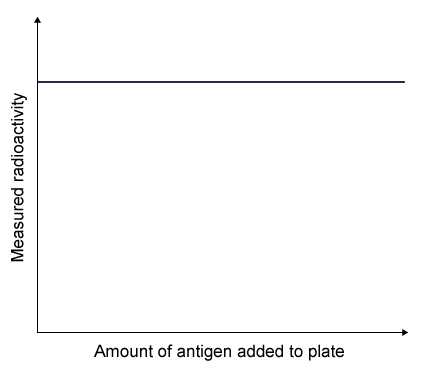 Which of the following best describes the results of this experiment?
A) Antigen X and antigen Y have no epitopes in common
B) Antigen X and antigen Y have the same epitopes
C) Antigen Y shares most of the epitopes of antigen X
D) Antigen Y shares some of the epitopes of antigen X
Correct Answer:

Verified
Q43: An 8-year-old male is brought to his
Q44: A 13-month-old boy is brought to the
Q45: A 68-year-old man comes to the office
Q46: A 37-year-old man comes to the emergency
Q47: An 18-month-old boy is evaluated for recurrent
Q49: A 57-year-old man underwent lung transplantation for
Q50: A 2-week-old infant is brought to the
Q51: A 68-year-old man comes to the emergency
Q52: A scientist is interested in the mechanisms
Q53: The immune response in a healthy 12-year-old
Unlock this Answer For Free Now!
View this answer and more for free by performing one of the following actions

Scan the QR code to install the App and get 2 free unlocks

Unlock quizzes for free by uploading documents