A 64-year-old woman is evaluated for progressive gait disturbance over the last 2 years. The patient feels her feet are "stuck on the floor" and that she is unsteady while walking. She also recently began experiencing urinary urgency and has wet herself several times due to difficulty getting to the bathroom on time. The patient stopped working 6 months ago because of difficulty concentrating, and she has also lost interest in her hobbies and social activities. She has had no tremor, visual changes, headaches, nausea, or vomiting. The patient has a remote history of closed traumatic brain injury. Vital signs are within normal limits. On physical examination, lower extremity tone and deep tendon reflexes are increased. Sensation to light touch, pain, and vibration are normal. The patient's gait is slow with small steps and a wide base. CT scan of the head is shown below. 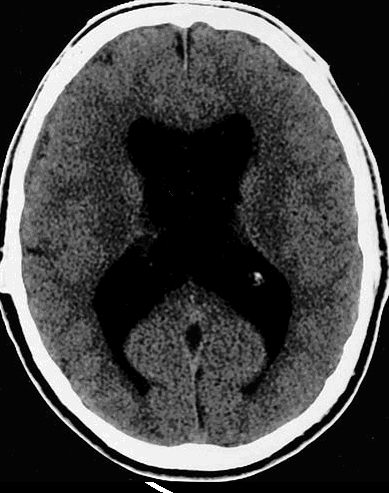 Which of the following is the most likely diagnosis?
A) Alzheimer disease
B) Frontotemporal dementia
C) Idiopathic Parkinson disease
D) Major depressive disorder
E) Normal pressure hydrocephalus
F) Obstructive hydrocephalus
G) Vitamin B12 deficiency
Correct Answer:

Verified
Q552: A 24-year-old man comes to the physician
Q553: A 43-year-old woman is brought to the
Q554: A 20-year-old woman comes to the physician
Q555: A 38-year-old woman comes to the emergency
Q556: An 11-month-old boy is brought to the
Q558: A 12-year-old boy is evaluated for chronic
Q559: A 56-year-old male with history of polycystic
Q560: Anterior horn cells of the spinal cord
Q561: A 21-year-old man comes to the office
Q562: A 75-year-old man is brought to the
Unlock this Answer For Free Now!
View this answer and more for free by performing one of the following actions

Scan the QR code to install the App and get 2 free unlocks

Unlock quizzes for free by uploading documents