A 43-year-old woman comes to the office due to progressive fatigue and intermittent pain in the hands, feet, and knee joints. The pain caused the patient to stop her daily yoga routine 2 months ago, and she has had difficulty performing daily household activities. She has had no fever, rash, or oral ulcers but frequently drinks water or chews gum due to her mouth feeling dry. The patient has no prior medical conditions and takes no medications or herbal supplements. She does not use tobacco, alcohol, or illicit drugs. Vital signs are within normal limits. Physical examination shows no muscle tenderness or joint swelling. The thyroid gland is normal to palpation. There is nontender diffuse swelling of the parotid glands. Laboratory evaluation reveals mild normocytic normochromic anemia and an elevated erythrocyte sedimentation rate. A salivary gland biopsy image representative of this patient's disease process is shown in the exhibit. 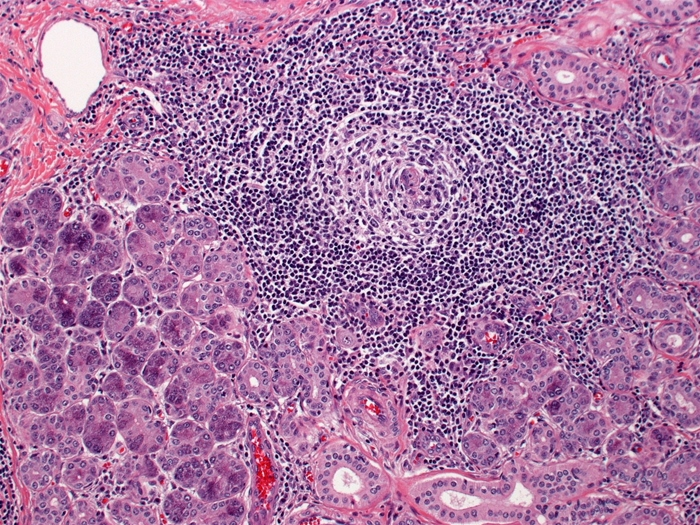 This patient is at greatest risk for which of the following due to her current condition?
A) Arterial and venous thrombosis
B) Atlantoaxial subluxation
C) Non-Hodgkin lymphoma
D) Renal arterial occlusion
E) Restrictive cardiomyopathy
Correct Answer:

Verified
Q806: A 30-year-old woman comes to the office
Q807: A 3-year-old boy is evaluated for delayed
Q808: A 45-year-old male sustains a traumatic injury
Q809: A 12-year-old girl comes to the office
Q810: A 61-year-old woman who recently immigrated to
Q812: A 48-year-old woman comes to the office
Q813: A 76-year-old man comes to the office
Q814: A 57-year-old man comes to the emergency
Q815: A 44-year-old man comes to the emergency
Q816: A 27-year-old man comes to the emergency
Unlock this Answer For Free Now!
View this answer and more for free by performing one of the following actions

Scan the QR code to install the App and get 2 free unlocks

Unlock quizzes for free by uploading documents