A 9-year-old boy with a history of sickle cell disease is brought to the office due to fatigue. The patient takes penicillin, hydroxyurea, and folic acid daily. Temperature is 37.1 C (98.8 F) , blood pressure is 102/68 mm Hg, pulse is 130/min, and respirations are 20/min. Examination shows conjunctival pallor. The oropharynx is clear and the neck is supple. The lungs are clear to auscultation bilaterally, and the abdomen is soft with normal bowel sounds; there is no organomegaly. Skin examination is unremarkable. Laboratory results are as follows: 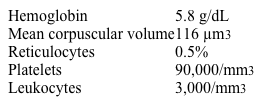 Which of the following is the most likely cause of this patient's findings?
A) Antibiotic-associated autoimmune hemolysis
B) Decreased methyl group donors involved in DNA synthesis
C) Loss of complement inhibition in hematopoietic stem cells
D) Medication-induced inhibition of a nucleic acid synthesis enzyme
E) Sequestration of cells in the reticuloendothelial system
Correct Answer:

Verified
Q219: A 62-year-old woman comes to the office
Q220: A 52-year-old woman comes to the office
Q221: An elderly patient is diagnosed with aggressive
Q222: A 24-year-old woman, gravida 1 para 0,
Q223: A 23-year-old woman comes to the emergency
Q225: A 51-year-old woman comes to the office
Q226: A 67-year-old man is evaluated for persistent
Q227: A 52-year-old man recovering from an acute
Q228: A 29-year-old woman comes to the office
Q229: A 23-year-old man is evaluated for excessive
Unlock this Answer For Free Now!
View this answer and more for free by performing one of the following actions

Scan the QR code to install the App and get 2 free unlocks

Unlock quizzes for free by uploading documents