A 20-year-old man is brought to the emergency department after being found confused and somnolent in his apartment. His face and upper body are covered with emesis. The patient was last seen with a normal appearance 4 hours ago. Medical history is significant for excessive alcohol use. Temperature is 36.8 C (98.2 F) , blood pressure is 120/88 mm Hg, pulse is 102/min, and respirations are 26/min. The patient is barely rousable and does not answer questions. Cardiopulmonary examination is normal. The abdomen is soft and nontender. There are no focal findings on neurologic examination. Laboratory results are as follows: 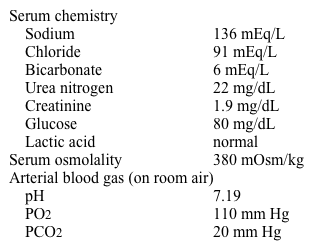 Acute poisoning is suspected and the patient is given an appropriate antidote. Which of the following is the most likely mechanism of action of the antidote?
A) Binds to the poison in the blood to form an inert complex
B) Competitively binds to cell surface receptors
C) Decreases the conversion rate of poison into a toxic metabolite
D) Prevents the gastrointestinal absorption of poison into the body
E) Promotes rapid enzyme-dependent detoxification in the liver
Correct Answer:

Verified
Q408: A 24-year-old man is brought to the
Q409: A 7-year-old boy is brought to the
Q410: A 57‐year‐old man is brought to the
Q411: A 17-year-old girl with a history of
Q412: A boy is delivered via spontaneous vaginal
Q414: A 40-year-old woman is brought to the
Q415: A 58-year-old man with type 2 diabetes
Q416: A 6-year-old girl is brought to the
Q417: A novel antiretroviral medication, Drug X, is
Q418: A 5-year-old boy is brought to the
Unlock this Answer For Free Now!
View this answer and more for free by performing one of the following actions

Scan the QR code to install the App and get 2 free unlocks

Unlock quizzes for free by uploading documents