A 78-year-old woman is brought to the emergency department with left hip pain after a mechanical fall at home. Her medical history includes knee osteoarthritis, hypertension, hyperlipidemia, and a myocardial infarction requiring bare-metal stent placement 14 months earlier. Her medications include acetaminophen, low-dose aspirin, and simvastatin. She had previously been prescribed a beta blocker but stopped taking it a couple months ago due to fatigue. At baseline, she is able to eat, dress, and use the bathroom without assistance. The patient is able to walk up only half a flight of stairs before stopping due to knee pain. She has no chest pain, shortness of breath, or palpitations. She is a lifetime nonsmoker.
The patient appears comfortable after intravenous morphine injection. Blood pressure is 154/80 mm Hg and pulse is 64/min. Oxygen saturation is 96% on room air. Physical examination shows an externally rotated and shortened left leg. No murmurs are heard on cardiac auscultation. Lungs are clear to auscultation.
Laboratory results are as follows: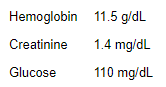 ECG demonstrates normal sinus rhythm with Q waves in the inferior leads. X-ray of the left hip and pelvis demonstrates a displaced intertrochanteric fracture. Transthoracic echocardiogram obtained 6 months earlier reveals inferior wall hypokinesis, a left ventricular ejection fraction of 50%, evidence of mild diastolic dysfunction, and no major valvular abnormalities.
Which of the following is the most appropriate next step in management of this patient?
A) Order pharmacologic stress testing
B) Proceed directly with surgical repair of hip fracture
C) Repeat transthoracic echocardiogram
D) Start ACE inhibitor therapy
E) Start beta blocker therapy
Correct Answer:

Verified
Q17: A 39-year-old woman comes to the emergency
Q18: A 68-year-old man comes to the emergency
Q19: A 73-year-old woman comes to the emergency
Q20: An 83-year-old woman is brought to the
Q21: A 45-year-old man with known HIV infection
Q23: A 65-year-old woman is brought to the
Q24: A 43-year-old man comes to the emergency
Q25: A 76-year-old man is brought to the
Q26: A 72-year-old man comes to the emergency
Q27: A 38-year-old man comes to the emergency
Unlock this Answer For Free Now!
View this answer and more for free by performing one of the following actions

Scan the QR code to install the App and get 2 free unlocks

Unlock quizzes for free by uploading documents