An 87-year-old man is brought to the emergency department with respiratory distress, confusion, and lethargy since this morning. The patient resides in a nursing home and is bedridden. He fell out of bed last night. He had no loss of consciousness prior to the fall or associated trauma, and he was verbally responsive and oriented after the fall. The patient's past medical history is significant for severe osteoarthritis in the knees and hips, hypertension, hyperlipidemia, and mild chronic obstructive pulmonary disease. His medications include amlodipine, simvastatin, and tiotropium.
His temperature is 36.7 C (98 F) , blood pressure is 148/90 mm Hg, pulse is 102/min, and respirations are 20/min. Oxygen saturation is 92% on room air. Physical examination shows a frail, elderly man in mild respiratory distress with accessory muscle usage. He is oriented to self only. Jugular venous pressure is estimated at 5 cm H2O. Cardiopulmonary examination reveals irregular tachycardia with bilateral crackles. There are no murmurs or third heart sound. The patient has significant pain with internal rotation of the left lower extremity. Skin examination shows many small (1- to 3-mm) purplish discolorations on the chest that do not blanch with pressure. The remainder of the examination is normal.
Laboratory results are as follows: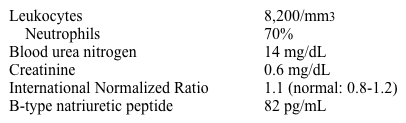
Chest x-ray reveals bibasilar and peripheral haziness. X-rays of the hip reveal left femoral neck fracture.
In addition to orthopedic evaluation, which of the following is the best next step in management of this patient?
A) Aggressive diuresis
B) Broad-spectrum antibiotics
C) Supportive care
D) Transesophageal echocardiogram
E) Venous Doppler of the lower extremities
Correct Answer:

Verified
Q189: A 62-year-old man comes to the emergency
Q190: A 53-year-old man comes to the emergency
Q191: A 62-year-old man comes to the emergency
Q192: A 34-year-old woman comes to the emergency
Q193: A 65-year-old man is brought to the
Q195: A 73-year-old man with a history of
Q196: A 23-year-old woman comes to the emergency
Q197: A 43-year-old man comes to the hospital
Q198: A 33-year-old man with a history of
Q199: An 18-year-old male has been brought to
Unlock this Answer For Free Now!
View this answer and more for free by performing one of the following actions

Scan the QR code to install the App and get 2 free unlocks

Unlock quizzes for free by uploading documents