A 16-year-old boy is brought to the office for evaluation of left thigh pain. The pain, which is dull and aching, has been present during most evenings for the last 2 months. Over the last month, the pain has worsened and is now interrupting his sleep but improves with ibuprofen. The patient has had no trauma, fever, or pain in other joints or extremities. He plays high school basketball and states the pain does not occur during or after practice or games. He has a history of moderate, persistent asthma for which he takes an inhaled corticosteroid daily and albuterol as needed; he has required a course of oral prednisone every 2-3 years since infancy. Vital signs are normal. The left lower extremity shows no redness or deformity. Mild tenderness is elicited with deep palpation of the left distal thigh. All extremities demonstrate normal muscle bulk and strength with full range of motion. Gait is normal. X-ray is shown in the exhibit. 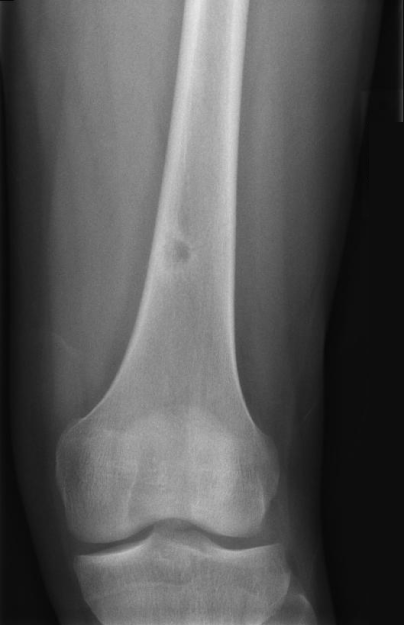 Which of the following is the most likely diagnosis in this patient?
A) Ewing sarcoma
B) Osteoid osteoma
C) Osteomyelitis
D) Osteosarcoma
E) Stress fracture
Correct Answer:

Verified
Q662: A 55-year-old woman comes to the hospital
Q663: A 35-year-old, previously healthy woman comes to
Q664: A 45-year-old man comes to the office
Q665: A 28-year-old man comes to the clinic
Q666: A 51-year-old woman comes to the clinic
Q668: A 2-year-old girl is brought to the
Q669: A 26-year-old woman comes to the office
Q670: A 7-year-old boy is brought to the
Q671: A 17-year-old girl comes to the clinic
Q672: A 50-year-old man comes to the office
Unlock this Answer For Free Now!
View this answer and more for free by performing one of the following actions

Scan the QR code to install the App and get 2 free unlocks

Unlock quizzes for free by uploading documents