A 32-year-old woman with a 13-year history of type 1 diabetes mellitus comes to the hospital with palpitations and shortness of breath. She has had these symptoms for the last several months, but they have worsened recently. The patient also has experienced anxiety, poor sleep, and unintentional weight loss that she attributes to drinking too much coffee at work. She drinks 2 8-oz cups of coffee daily and a glass of red wine on weekends. The patient's diabetes is managed with a regimen of insulin glargine and insulin lispro, and she has had good glycemic control in the past. However, in the last few months she has had rising home glucose readings and has required increasing insulin doses to maintain control. The patient has also had irregular menstrual periods, for which she was started on a combination estrogen-progesterone oral contraceptive pill 2 months ago. CT scan of the chest with contrast performed in the emergency department shows no evidence of pulmonary embolism, and the patient is admitted for additional evaluation. Following admission, she develops nausea and vomiting. Six hours later, the patient is found to be confused, diaphoretic, and agitated. Her temperature is 38.9 C (102 F) , blood pressure is 145/65 mm Hg, and pulse is 154/min. The chest is clear to auscultation. Examination of skin and abdomen is unremarkable. Laboratory results are as follows: 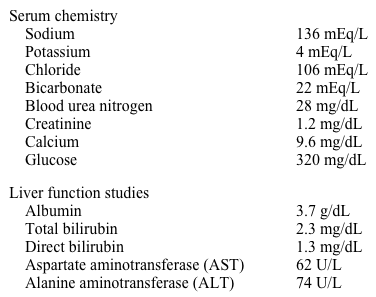 Which of the following is the most likely diagnosis?
A) Delayed iodine allergy
B) Diabetic ketoacidosis
C) Hepatic encephalopathy
D) Subsegmental pulmonary emboli
E) Thyrotoxic crisis
Correct Answer:

Verified
Q1051: A 25-year-old woman comes to the physician
Q1052: A 70-year-old man is brought to the
Q1053: A 23-year-old woman comes to the office
Q1054: A 58-year-old woman comes to the office
Q1055: A 22-year-old female presents with complaints of
Q1057: A 75-year-old man is brought to the
Q1058: A 55-year-old homeless man comes to the
Q1059: A 24-year-old woman comes to the clinic
Q1060: A 66-year-old man is brought to the
Q1061: A 36-year-old woman comes to the office
Unlock this Answer For Free Now!
View this answer and more for free by performing one of the following actions

Scan the QR code to install the App and get 2 free unlocks

Unlock quizzes for free by uploading documents