A 26-year-old woman comes to the emergency department with severe shortness of breath. She has a long history of asthma with periodic exacerbations. Her home medications include inhaled albuterol and fluticasone. The patient does not use tobacco, alcohol, or illicit drugs. Her temperature is 37.2 C (99 F) , blood pressure is 150/90 mm Hg, pulse is 110/min, and respirations are 24/min. On examination, she has moderate respiratory distress, prolonged expiratory phase, and diffuse wheezing. Complete blood count shows a hemoglobin of 13.8 g/dL and a leukocyte count of 9,200/mm3. Chest x-ray reveals hyperinflated lungs but no infiltrates. The patient is admitted and is given nebulized albuterol, intravenous methylprednisolone, and supplemental oxygen. The next day, her respiratory status is improved. Repeat vital signs show temperature of 37.2 C (99 F) , blood pressure of 130/80 mm Hg, pulse of 90/min, and respirations of 20/min. Some scattered bilateral wheezes are heard on lung auscultation. Changes in laboratory results are as follows: 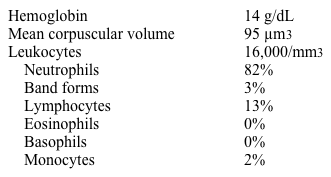 What is the most likely explanation for the abnormal laboratory findings in this patient?
A) Hypersensitivity reaction
B) Medication effect
C) Metabolic disorder
D) Myeloproliferative disorder
E) Pneumonia
Correct Answer:

Verified
Q1433: A 32-year-old man is intubated and mechanically
Q1434: A 60-year-old man comes to the office
Q1435: A 64-year-old man comes to the office
Q1436: A 68-year-old man comes to the office
Q1437: A 66-year-old man with a history of
Q1439: A 36-year-old primigravida at 24 weeks gestation
Q1440: A 52-year-old man is brought to the
Q1441: A 46-year-old man is hospitalized with severe
Q1442: A 34-year-old woman comes to the physician
Q1443: Walking for 6 minutes causes mild dyspnea,
Unlock this Answer For Free Now!
View this answer and more for free by performing one of the following actions

Scan the QR code to install the App and get 2 free unlocks

Unlock quizzes for free by uploading documents