A 33-year-old woman is brought to the emergency department after an episode of generalized tonic-clonic seizures. She is confused and unable to provide further history. Review of the medical record indicates that she has schizophrenia but stopped taking all her psychiatric medications 3 weeks ago. Temperature is 36.7 C (98 F) , blood pressure is 130/76 mm Hg, pulse is 80/min, and respirations are 14/min. Examination shows normal pupils. The patient's lungs are clear to auscultation and her heart sounds are normal. Her abdomen is soft. Extremities examination shows no edema. Laboratory results are as follows: 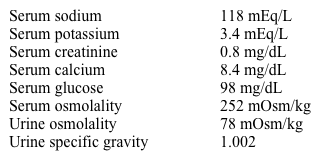 Which of the following is the most likely cause of this patient's electrolyte abnormalities?
A) Adrenal insufficiency
B) Fluoxetine-mediated hypothalamic antidiuretic hormone production
C) Idiopathic central diabetes insipidus
D) Idiopathic nephrogenic diabetes insipidus
E) Primary polydipsia
F) Syndrome of inappropriate antidiuretic hormone secretion due to lung cancer
Correct Answer:

Verified
Q1504: A 32-year-old man comes to the emergency
Q1505: A 56-year-old diabetic male is brought to the emergency
Q1506: A 55-year-old man comes to the office
Q1507: A 32-year-old woman is brought to the
Q1508: A 26-year-old man comes to the emergency
Q1510: A 19-year-old man comes to the emergency
Q1511: A 54-year-old woman comes to the emergency
Q1512: A 66-year-old man comes to the clinic
Q1513: A 33-year-old man comes to the office
Q1514: A 22-year-old man comes to the urgent
Unlock this Answer For Free Now!
View this answer and more for free by performing one of the following actions

Scan the QR code to install the App and get 2 free unlocks

Unlock quizzes for free by uploading documents