A 40-year-old woman comes to the office due to worsening gait disturbances over the past several months. The patient has had difficulty taking steps, as if her feet were stuck to the floor, and she feels unsteady while walking. She has had no falls, headache, vertigo, vision loss, or focal weakness or numbness. Three years ago, the patient had subarachnoid hemorrhage (SAH) from ruptured posterior communicating artery aneurysm, which was treated with endovascular coiling; she has had no recurrent bleeding. She has no other medical conditions and takes no medications. Vital signs are within normal limits. Physical examination shows flat affect and psychomotor retardation. The pupils are equal and reactive to light. The cranial nerves and funduscopic examination are unremarkable. Muscle strength, deep tendon reflexes, and sensation are normal throughout. The gait is slow and wide-based with small steps. MRI of the head is shown in the exhibit. 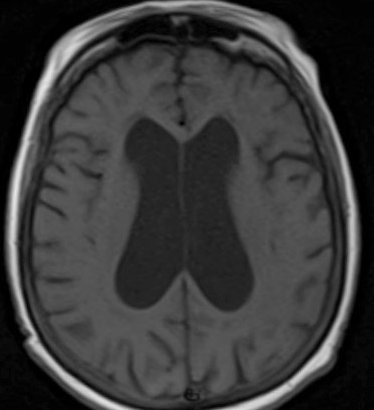 Lumbar puncture reveals normal opening pressure, and the cerebrospinal fluid cell counts and laboratory studies are within normal limits. Which of the following is the most likely cause of this patient's gait disturbance?
A) Aqueductal stenosis
B) Cerebellar degeneration
C) Normal pressure hydrocephalus
D) SAH-induced cerebral ischemia
E) Secondary parkinsonism
Correct Answer:

Verified
Q101: A 56-year-old man comes to the office
Q102: A 36-year-old woman comes to the office
Q103: A 68-year-old man is brought to the
Q104: A 5-year-old boy is brought to the
Q105: A 31-year-old woman comes to the office
Q107: A 79-year-old woman is brought to the
Q108: A 31-year-old man comes to the office
Q109: A 32-year-old man comes to the office
Q110: A 65-year-old woman comes to the office
Q111: A 74-year-old man is brought to the
Unlock this Answer For Free Now!
View this answer and more for free by performing one of the following actions

Scan the QR code to install the App and get 2 free unlocks

Unlock quizzes for free by uploading documents