A 3-year-old boy is brought to the clinic by his father due to fatigue and pallor. The patient was seen in another clinic a week ago for abdominal pain and diarrhea. A medication was prescribed to help slow the diarrhea, which resolved, but the patient has been much less playful over the last day. Temperature is 36.7 C (98 F) , blood pressure is 110/70 mm Hg, pulse is 120/min, and respirations are 20/min. Physical examination shows an uncomfortable-appearing child with scleral icterus. Cardiac examination shows mild tachycardia with no murmurs. A few ecchymoses are noted along the upper and lower extremities. There is pitting edema along bilateral lower extremities to the knees. The remainder of the examination is unremarkable. Laboratory results are as follows:  Peripheral blood smear results are shown in the image below:
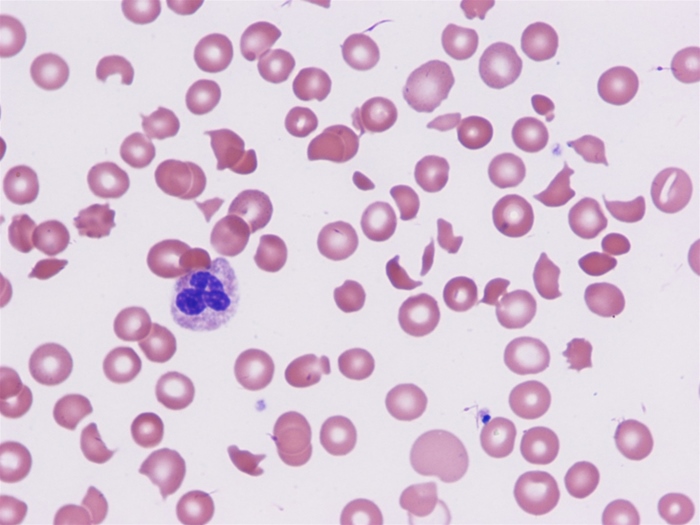 Which of the following is the most likely mechanism of this patient's condition?
A) Antibody-mediated destruction of red blood cells
B) Decreased erythropoietin production
C) Defective globin chain synthesis
D) Deficiency in an enzyme that protects cells from oxidative injury
E) Intravascular shearing of red blood cells
F) Systemic activation of coagulation system
Correct Answer:

Verified
Q436: A 5-day-old girl is brought to the
Q437: A 4-year-old boy is brought to the
Q438: A 2-day-old Asian girl is evaluated in
Q439: A 4-year-old girl is brought to the
Q440: A previously healthy 2-year-old girl is brought
Q442: A 12-year-old African American boy is brought
Q443: A 16-year-old boy is brought to the
Q444: A 5-year-old girl is brought to the
Q445: A 5-year-old boy is brought to the
Q446: A 6-year-old boy is brought to the
Unlock this Answer For Free Now!
View this answer and more for free by performing one of the following actions

Scan the QR code to install the App and get 2 free unlocks

Unlock quizzes for free by uploading documents