A 4-week-old girl is brought to the clinic for post-hospitalization follow-up. Her mother moved from Greece to the United States for a diplomatic position a few months prior to giving birth. The patient was born at term, and the mother's prenatal course and delivery were uncomplicated. Due to hyperbilirubinemia, the patient was in the nursery for 3 weeks of phototherapy. Bilirubin was normal at discharge. Since discharge, the girl's skin and eyes have remained yellow. Maternal blood type is AB, Rh-D positive. Infant blood type is A, Rh-D positive. The patient has been breastfeeding exclusively. Weight and length were at the 50th percentile at 2 weeks of age and remain at the 50th percentile today. Laboratory results today are as follows: 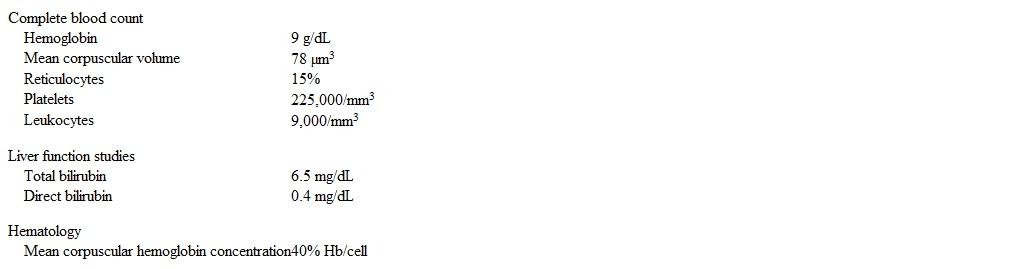 Which of the following is the most likely cause of this patient's condition?
A) ABO incompatibility
B) Beta thalassemia
C) Breastfeeding failure jaundice
D) Glucose-6-phosphate dehydrogenase deficiency
E) Hereditary spherocytosis
Correct Answer:

Verified
Q474: A 2-year-old boy with sickle cell anemia
Q475: A 7-week-old boy is brought to the
Q476: A 10-year-old girl comes to the office
Q477: A 6-day-old girl is seen in the
Q478: An 8-year-old boy is brought to the
Q480: A 16-year-old boy is brought to the
Q481: A 7-year-old Vietnamese boy is brought to
Q482: An 8-month-old girl is brought to the
Q483: A 1-year-old boy is brought to the
Q484: A 3-day-old boy is brought to the
Unlock this Answer For Free Now!
View this answer and more for free by performing one of the following actions

Scan the QR code to install the App and get 2 free unlocks

Unlock quizzes for free by uploading documents