A newborn boy is being evaluated in the nursery for respiratory distress. He was born an hour ago at 37 weeks gestation via spontaneous vaginal delivery to a primigravid mother who had scant prenatal care. Delivery was uneventful. During skin-to-skin contact, the mother noticed his face turn blue. The patient was stimulated and began crying, which improved his color. Weight, length, and head circumference are in the 25th-50th percentile. Temperature is 36.8 C (98.2 F) , pulse is 150/min, and respirations are 48/min. Pulse oximetry is 97% on room air. As the crying stops, pulse oximetry decreases to 80% on room air. A 5-French catheter is unable to be passed through either naris. The ears are short and wide with no earlobes. The right eye is as shown below: 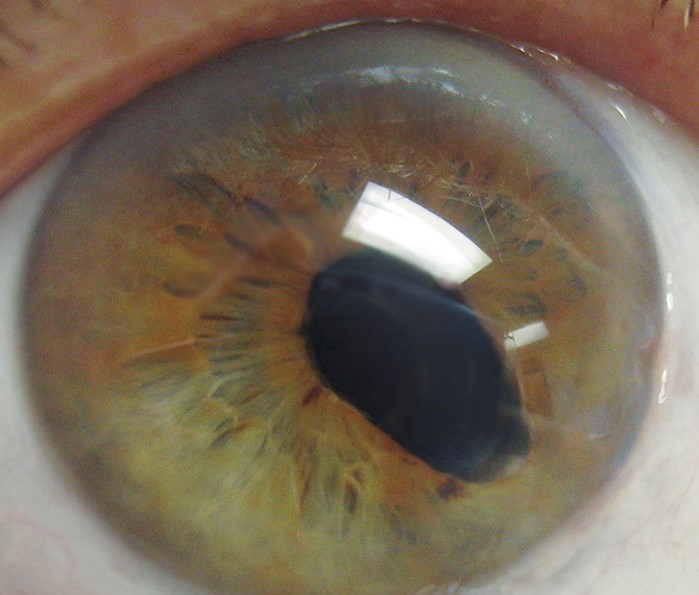 Oropharyngeal examination reveals a cleft palate. The patient has a loud, harsh, holosystolic murmur best heard at the lower left sternal border. The testes are not palpable. The skin and extremities appear normal. Which of the following is the most likely diagnosis in this patient?
A) CHARGE syndrome
B) DiGeorge syndrome
C) Fanconi anemia
D) Trisomy 13
E) VACTERL syndrome
Correct Answer:

Verified
Q537: A 9-year-old girl is brought to the
Q538: A 2-year-old girl is brought to the
Q539: A 5-month-old boy is brought to the
Q540: A 10-year-old boy is brought to an
Q541: A 3-year-old girl is brought to the
Q543: A 7-year-old boy is brought to the
Q544: A 6-day-old boy is brought to the
Q545: A 4-month-old girl is brought to the
Q546: A 4-year-old boy is brought to the
Q547: A 15-year-old girl is brought to the
Unlock this Answer For Free Now!
View this answer and more for free by performing one of the following actions

Scan the QR code to install the App and get 2 free unlocks

Unlock quizzes for free by uploading documents