Solved

A 4-Month-Old Boy Is Brought to Clinic by His Mother

Question 592

Multiple Choice

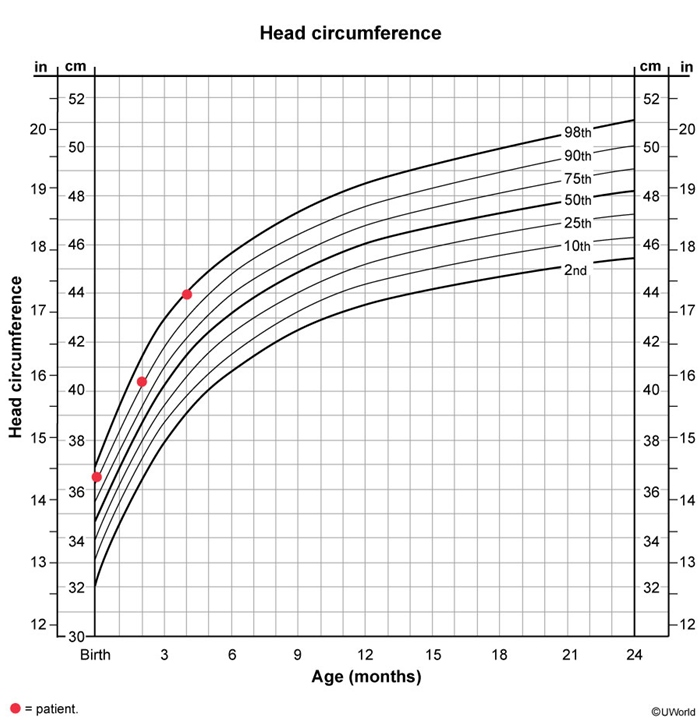
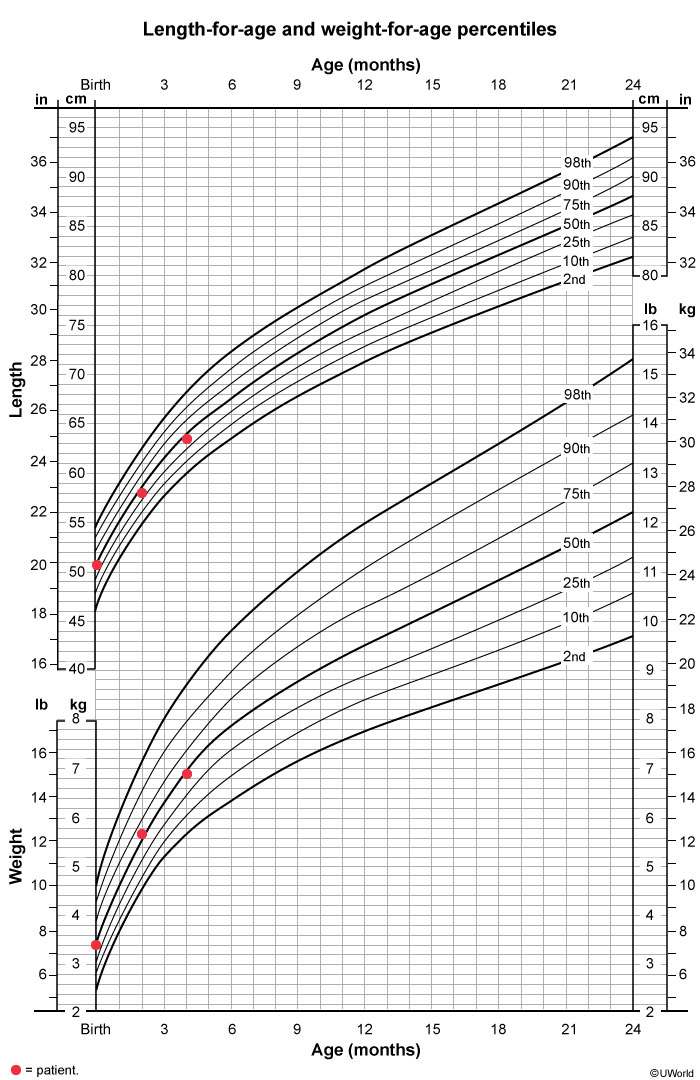
A 4-month-old boy is brought to clinic by his mother for routine follow-up.  He was last seen at his 2-month checkup.  The mother reports that the patient continues to feed well but has noticed that his head is larger than other infants'.  He can roll from front to back, sit straight when propped, and hold his head steady without support.  The patient can bring objects to his mouth and make babbling sounds.  The patient was born at 37 weeks gestation and adopted at birth.  Temperature is 37.2 C (99 F) , pulse is 130/min, and respirations are 30/min.  Examination shows a symmetrical head with an open and soft fontanelle.  Pupils are equal and reactive, and extraocular movements are intact.  Eyes and ears are in the normal positions.  The neck is supple.  Abdominal and skin examination is unremarkable.  Extremities appear normal.  Growth charts are shown in the exhibit.A 4-month-old boy is brought to clinic by his mother for routine follow-up.  He was last seen at his 2-month checkup.  The mother reports that the patient continues to feed well but has noticed that his head is larger than other infants'.  He can roll from front to back, sit straight when propped, and hold his head steady without support.  The patient can bring objects to his mouth and make babbling sounds.  The patient was born at 37 weeks gestation and adopted at birth.  Temperature is 37.2 C (99 F) , pulse is 130/min, and respirations are 30/min.  Examination shows a symmetrical head with an open and soft fontanelle.  Pupils are equal and reactive, and extraocular movements are intact.  Eyes and ears are in the normal positions.  The neck is supple.  Abdominal and skin examination is unremarkable.  Extremities appear normal.  Growth charts are shown in the exhibit.    Head ultrasound shows normal ventricles and brain parenchyma.  Which of the following is the best next step in management of this patient? A) Cranial molding helmet B) Karyotype analysis C) Lumbar puncture for opening pressure D) MRI of the brain E) Reassurance and continued observation  A 4-month-old boy is brought to clinic by his mother for routine follow-up.  He was last seen at his 2-month checkup.  The mother reports that the patient continues to feed well but has noticed that his head is larger than other infants'.  He can roll from front to back, sit straight when propped, and hold his head steady without support.  The patient can bring objects to his mouth and make babbling sounds.  The patient was born at 37 weeks gestation and adopted at birth.  Temperature is 37.2 C (99 F) , pulse is 130/min, and respirations are 30/min.  Examination shows a symmetrical head with an open and soft fontanelle.  Pupils are equal and reactive, and extraocular movements are intact.  Eyes and ears are in the normal positions.  The neck is supple.  Abdominal and skin examination is unremarkable.  Extremities appear normal.  Growth charts are shown in the exhibit.    Head ultrasound shows normal ventricles and brain parenchyma.  Which of the following is the best next step in management of this patient? A) Cranial molding helmet B) Karyotype analysis C) Lumbar puncture for opening pressure D) MRI of the brain E) Reassurance and continued observationHead ultrasound shows normal ventricles and brain parenchyma.  Which of the following is the best next step in management of this patient?

A) Cranial molding helmet
B) Karyotype analysis
C) Lumbar puncture for opening pressure
D) MRI of the brain
E) Reassurance and continued observation

Correct Answer:

verifed

Verified

Unlock this answer now
Get Access to more Verified Answers free of charge

Related Questions

Unlock this Answer For Free Now!

View this answer and more for free by performing one of the following actions

qr-code

Scan the QR code to install the App and get 2 free unlocks

upload documents

Unlock quizzes for free by uploading documents