A 10-minute-old neonate is evaluated in the delivery room for low oxygen saturation and difficulty breathing. The patient was born at 36 weeks gestation to a 37-year-old mother whose pregnancy was complicated by poorly controlled type 2 diabetes mellitus. Membranes were ruptured 3 hours prior to delivery, and the fluid was clear. Apgar scores were 5 and 7 at 1 and 5 minutes, respectively. Temperature is 36.9 C (98.4 F) , pulse is 166/min, and respirations are 70/min. Examination shows cyanosis of the lips and mucous membranes. The patient is grunting and has intercostal and subcostal retractions. Cardiac examination shows a 1/6 systolic ejection murmur at the left upper sternal border. Breath sounds are decreased bilaterally. The abdomen is soft with no organomegaly. Pulses are 2+ in all extremities. Pulse oximetry on room air is 64% in the right hand and foot. An orogastric tube is placed, and the patient is started on continuous positive airway pressure with supplemental oxygen. Pulse oximetry improves to 82%. Chest radiograph is shown in the image below: 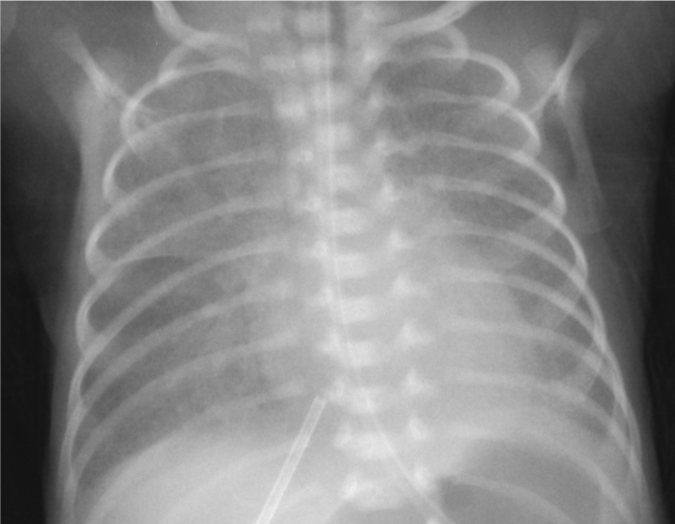 Blood cultures are obtained, and intravenous antibiotics are started. Which of the following is the most appropriate pharmacotherapy for this patient?
A) Corticosteroids
B) Indomethacin
C) Nitric oxide
D) Prostaglandin
E) Surfactant
Correct Answer:

Verified
Q653: A 6-year-old boy is brought to the
Q654: A newborn girl is evaluated in the
Q655: A 1-hour-old girl is evaluated in the
Q656: A 2-week-old girl in the neonatal intensive
Q657: A 5-month-old full-term boy is brought to
Q659: An 18-month-old boy is brought to the
Q660: A 13-day-old full-term girl is brought to
Q661: An 18-month-old girl is brought to the
Q662: A 17-year-old man comes to the emergency
Q663: A 3-year-old boy is brought to the
Unlock this Answer For Free Now!
View this answer and more for free by performing one of the following actions

Scan the QR code to install the App and get 2 free unlocks

Unlock quizzes for free by uploading documents