A 5-month-old girl is brought to the physician for a weight check. The patient has been evaluated several times for poor weight gain. She takes 6 ounces of regular formula every 4 hours. Increasing the caloric density of her formula has not improved her growth. The patient has no diarrhea or vomiting. There is a family history of nephrolithiasis. She was born full term without complications. The patient's birth weight was 3.6 kg (8 lb, 50th percentile) . Current weight is <5th percentile; length and head circumference have been tracking along the 25th percentile. The infant appears thin, but the remainder of the physical examination is unremarkable. Newborn screening results were normal. Laboratory results are as follows: 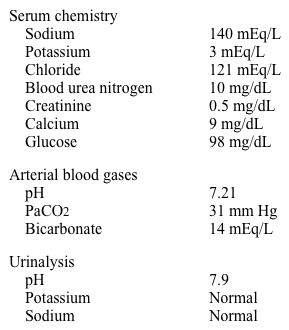 Which of the following is the most likely cause of this patient's failure to thrive?
A) Cystic fibrosis
B) Gastroesophageal reflux
C) Insufficient caloric intake
D) Lactic acidosis
E) Renal tubular acidosis
Correct Answer:

Verified
Q664: A 3-month-old girl is brought to the
Q665: A 5-year-old girl with chronic renal insufficiency
Q666: A newborn boy is evaluated for respiratory
Q667: A 4-week-old full-term boy is brought to
Q668: A 2-day-old boy is being evaluated in
Q670: A 5-year-old boy is brought to the
Q671: A 17-year-old boy is evaluated in the
Q672: A 23-hour-old girl is evaluated for jaundice
Q673: A 12-year-old boy is brought to the
Q674: A 9-year-old boy is brought to the
Unlock this Answer For Free Now!
View this answer and more for free by performing one of the following actions

Scan the QR code to install the App and get 2 free unlocks

Unlock quizzes for free by uploading documents