A 57-year-old man is brought to the emergency department after being found confused and agitated in a park. Medical records indicate that he has a history of schizophrenia, alcohol use disorder, and liver cirrhosis. The patient states that he has not been taking his medications "because they never help." Temperature is 37.2 C (99 F) , blood pressure is 160/80 mm Hg, pulse is 118/min, and respirations are 24/min. On examination, the patient is disheveled and disoriented, claiming that FBI agents have been chasing him. His breath smells of alcohol. Pupils are equal and reactive, and the neck is supple. The abdomen is distended but nontender. The skin and mucous membranes are dry. There is mild edema in both lower extremities but no deformity. Laboratory results are as follows: 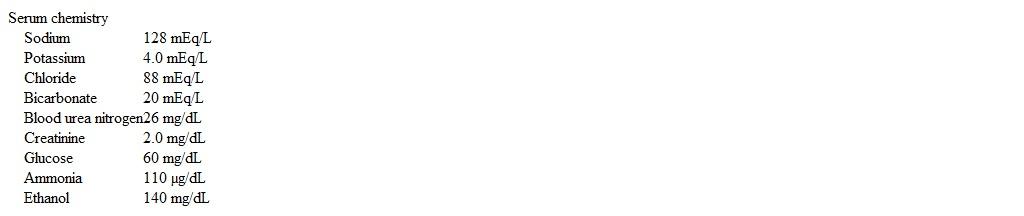 During evaluation, the patient is initially cooperative but becomes increasingly aggressive and combative. For safety reasons, he is given intravenous haloperidol and lorazepam. Shortly afterward, the cardiac monitor displays the rhythm shown in the exhibit.
 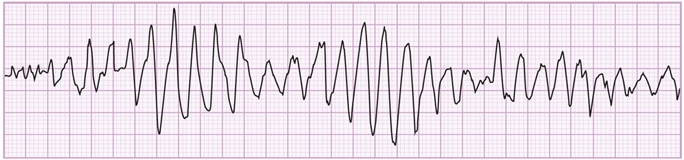 Which of the following most likely contributed to this patient's abnormal rhythm?
A) Elevated blood alcohol level
B) Elevated blood ammonia level
C) Haloperidol adverse effect
D) Lorazepam adverse effect
E) Low glucose level
F) Low sodium level
Correct Answer:

Verified
Q52: A 19-year-old woman is brought to the
Q53: A 37-year-old man comes to the emergency
Q54: A 22-year-old woman comes to student health
Q55: A 23-year-old woman is brought to the
Q56: A 24-year-old woman is brought to the
Q58: A 26-year-old man is brought to the
Q59: A 46-year-old man with a history of
Q60: A 55-year-old man is brought by ambulance
Q61: A 27-year-old woman comes to the office
Q62: A 25-year-old woman comes to the office
Unlock this Answer For Free Now!
View this answer and more for free by performing one of the following actions

Scan the QR code to install the App and get 2 free unlocks

Unlock quizzes for free by uploading documents