A 52-year-old man comes to the office for 6 months of abdominal pain. The pain is intermittent, epigastric, radiating to the back, exacerbated by eating, and associated with nausea. He has no diarrhea, hematochezia, or melena. Medical and family history are both unremarkable. The patient has smoked cigarettes for 20 years and drinks 7 or 8 beers a day. Temperature is 37.4 C (99.3 F) , blood pressure is 134/82 mm Hg, heart rate is 78/min, and respirations are 13/min. BMI is 28 kg/m2. Physical examination reveals anicteric sclera, moist mucosal membranes, and normal heart and lung sounds. The abdomen is mildly tender to palpation in the epigastrium but without rebound or guarding. Laboratory results are as follows: 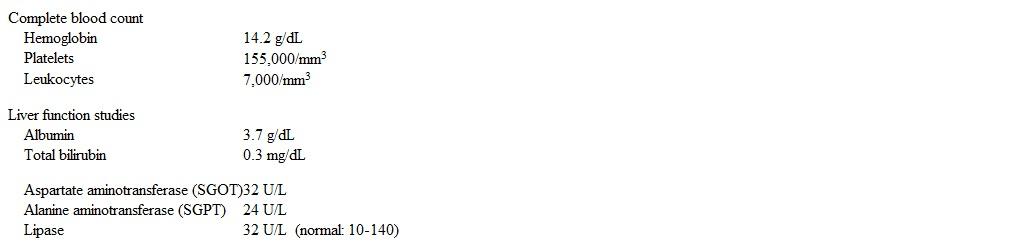 CT scan of the abdomen shows pancreatic atrophy along with multiple calcifications in the pancreatic parenchyma. MR cholangiopancreatography (MRCP) reveals a nondilated pancreatic duct without intraductal stones. In addition to lifestyle modification, which of the following is the best next step in management?
A) Celiac plexus block
B) Endoscopic pancreatic sphincterotomy
C) Lipase supplementation
D) Long-acting oxycodone
E) Pancreatic surgery
Correct Answer:

Verified
Q148: A 72-year-old man underwent surgical repair of
Q149: A 41-year-old man comes to the office
Q150: A 26-year-old man is hospitalized for fevers
Q151: A 20-year-old man comes to the office
Q152: A 52-year-old woman comes to the office
Q154: A 5-year-old boy is brought to the
Q155: A 65-year-old woman comes to the emergency
Q156: A 56-year-old man comes to the office
Q157: A 72-year-old retired plumber comes to the
Q158: A 58-year-old man comes to the emergency
Unlock this Answer For Free Now!
View this answer and more for free by performing one of the following actions

Scan the QR code to install the App and get 2 free unlocks

Unlock quizzes for free by uploading documents