A 65-year-old man comes to the office due to progressively worsening dyspnea and fatigue over the last 2 weeks. His lifestyle is mostly sedentary with limited activities around the house, but he has had dyspnea for the past 3 days while at rest. The patient was diagnosed with lung cancer a year ago and underwent surgical resection followed by chemotherapy. Other medical conditions include chronic kidney disease and hypertension. Temperature is 37 C (98.6 F) , blood pressure is 114/70 mm Hg, pulse is 95/min, and respirations are 20/min. Pulse oximetry shows an oxygen saturation of 95% on room air. Lungs are clear to auscultation bilaterally. There are no heart murmurs. Extremities are without edema. Laboratory studies are as follows:  Chest x-ray is shown in the exhibit.
 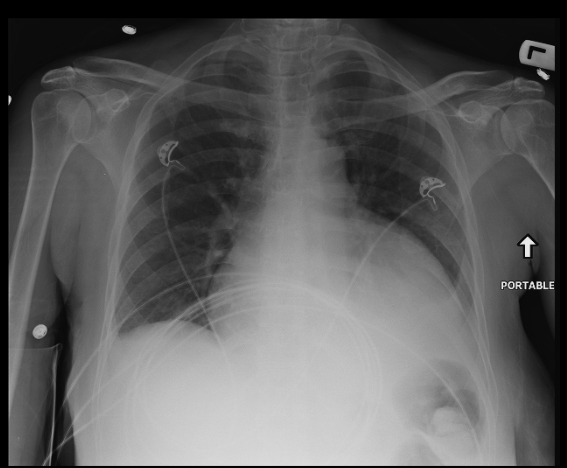 What is the most appropriate next step in management of this patient?
A) CT angiography of the chest
B) Echocardiography
C) Erythropoietin injection
D) Furosemide therapy
E) Pulmonary function studies
Correct Answer:

Verified
Q233: A 50-year-old man comes to the physician
Q234: A 73-year-old man comes to the physician
Q235: An 88-year-old man is evaluated due to
Q236: A 53-year-old man is brought to the
Q237: A 49-year-old man, who is in the
Q239: A 46-year-old man with autosomal dominant polycystic
Q240: A 65-year-old man comes to the office
Q241: A 58-year-old man comes to the office
Q242: An 82-year-old man comes to the office
Q243: A 32-year-old woman comes to the office
Unlock this Answer For Free Now!
View this answer and more for free by performing one of the following actions

Scan the QR code to install the App and get 2 free unlocks

Unlock quizzes for free by uploading documents