A 43-year-old man comes to the hospital following 24 hours of increasing pain in the lower abdomen, scrotum, and perineum. He also has experienced malaise and nausea. He has had no abdominal surgeries or recent perianal or scrotal trauma. The patient has a history of morbid obesity, hypertension, type 2 diabetes mellitus, hypercholesterolemia, and heart failure with preserved systolic function. Temperature is 39.7 C (103.5 F) , blood pressure is 80/60 mm Hg, pulse is 112/min, and respirations are 18/min. Pulse oximetry shows 96% on room air. BMI is 47 kg/m2. The patient appears ill and uncomfortable. There is no jugular venous distension. Lungs are clear to auscultation. Heart sounds are normal. The skin over the lower abdomen, scrotum, and perineum is tense, tender, erythematous, and swollen with evidence of crepitus. Mild, bilateral, lower extremity edema is present. Laboratory results are as follows: 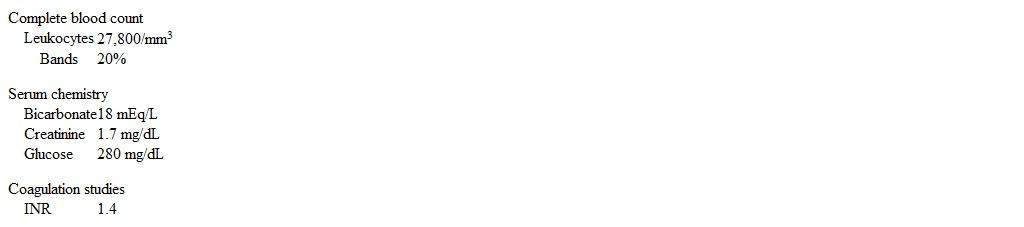 Blood cultures are obtained, and intravenous fluids and antibiotics are initiated. Which of the following is the best next step in management of this patient?
A) CT scan of the abdomen and perineum
B) Emergent surgery
C) Hyperbaric oxygen
D) Intravenous corticosteroid bolus
E) Supportive care in critical care unit
Correct Answer:

Verified
Q435: A 55-year-old man undergoes a conventional pancreaticoduodenectomy
Q436: A 15-year-old boy with sickle cell disease
Q437: A 35-year-old man is evaluated in the
Q438: A 68-year-old man is brought to the
Q439: A 28-year-old man comes to the office
Q441: A 38-year-old man comes to the emergency
Q442: A 16-year-old boy is brought to the
Q443: A 60-year-old woman with a history of
Q444: A 19-year-old college student comes to the
Q445: A 46-year-old woman comes to the office
Unlock this Answer For Free Now!
View this answer and more for free by performing one of the following actions

Scan the QR code to install the App and get 2 free unlocks

Unlock quizzes for free by uploading documents