An 84-year-old man comes to the physician with persistent dyspnea despite being treated with optimal medical therapy for congestive heart failure with low left ventricular ejection fraction. A recently published randomized clinical trial compared an angiotensin-neprilysin inhibitor (ANi) to an angiotensin-converting enzyme inhibitor (ACEi) in patients who have heart failure with a reduced ejection fraction. The following results were reported: 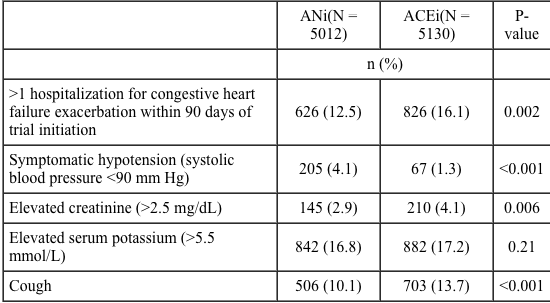 The investigators also reported the following results for patients in the angiotensin-neprilysin inhibitor (ANi) and angiotensin-converting enzyme inhibitor (ACEi) groups:
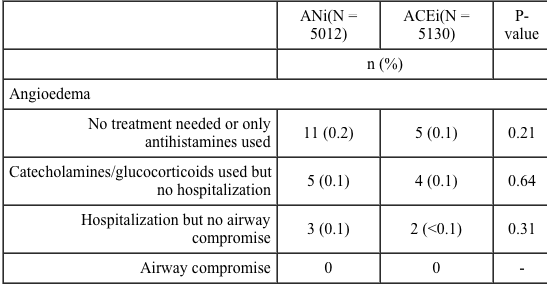 Which of the following is the best interpretation of these results
A) The interpretation of the results is confounded by the placebo effect
B) The study results reassure that there is no danger of drug-induced angioedema with the new drug due to the absence of airway compromise
C) There is a higher number of angioedema events with the new drug, warranting a larger randomized clinical trial to investigate safety
D) There is a higher number of angioedema events with the new drug, warranting postmarketing surveillance if the drug is approved
E) There is a small but statistically significant increase in the rate of angioedema with the new drug
Correct Answer:

Verified
Q19: A 64-year-old man comes to the emergency
Q20: A 4-month-old boy is brought to the
Q21: An open-label randomized trial is conducted to
Q22: An 84-year-old man comes to the physician
Q23: A retrospective, matched-cohort study is conducted to
Q25: A 35-year-old man comes to the emergency
Q26: A study was conducted to identify factors
Q27: A 32-year-old woman, gravida 2 para 1,
Q28: A 59-year-old man comes to the office
Q29: A new, randomized, placebo-controlled trial studied the
Unlock this Answer For Free Now!
View this answer and more for free by performing one of the following actions

Scan the QR code to install the App and get 2 free unlocks

Unlock quizzes for free by uploading documents