A 16-year-old boy is brought to the office due to a rash on his chin. The boy sustained a minor cut while shaving with his father's razor 4 days ago. The patient was also using a new shaving cream at the time. The bleeding stopped with minimal pressure. The surrounding skin appeared red the next day. Since then, the affected area has increased in size, become tender, and appeared "wet." This morning, the rash is "dry and crusty." The patient has a history of acne vulgaris and uses a topical retinoid and benzoyl peroxide on his forehead and cheeks. He also periodically develops "cold sores" when experiencing stress, such as before tests at school. He takes no other medications and has no known allergies. Temperature is 37 C (98.6 F) . Physical examination shows a well-appearing adolescent in no distress. Skin examination reveals inflammatory acne on the cheeks and forehead. The rash on the chin is shown in the exhibit. 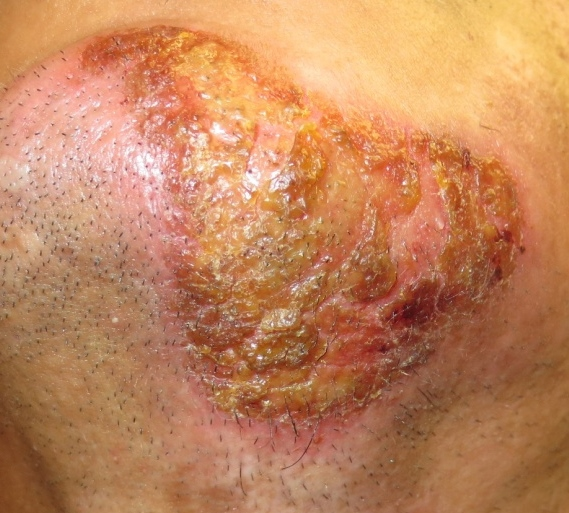 Which of the following is the most likely diagnosis in this patient?
A) Contact dermatitis
B) Erysipelas
C) Herpes simplex infection
D) Impetigo
E) Tinea barbae
Correct Answer:

Verified
Q191: A 25-year-old college student comes to the
Q192: A 65-year-old woman comes to the physician
Q193: A 20-year-old college student comes to see
Q194: A 52-year-old homeless man comes to the
Q195: A 47-year-old-man comes to the physician for
Q197: A 48-year-old woman comes to the office
Q198: A 48-year-old woman comes to the office
Q199: An 8-year-old girl is brought to the
Q200: A 47-year-old-man comes to the physician for
Q201: An 8-month-old boy is brought to the
Unlock this Answer For Free Now!
View this answer and more for free by performing one of the following actions

Scan the QR code to install the App and get 2 free unlocks

Unlock quizzes for free by uploading documents