A 23-year-old woman comes to the office with worsening fever, chills, and lower abdominal pain for 3 days. The patient has been taking nonsteroidal anti-inflammatories for pain relief. She also has increasing malodorous vaginal discharge. The patient has a history of 2 episodes of pelvic inflammatory disease that required hospitalization and intravenous antibiotic treatment. She has smoked a pack of cigarettes daily for 7 years and consumes 1 or 2 beers daily. The patient has had 6 sexual partners over the last 6 months. She had an intrauterine device (IUD) placed a year ago and inconsistently uses barrier contraception. The patient has no known drug allergies. Temperature is 38.3 C (100.9 F) , blood pressure is 110/70 mm Hg, pulse is 100/min, and respirations are 20/min. Weight is 60 kg (132.3 lb) and height is 157.5 cm (5 ft 2 in) . Examination shows a soft, nondistended abdomen with mild rigidity and rebound tenderness in the lower abdomen; bowel sounds are present. There is no hepatosplenomegaly. No lesions are present on the vulva or vagina. Pelvic examination reveals cervical motion and bilateral adnexal tenderness as well as purulent discharge from the cervical os. The IUD strings are visible at the external cervical os. Laboratory results are as follows: 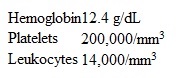 Urinalysis shows 50+/hpf of WBCs. Urine pregnancy test is negative. Nucleic acid amplification testing is positive for Neisseria gonorrhoeae. Pelvic ultrasound reveals a dilated fallopian tube filled with debris. Which of the following is the strongest risk factor for this patient's condition?
A) Age <25
B) Inconsistent use of barrier contraception
C) Intrauterine contraceptive device
D) Multiple sexual partners
E) Previous episodes of pelvic inflammatory disease
Correct Answer:

Verified
Q217: An 18-year-old woman comes to the office
Q218: A 26-year-old woman comes to the office
Q219: A 36-year-old woman comes to the office
Q220: A 30-year-old woman comes to the office
Q221: A 53-year-old woman comes to the office
Q223: A 27-year-old woman, gravida 0 para 0,
Q224: A 14-year-old girl is brought to the
Q225: A 34-year-old woman comes to the emergency
Q226: A 69-year-old woman, gravida 5 para 5,
Q227: A 53-year-old man comes to the emergency
Unlock this Answer For Free Now!
View this answer and more for free by performing one of the following actions

Scan the QR code to install the App and get 2 free unlocks

Unlock quizzes for free by uploading documents