Passage
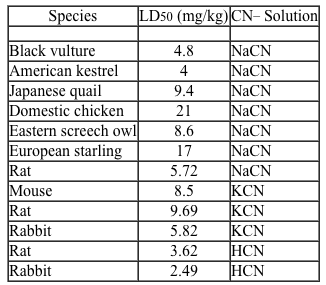
Cyanide (CN−) is a powerful, rapid toxin that binds to the cellular respiratory enzyme cytochrome c oxidase. The resulting enzyme-cyanide complex blocks the transfer of electrons to oxygen in the last step of the electron transport chain. This results in cytotoxic anoxia, causing asphyxiation at the cellular level.Exposure to cyanide can occur from dietary sources, medical treatments, industrial applications, smoke inhalation (structural fires) , and intentional use (suicide) . While dietary exposure from moderate consumption of naturally occurring plant compounds such as cyanogenic glycosides rarely results in acute adverse effects in humans, chronic effects have been observed from prolonged diets with significant levels of these compounds. In the developed world, risk of significant cyanide exposure is most likely to result from smoke inhalation during building fires or from industrial/occupational exposures.The impact of a given exposure depends on the amount (dose, duration) , the chemical composition of the cyanide compound (HCN, NaCN, KCN) , and the route of exposure (inhalation, absorption, ingestion) . The ionic salts (NaCN, KCN) and free acid (HCN) forms of cyanide each have different acid-base properties that interact differently under the physiological conditions associated with each route of exposure.To better understand the toxicity of different forms of cyanide, animal models have been studied for comparison to known human exposure case studies. Table 1 presents a summary of selected animal toxicity studies that examine exposure via ingestion. The table provides the lethal dose to 50% of the population (LD50) in milligrams of cyanide per kilogram of body weight (mg/kg) .Table 1 Compilation of LD50 Cyanide Values in Various Animal Species
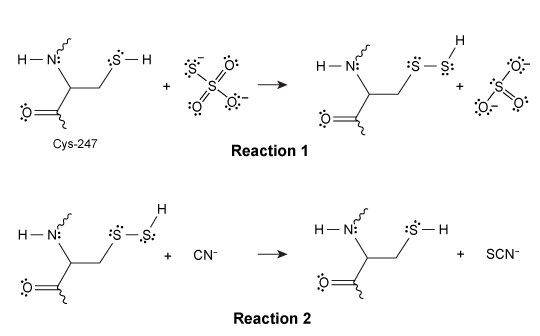
 Based on animal models, one treatment developed for cyanide poisoning involves assisting the rhodanese enzyme in metabolizing CN− to SCN− via an intravenous solution of NaNO2 and Na2S2O3. The Na2S2O3 assists in the formation of a reactive S-SH (persulfide) bond in the enzyme on cysteine-247 (Reaction 1) , which then reacts with the cyanide ion to form thiocyanate (Reaction 2) .
 Adapted from: Hall AH, Isom GE, Rockwood GA. Toxicology of Cyanides and Cyanogens, Experimental, Applied and Clinical Aspects. John Wiley & Sons; 2015: 1-20; and Egekeze JO, Oehme FW. Cyanides and their toxicity: A literature review. Vet Q. 1980; 2(2) : 104-114.
-Based on the experimental data in Table 1, which cyanide compound(s) likely diffuse(s) most readily across the gastric lipid membrane?HCNNaCNKCN
A) I only
B) II only
C) I and III only
D) I, II, and III
Correct Answer:

Verified
Q108: Passage
Although acetylsalicylic acid (aspirin) is a well-known
Q109: Passage
A group of students were given water
Q110: Passage
Although acetylsalicylic acid (aspirin) is a well-known
Q111: Passage
Cyanide (CN−) is a powerful, rapid toxin
Q112: Passage
A group of students were given water
Q114: Passage
A group of students were given water
Q115: Passage
Cyanide (CN−) is a powerful, rapid toxin
Q116: Passage
Although acetylsalicylic acid (aspirin) is a well-known
Q117: The Nernst equation states: Q118: Passage
Although acetylsalicylic acid (aspirin) is a well-known
Unlock this Answer For Free Now!
View this answer and more for free by performing one of the following actions

Scan the QR code to install the App and get 2 free unlocks

Unlock quizzes for free by uploading documents