A 64-year-old lady is examined for a 2 year progression of gait abnormality. The patient feels wobbly and as though her feet are "trapped on the floor" when walking. Additionally, she has recently started having frequent urination and has wet herself a few times as a result of having trouble finding time to use the restroom. Due to her inability to focus, the patient stopped working six months ago. She has since lost interest in both her hobbies and social activities. No tremor, vision problems, headaches, nausea, or vomiting have been reported by her. There is a distant history of closed traumatic brain injury in the patient. Vital indicators are in the expected range. On physical examination, there is increased tone in the lower extremities and deep tendon reflexes. It's natural to feel vibration, discomfort, and light touch. The patient's gait is slow with small steps and a wide base. CT scan of the head is shown below. 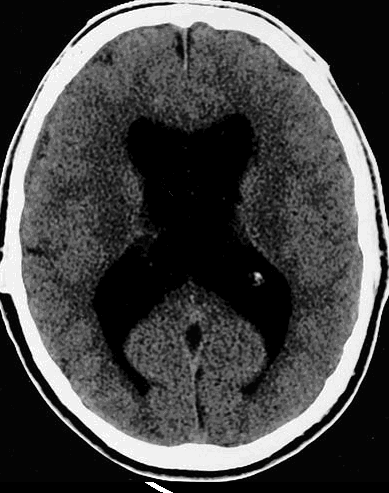 Which of the following is the most likely diagnosis?
A) Alzheimer disease
B) Frontotemporal dementia
C) Idiopathic Parkinson disease
D) Major depressive disorder
E) Normal pressure hydrocephalus
F) Obstructive hydrocephalus
G) Vitamin B12 deficiency
Correct Answer:

Verified
Q323: A 43-year-old woman is brought to the
Q324: A 22-year-old man comes to the emergency
Q325: A 71-year-old woman comes to the physician
Q326: A 22-year-old man comes to the emergency
Q327: A 65-year-old man arrives at the emergency
Q329: A 48-year-old woman presented to the emergency
Q330: A 62-year-old man comes to the physician
Q331: A 71-year-old woman comes to the physician
Q332: A 11-year-old girl is being evaluated for
Q333: A 48-year-old woman arrives at the office
Unlock this Answer For Free Now!
View this answer and more for free by performing one of the following actions

Scan the QR code to install the App and get 2 free unlocks

Unlock quizzes for free by uploading documents