A 42-year-old lady arrives at the clinic complaining of a lesion on the left side of her chest. The lesion formed some months ago and is gradually growing in size, occasionally seeping blood. The patient had a living-donor kidney transplant five years ago for end-stage renal illness caused by IgA nephropathy. She is also hypothyroid as a result of Hashimoto thyroiditis. Tacrolimus, mycophenolate, low-dose prednisone, and levothyroxine are among the medications used. Vital indicators are typical. A 1 2 cm crusty lesion over the midsternum is discovered on physical examination. The lesion is biopsied, and the histopathology findings are shown in the exhibit. 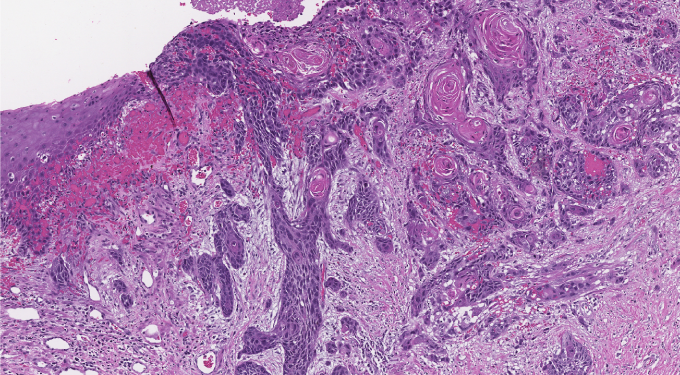 Which of the following most likely contributed to the development of this patient's skin lesion?
A) Decreased immune surveillance
B) Decreased peripheral T-cell tolerance
C) Decreased telomerase activity
D) Increased differentiation of monocytes into macrophages
E) Increased expression of MHC class I on abnormal cells
Correct Answer:

Verified
Q561: A 22-year-old woman is brought to the
Q562: A 52-year-old lady arrives at the clinic
Q563: A 14-year-old girl is brought to the
Q564: A 43-year-old woman comes to the physician
Q565: A 64-year-old woman arrives at the emergency
Q567: A 40-year-old woman comes to the physician
Q568: A 50-year-old man comes to the physician
Q569: A 63-year-old woman dies of congestive heart
Q570: A 46-year-old woman's upper eyelid skin lesion
Q571: A 13-year-old girl is brought to the
Unlock this Answer For Free Now!
View this answer and more for free by performing one of the following actions

Scan the QR code to install the App and get 2 free unlocks

Unlock quizzes for free by uploading documents