Figure 17-6 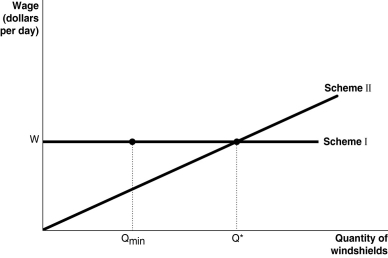 Figure 17-6 shows two different compensation schemes for the Safelite Glass Corporation, an installer of auto glass windshields. Under Scheme I, the firm pays a consistent wage of $80 per day based on an 8-hour workday. Qmin represents the cut-off point under the hourly-wage system: if a worker installed fewer than Qmin windshields, the worker got fired. Scheme II represents a piece-rate scheme with an earnings floor: no worker would get less than $80 per day (for an 8-hour workday) and would have to produce at least Qmin. For any output level beyond Q* the worker earned an additional $20 for each unit produced.
-Refer to Figure 17-6.Under Scheme I
A) workers compete with each other to see who can produce beyond Qmin in the shortest possible time.
B) workers have no incentive to produce beyond Qmin.
C) workers signal their productivity to the firm by consistently producing above Qmin.
D) the incentive to increase productivity depends on where Qmin is set; if it is at a very high level, then workers will rise to the challenge for fear of losing their jobs.
Correct Answer:

Verified
Q211: Higher wages that compensate workers for unpleasant
Q216: Many economists are critical of proposals to
Q221: The application of economic analysis to human
Q222: Figure 17-6 Q223: Which of the following statements about commission Q226: Despite evidence that companies will find it Q228: Why do professional basketball players earn more Q232: Personnel economics is Q234: A successful compensation scheme Q240: The Equal Pay Act of 1963 requires
A)the study of the factors
A)must pay workers with
Unlock this Answer For Free Now!
View this answer and more for free by performing one of the following actions

Scan the QR code to install the App and get 2 free unlocks

Unlock quizzes for free by uploading documents