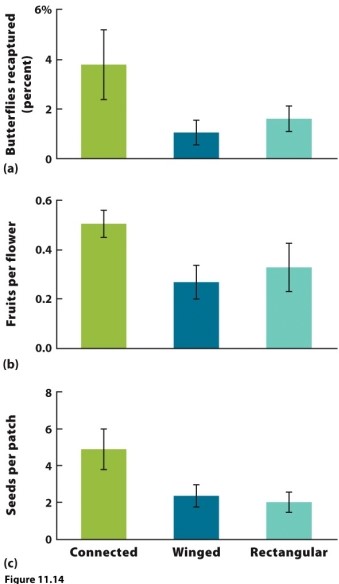
(Figure 11.14) Researchers used an experimental design in which they cleared large patches of pine forest in five areas. The central cleared area served as the source of dispersers. The four remaining cleared patches were (1) a rectangular unconnected patch, (2) a rectangular patch connected to the central patch by a cleared path that served as a corridor, (3) two rectangular patches with wings (patches with corridors that did not connect to other patches). The researchers were interested in the importance of habitat corridors to the movement of seeds, pollen, and butterflies between central and peripheral habitat patches. What was the purpose of the unconnected winged patches?
Correct Answer:

Verified
View Answer
Unlock this answer now
Get Access to more Verified Answers free of charge
Q45: A southern European songbird, the blue tit
Q46: In the experiment in which stickleback fish
Q49: Although there is suitable habitat for sugar
Q49: Which of the following is NOT a
Q51: When individuals have perfect knowledge of habitat
Q52: In populations that fit a source-sink metapopulation
Q53: Per capita benefit is the amount of
Q53: In some parts of the United States,
Q58: Which of the following does NOT explain
Q60: Which population model applies to the situation
Unlock this Answer For Free Now!
View this answer and more for free by performing one of the following actions

Scan the QR code to install the App and get 2 free unlocks

Unlock quizzes for free by uploading documents