A 36-year-old woman with mitral valve prolapse comes to the office due to dyspnea and is found to have severe mitral valve regurgitation. Two weeks later, the patient undergoes elective mechanical mitral valve replacement. Continuous heparin infusion and oral warfarin are initiated following the procedure. Coagulation studies during admission are as follows: 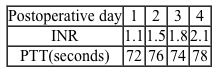 The patient achieves the goal of INR ≥2.5 on postoperative day 5 and heparin infusion is discontinued. Which of the following likely caused the delay in achieving therapeutic INR in this patient?
A) Clotting factors generated before warfarin initiation
B) Formation of anti-platelet factor 4/heparin antibodies
C) High total body stores of vitamin K
D) Induction of an enzyme that metabolizes warfarin
E) Slow onset of steady-state drug concentration
Correct Answer:

Verified
Q201: A 68-year-old man is brought to the
Q202: A 72-year-old woman is brought to the
Q203: In vitro studies demonstrate that tumor cell
Q204: A 68-year-old man comes to the emergency
Q205: A 56-year-old man comes to the emergency
Q207: A 52-year-old man comes to the emergency
Q208: Two antineoplastic drugs are shown to inhibit
Q209: A 70-year-old man develops progressive fatigue and
Q210: A 61-year-old man comes to the office
Q211: A 5-year-old girl is brought to the
Unlock this Answer For Free Now!
View this answer and more for free by performing one of the following actions

Scan the QR code to install the App and get 2 free unlocks

Unlock quizzes for free by uploading documents