A 34-year-old man comes to the office for evaluation of opioid use disorder. He was prescribed oxycodone for a sports-related injury in his mid-20s, developed dependency, and began using intravenous heroin in its place. In the past few years, the patient has had multiple overdoses requiring naloxone administration. He recently tried quitting heroin on his own but experienced recurrent relapses. He has now been abstinent for 2 days but reports significant cravings. After a discussion of various treatment options, the patient is prescribed buprenorphine. The dose-response curve of this medication is shown in the image below: 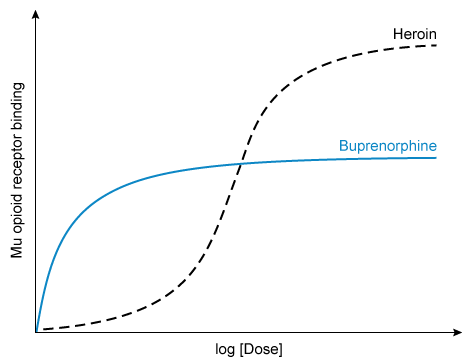 Which of the following clinical pharmacologic effects of buprenorphine is most likely?
A) Buprenorphine can fully reverse the effect of heroin overdose
B) Buprenorphine can precipitate or treat opioid withdrawal from heroin
C) Buprenorphine carries a higher risk of hypoventilation compared to heroin
D) Buprenorphine overdose is more easily reversed with naloxone compared to heroin
Correct Answer:

Verified
Q437: A 27-year-old man with schizophrenia comes to
Q438: A 22-year-old college student seeks treatment for
Q439: A 26-year-old woman comes to the emergency
Q440: A 7-year-old boy is evaluated for fatigue.
Q441: A 30-year-old woman comes to the office
Q443: A 31-year-old man is hospitalized after sustaining
Q444: A 45-year-old woman with a history of
Q445: A 39-year-old woman is brought to the
Q446: A 24-year-old man is found unconscious in
Q447: An 83-year-old woman is sent to the
Unlock this Answer For Free Now!
View this answer and more for free by performing one of the following actions

Scan the QR code to install the App and get 2 free unlocks

Unlock quizzes for free by uploading documents