A 72-year-old man comes to the emergency department because of palpitations and shortness of breath for the past 24 hours. His medical problems include hypertension, hyperlipidemia, type 2 diabetes mellitus, obstructive sleep apnea, and emphysema. He uses 2 liters of oxygen only during the night. He cannot recall his medications, but uses an unknown daily inhaler for his "lung disease." He quit smoking 12 years ago.
His blood pressure is 132/54 mm Hg and pulse is 155/min. There is faint end expiratory wheezing noted over both lungs. No murmurs are appreciated. There is bilateral 1+ edema in his lower extremities.
An ECG is performed in the emergency department and is shown in this exhibit. 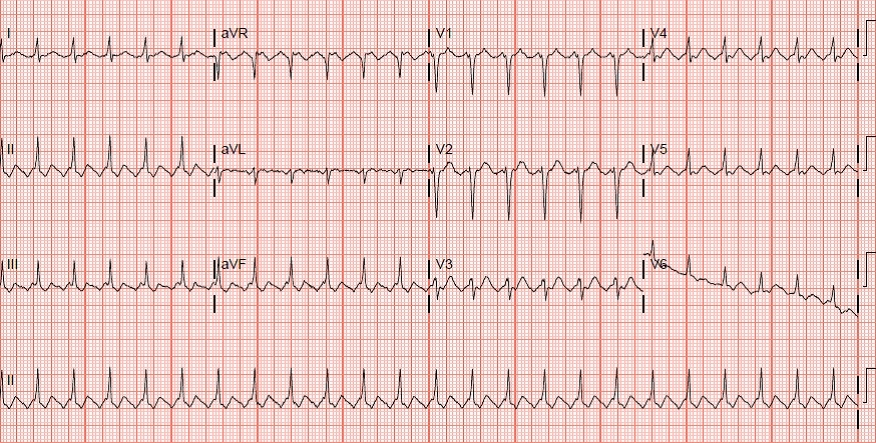
He is admitted to the hospital and started on a diltiazem infusion. The next morning, he continues to have a rapid pulse at 155/min. Transthoracic echocardiogram shows left atrial dilation, normal left ventricular systolic function, and an estimated pulmonary artery systolic pressure of 50 mm Hg.
Which of the following is the best management option for this patient?
A) Adenosine
B) Digoxin
C) Flecainide
D) Radiofrequency ablation
E) Sotalol
Correct Answer:

Verified
Q21: A 45-year-old man with known HIV infection
Q22: A 78-year-old woman is brought to the
Q23: A 65-year-old woman is brought to the
Q24: A 43-year-old man comes to the emergency
Q25: A 76-year-old man is brought to the
Q27: A 38-year-old man comes to the emergency
Q28: A 47-year-old man is brought to the
Q29: A 72-year-old man is brought to the
Q30: A 76-year-old man is seen in the
Q31: A 73-year-old woman comes to the emergency
Unlock this Answer For Free Now!
View this answer and more for free by performing one of the following actions

Scan the QR code to install the App and get 2 free unlocks

Unlock quizzes for free by uploading documents