A 43-year-old man comes to the emergency department with a 3-day history of fever, malaise, and chills. He was hospitalized a year ago for alcohol withdrawal symptoms but otherwise no medical history is available. He admits to using intravenous drugs.
The patient's temperature is 38.4 C (101.1 F) , blood pressure is 144/90 mm Hg, and pulse is 102/min. He has poor oral dentition. A small white plaque is seen on the buccal mucosa. Cervical lymph nodes are palpable bilaterally but are small and nontender. Lungs are clear on auscultation. There is a short 2/6 early diastolic murmur heard at the right upper sternal border. The abdomen is soft and nontender. Extremity pulses are full and symmetric, and there is no edema.
Laboratory results are as follows: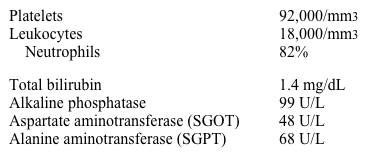
Blood cultures are sent.
Which of the following tests is most important for making treatment decisions at this point?
A) Blood smear
B) Bone marrow biopsy
C) CT scan of the chest
D) Echocardiography
E) Rapid HIV testing
Correct Answer:

Verified
Q19: A 73-year-old woman comes to the emergency
Q20: An 83-year-old woman is brought to the
Q21: A 45-year-old man with known HIV infection
Q22: A 78-year-old woman is brought to the
Q23: A 65-year-old woman is brought to the
Q25: A 76-year-old man is brought to the
Q26: A 72-year-old man comes to the emergency
Q27: A 38-year-old man comes to the emergency
Q28: A 47-year-old man is brought to the
Q29: A 72-year-old man is brought to the
Unlock this Answer For Free Now!
View this answer and more for free by performing one of the following actions

Scan the QR code to install the App and get 2 free unlocks

Unlock quizzes for free by uploading documents