A 57-year-old woman comes to the emergency department due to black stools and 2 episodes of hematemesis over the last 24 hours. Her other medical problems include hypertension, type 2 diabetes mellitus, hypercholesterolemia, and migraine headaches. Current medications include metformin, glyburide, simvastatin, ramipril, and low-dose aspirin. The patient has also been taking naproxen for frequent headaches over the last week. She has smoked a pack of cigarettes per day for 20 years and drinks 1 or 2 cans of beer daily.
Temperature is 36.7 C (98.1 F) , blood pressure is 122/70 mm Hg, pulse is 96/min, and respirations are 16/min. Examination reveals a soft abdomen that is mildly tender over the epigastrium. There is no rebound tenderness or rigidity.
Laboratory results are as follows: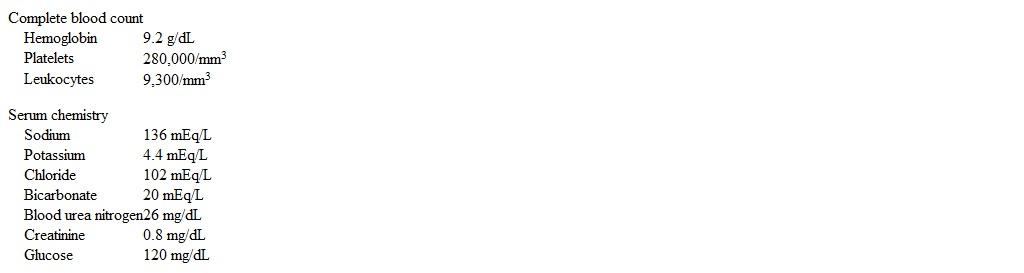 After initial fluid resuscitation, the patient undergoes upper gastrointestinal endoscopy in the emergency department; it reveals a 1.5-cm ulcer in the gastric antrum. There is no active bleeding and the ulcer is covered with an adherent clot. Endoscopic hemostatic therapy is performed.
Which of the following is the most appropriate course of action for this patient?
A) Advise the patient to stop naproxen; discharge on oral lansoprazole with close follow-up
B) Admit the patient, order a regular diet, and observe overnight
C) Admit the patient to the intensive care unit for octreotide infusion
D) Admit the patient to the regular medical ward and order a clear liquid diet
E) Order a blood transfusion and schedule follow-up endoscopy in 24-48 hours
Correct Answer:

Verified
Q46: A 44-year-old man comes to the emergency
Q47: A 35-year-old woman comes to the emergency
Q48: A 54-year-old man with a history of
Q49: A 26-year-old man is brought to the
Q50: A 22-year-old man comes to the emergency
Q52: A 52-year-old man comes to the emergency
Q53: A 16-year-old girl is evaluated in the
Q54: A 72-year-old man with end-stage renal disease
Q55: A 55-year-old woman is brought to the
Q56: A 34-year-old woman comes to the emergency
Unlock this Answer For Free Now!
View this answer and more for free by performing one of the following actions

Scan the QR code to install the App and get 2 free unlocks

Unlock quizzes for free by uploading documents