A 38-year-old woman comes to the physician with the complaint of severe abdominal pain for 8 hours. The pain is crampy and periumbilical and occurs every 4 to 5 minutes. It is not improved with positional changes, and there is no radiation to the back. She has vomited 3 times since the pain began. Her last bowel movement was 18 hours ago. She denies any reflux symptoms, hematemesis, melena, or hematochezia. The patient's medical problems include depression, fibromyalgia, and hypothyroidism. Her surgical history includes appendectomy for a ruptured appendix 20 years ago, tonsillectomy, and breast lumpectomy. She does not use tobacco, alcohol, or illicit drugs.
Her temperature is 37.3 C (99.1 F) , blood pressure is 110/80 mm Hg, pulse is 92/min, and respirations are 16/min. The abdomen is tender in the periumbilical area. There is no significant abdominal distension, rebound tenderness, or rigidity. Rectal examination shows an empty rectal vault, and test for occult blood is negative.
Laboratory results are as follows: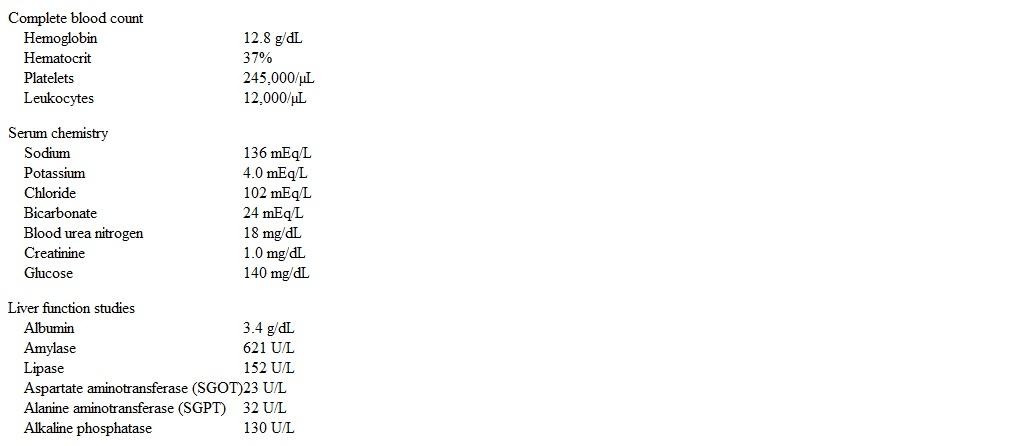 Urine pregnancy test is negative.
Which of the following is the most appropriate next step in this patient's management?
A) Contrast-enhanced abdominal CT
B) NPO and repeat physical examinations
C) Pain management consult
D) Plain upright chest and abdominal radiographs
E) Small-bowel follow-through series
Correct Answer:

Verified
Q54: A 72-year-old man with end-stage renal disease
Q55: A 55-year-old woman is brought to the
Q56: A 34-year-old woman comes to the emergency
Q57: A 72-year-old woman undergoes parathyroidectomy for primary
Q58: A 65-year-old woman comes to the emergency
Q60: A 56-year-old woman is brought to the
Q61: A 43-year-old man comes to the emergency
Q62: A 60-year-old woman comes to the emergency
Q63: A 40-year-old man comes to the emergency
Q64: A 45-year-old man comes to the emergency
Unlock this Answer For Free Now!
View this answer and more for free by performing one of the following actions

Scan the QR code to install the App and get 2 free unlocks

Unlock quizzes for free by uploading documents