A 60-year-old woman comes to the emergency department because of progressive fatigue and low grade fever for the last 2 weeks. She is from Mexico and is currently visiting her children in the United States. She has never been diagnosed with any chronic medical problems. However, she did receive a blood transfusion 20 years ago when she underwent right femur fracture repair after a motor vehicle accident. She denies tobacco, alcohol, or illicit drug use.
Her temperature is 37.7 C (99.9 F) , blood pressure is 130/76 mm Hg, and pulse is 90/min and regular. Her BMI is 27 kg/m2. Physical examination reveals scleral icterus and non-tender rubbery lymph nodes bilaterally in the submandibular, anterior cervical, and axillary areas. Cardiopulmonary examination reveals a 2/6 ejection-type murmur at the left sternal border, and clear lungs. The liver edge is palpated 3 cm below the right costal margin, and the spleen tip is palpated on deep inspiration. There is no skin rash or peripheral edema.
Laboratory results are as follows: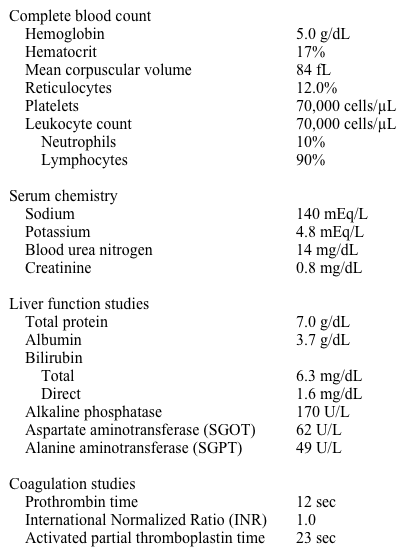
Which of the following would most likely be present in this patient's peripheral blood smear?
A) Bite cells
B) Fragmented red cells
C) Red blood cell inclusions
D) Spherocytes
E) Tear drop cells
Correct Answer:

Verified
Q57: A 72-year-old woman undergoes parathyroidectomy for primary
Q58: A 65-year-old woman comes to the emergency
Q59: A 38-year-old woman comes to the physician
Q60: A 56-year-old woman is brought to the
Q61: A 43-year-old man comes to the emergency
Q63: A 40-year-old man comes to the emergency
Q64: A 45-year-old man comes to the emergency
Q65: A 68-year-old man is brought to the
Q66: A 49-year-old woman comes to the emergency
Q67: A 70-year-old woman is brought to the
Unlock this Answer For Free Now!
View this answer and more for free by performing one of the following actions

Scan the QR code to install the App and get 2 free unlocks

Unlock quizzes for free by uploading documents