A 49-year-old woman comes to the emergency department with acute-onset hematemesis. She has vomited blood 3 times over the past 3 hours and feels weak and light-headed. She has a history of alcoholic cirrhosis with grade 1 esophageal varices, depression, and prior opiate abuse that is now in remission. The patient takes sertraline, methadone, a multivitamin, folate, and thiamine daily. She does not use tobacco or illicit drugs but drinks 10 ounces of vodka every night.
Temperature is 37.2 C (99 F) , blood pressure is 90/50 mm Hg, pulse is 104/min, and respirations are 20/min. The patient appears anxious and uncomfortable. Her abdomen is distended and a fluid wave is present. There is mild asterixis. Rectal examination reveals guaiac-positive brown stools. Skin examination is notable for multiple telangiectasias and palmar erythema.
Laboratory results are as follows: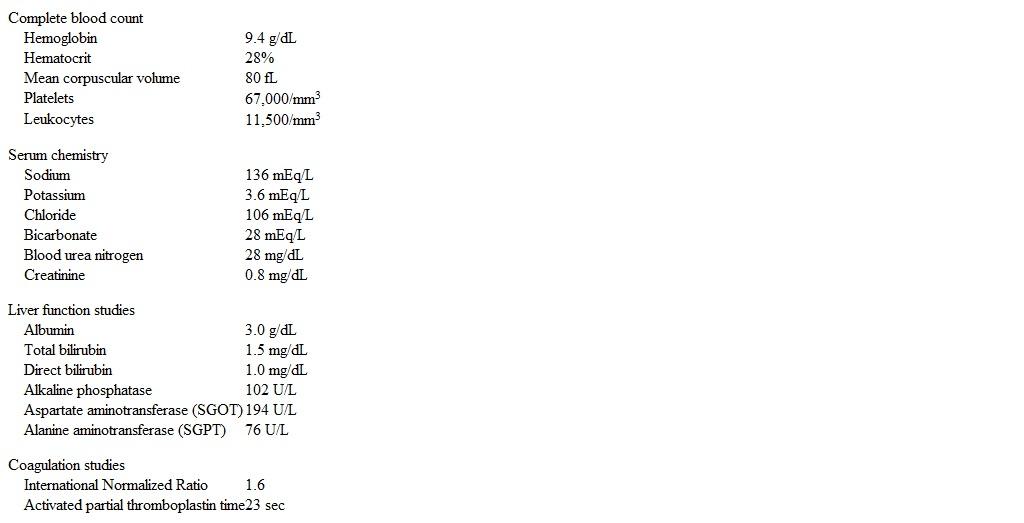 Intravenous fluids and octreotide are started, and urgent esophagogastroduodenoscopy is planned.
Which of the following is the best next step in management of this patient?
A) Abdominal ultrasound
B) Antibiotics
C) Lactulose
D) Packed red blood cell transfusion
E) Platelet transfusion
Correct Answer:

Verified
Q61: A 43-year-old man comes to the emergency
Q62: A 60-year-old woman comes to the emergency
Q63: A 40-year-old man comes to the emergency
Q64: A 45-year-old man comes to the emergency
Q65: A 68-year-old man is brought to the
Q67: A 70-year-old woman is brought to the
Q68: A 78-year-old man is brought to the
Q69: A 20-year-old woman comes to the emergency
Q70: A 66-year-old man comes to the emergency
Q71: An 82-year-old woman is brought to the
Unlock this Answer For Free Now!
View this answer and more for free by performing one of the following actions

Scan the QR code to install the App and get 2 free unlocks

Unlock quizzes for free by uploading documents