A 20-year-old African American woman with sickle cell disease comes to the emergency department with complaints of severe generalized body pain for 1 day. She has been hospitalized for similar episodes in the past. Her medications include folic acid, hydroxyurea, and hydrocodone as needed for pain.
After initial evaluation, including pertinent laboratory studies and chest x-ray, she is started on 1/2 normal saline at 125 mL/hr and hydromorphone every 3 hours. Over the next 36 hours, the patient complains of worsening chest pain and mild shortness of breath. Her temperature is 38.9 C (102 F) , pulse is 112/min, and respirations are 23/min. Oxygen saturation is 93% on 2 L O2. Lung examination shows bilateral crackles. Lower-extremity examination shows tenderness with palpation.
Laboratory results are as follows: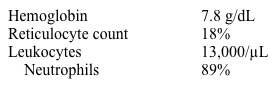
She has good urine output. Her chest x-ray on admission (Image 1) and repeat x-ray after 36 hours (Image 2) are shown below.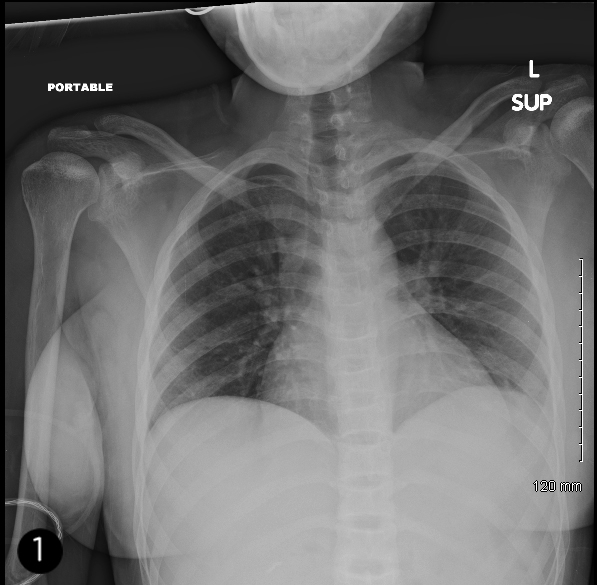
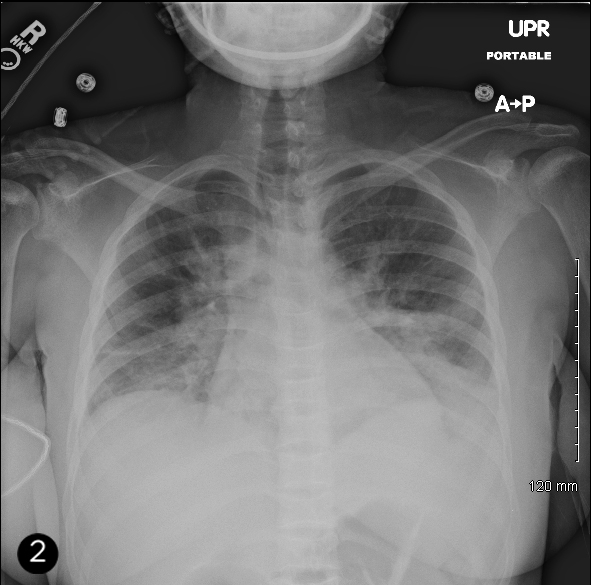
Which of the following, if instituted on initial presentation, may have helped prevent the clinical worsening that occurred in this patient?
A) Antibiotic prophylaxis
B) Hydromorphone PCA pump
C) Incentive spirometry
D) Inhaled bronchodilators
E) Stringent use of intravenous hydration
Correct Answer:

Verified
Q74: A 64-year-old man comes to the emergency
Q75: A 58-year-old woman comes to the emergency
Q76: A 65-year-old man comes to the emergency
Q77: A 72-year-old man is brought to the
Q78: A 36-year-old woman comes to the emergency
Q80: A 19-year-old man comes to the emergency
Q81: A 67-year-old man is brought to the
Q82: A 42-year-old woman comes to the emergency
Q83: An 82-year-old nursing home resident with a
Q84: A 23-year-old woman with known sickle cell
Unlock this Answer For Free Now!
View this answer and more for free by performing one of the following actions

Scan the QR code to install the App and get 2 free unlocks

Unlock quizzes for free by uploading documents