A 62-year-old man comes to the hospital due to 2 days of bilateral lower extremity swelling and throbbing pain. Two weeks ago he was admitted to a different hospital with a non-ST elevation myocardial infarction. He initially received aspirin, metoprolol, nitrates, heparin, a statin, and a glycoprotein IIb/IIIa inhibitor. Cardiac catheterization showed 3-vessel coronary artery disease and a left ventricular ejection fraction of 40%. The patient underwent on-pump coronary artery bypass grafting. His postoperative course was uncomplicated, and he was discharged home with a normal blood count and serum creatinine levels. He also has a history of hypertension, hyperlipidemia, and type 2 diabetes mellitus. His current medications include aspirin, metoprolol, lisinopril, atorvastatin, metformin, insulin, and fish oil. The patient does not use tobacco, alcohol, or illicit drugs.
Blood pressure is 135/70 mm Hg, pulse is 78/min, and oxygen saturation is 98% on room air. Physical examination reveals clear lungs, normal heart sounds, and bilateral pitting edema. There is no jugular venous distension. The sternotomy scar is clean, dry, and intact. The remainder of the examination is unremarkable.
Laboratory results are as follows: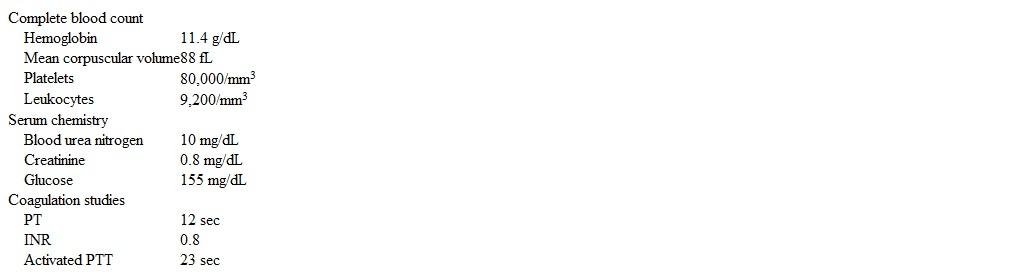 Lower extremity ultrasound reveals extensive, bilateral deep venous thrombosis extending into the superficial femoral veins.
Which of the following is the most appropriate next step in management of this patient?
A) Initiate direct thrombin inhibitor
B) Initiate low-molecular-weight heparin and place an inferior vena cava filter
C) Initiate low-molecular-weight heparin only
D) Obtain serum fibrinogen level and fibrinogen split products
E) Send blood for hypercoagulable workup and initiate low-molecular-weight heparin
Correct Answer:

Verified
Q54: A 72-year-old man is evaluated for refractory
Q55: A 55-year-old man with chronic alcohol abuse
Q56: A 40-year-old man with known HIV infection
Q57: An 80-year-old man fell at home and
Q58: A 49-year-old man with end-stage renal disease
Q60: A 74-year-old man recovering from recent ischemic
Q61: A 79-year-old man is found poorly responsive
Q62: A 43-year-old woman is seen in the
Q63: There has been a continuous increase in
Q64: A 72-year-old woman is sent to the
Unlock this Answer For Free Now!
View this answer and more for free by performing one of the following actions

Scan the QR code to install the App and get 2 free unlocks

Unlock quizzes for free by uploading documents