A 22-year-old woman is evaluated for fever, diarrhea, and skin rash. The patient was admitted 10 days ago after a motor vehicle collision resulted in a splenic laceration. She underwent an emergency splenectomy and received multiple units of emergency-release type O-negative blood perioperatively. Postoperatively, she received the pneumococcal vaccine but not the meningococcal vaccine as it had been given 2 years ago. The patient had been recovering well with no issues until 2 days ago when she developed a nonpruritic skin rash on her trunk that progressed to involve the face and extremities. She has also had fevers as high as 38.8 C (102 F) and profuse, watery diarrhea. The patient has a history of Hodgkin disease and received her most recent dose of chemotherapy 3 weeks ago.
New findings on the physical examination compared to 2 days ago include a diffuse maculopapular skin rash sparing the palms and soles and mild, nontender hepatomegaly.
Laboratory test results are as follows: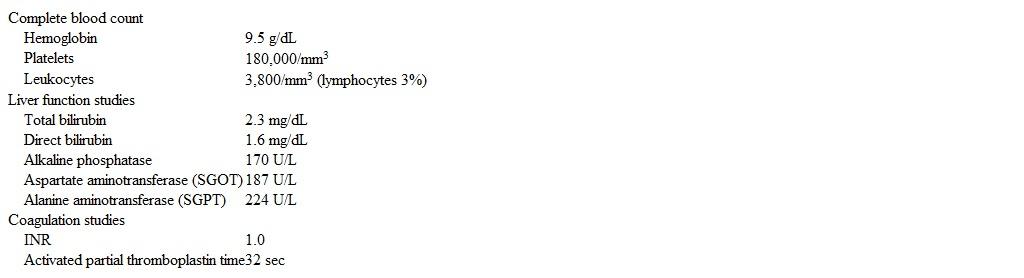 Stool Clostridium difficile testing is negative.
Which of the following would have been most effective in preventing this patient's current condition?
A) Cytomegalovirus screening of the donor blood
B) Repeat meningococcal vaccination
C) Transfusion of ABO-compatible erythrocytes
D) Transfusion of washed erythrocytes
E) Use of irradiated blood products
Correct Answer:

Verified
Q37: An 80-year-old man is hospitalized because of
Q38: A 60-year-old man with alcoholism is admitted
Q39: An 88-year-old nursing home resident is admitted
Q40: A 66-year-old woman is admitted to the
Q41: A 63-year-old man with diabetes is hospitalized
Q43: A 54-year-old man comes to the emergency
Q44: A 61-year-old man with a history of
Q45: An 81-year-old woman is seen for a
Q46: A 61-year-old man comes to the emergency
Q47: A 22-year-old hospitalized woman is evaluated for
Unlock this Answer For Free Now!
View this answer and more for free by performing one of the following actions

Scan the QR code to install the App and get 2 free unlocks

Unlock quizzes for free by uploading documents