A 40-year-old woman is seen 48 hours after an uncomplicated repeat caesarean delivery at 39 weeks gestation. She reports sudden-onset shortness of breath and a nonproductive cough. The patient has no fever, chills, nausea, vomiting, or chest pain. Her prenatal course was uncomplicated. She has no chronic medical conditions. The patient's previous pregnancy was uncomplicated; she had a term caesarean delivery for breech presentation.
On examination, the patient appears distressed. Blood pressure is 196/112 mm Hg, pulse is 120/min, and respirations are 32/min. Pulse oximetry is 86% on room air. Auscultation of the lungs shows diffuse inspiratory crackles bilaterally. Jugular venous pressure is normal. Cardiac sounds are normal and there are no murmurs or additional sounds. Abdominal examination is normal. There is 2+ pedal edema to the bilateral mid-calves.
Laboratory results are as follows: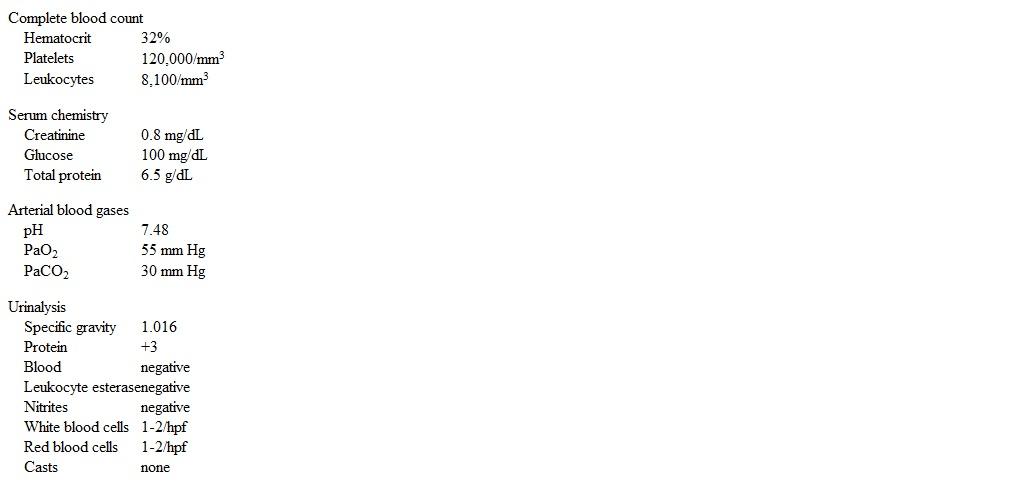 Chest x-ray reveals bilateral diffuse alveolar infiltrates. ECG shows sinus tachycardia and upsloping ST-segment depressions in the inferior lateral leads.
Which of the following is the most likely diagnosis in this patient?
A) Acute coronary syndrome
B) Amniotic fluid embolism
C) Aspiration of gastric contents
D) Peripartum cardiomyopathy
E) Preeclampsia
Correct Answer:

Verified
Q61: A 79-year-old man is found poorly responsive
Q62: A 43-year-old woman is seen in the
Q63: There has been a continuous increase in
Q64: A 72-year-old woman is sent to the
Q65: An 84-year-old man with a long history
Q67: An 81-year-old man is transferred from a
Q68: A 75-year-old woman with stage 4 breast
Q69: A 63-year-old man with recent elective right
Q70: A 69-year-old man is admitted to the
Q71: A 36-year-old man is brought to the
Unlock this Answer For Free Now!
View this answer and more for free by performing one of the following actions

Scan the QR code to install the App and get 2 free unlocks

Unlock quizzes for free by uploading documents