A 74-year-old woman with Alzheimer disease is evaluated for a sacral ulcer. She has become increasingly dependent on others for day-to-day activities and has been bed-bound for the past year. The patient developed a sacral pressure ulcer a few months ago, and it has progressively enlarged with excessive drainage. Her other medical problems include hypertension, osteoarthritis, and urinary incontinence. She lives with her sister and gets care from a 24-hour caregiver and a visiting nurse.
Temperature is 36.7 C (98 F) , blood pressure is 150/80 mm Hg, and pulse is 68/min. The patient is confused but has no focal neurologic deficits. She has a 3- to 4-cm sacral ulcer with visible subcutaneous tissue, grayish slough, and foul-smelling drainage. There is no surrounding erythema or fluctuation.
Laboratory studies are as follows: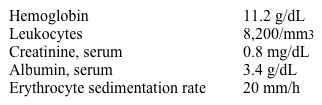
Which of the following is the best next step in managing this patient's pressure ulcer?
A) Debridement and topical antibiotics
B) Enteral nutritional supplement
C) MRI of the sacrum and bone biopsy
D) Occlusive dressing with close monitoring
E) Wound swab culture and intravenous antibiotics
Correct Answer:

Verified
Q168: A 75-year-old woman comes to the office
Q169: An 82-year-old farmer comes to the office
Q170: A 37-year-old woman comes to the physician
Q171: A 45-year-old man comes to the office
Q172: An 87-year-old woman is brought to the
Q174: A 75-year-old man comes to the physician
Q175: A 55-year-old woman comes to the office
Q176: A 42-year-old woman comes to the office
Q177: A 48-year-old man comes to the office
Q178: A 21-year-old woman comes to the office
Unlock this Answer For Free Now!
View this answer and more for free by performing one of the following actions

Scan the QR code to install the App and get 2 free unlocks

Unlock quizzes for free by uploading documents