A 58-year-old man comes to the office for follow-up of his type 2 diabetes mellitus. He feels well. The patient was diagnosed with diabetes 10 years ago, and his medical history is also notable for hypertension, hypercholesterolemia, obesity, and osteoarthritis. Three years ago, he underwent upper endoscopy for a bleeding peptic ulcer. Current medications include aspirin 81 mg daily, metformin 1000 mg twice per day, insulin glargine 15 units daily, atorvastatin 10 mg daily, hydrochlorothiazide 25 mg daily, ramipril 10 mg daily, and amlodipine 10 mg daily. The patient's father was diagnosed with diabetes at age 54 and died due to heart problems at age 70; his mother has hypertension and hypercholesterolemia. He is a former smoker of a half pack of cigarettes per day and quit 5 years ago. He drinks alcohol occasionally. The patient has a sedentary lifestyle, and his diet consists mainly of fast food.
Blood pressure is 130/77 mm Hg and pulse is 76/min. BMI is 40 kg/m2. Physical examination shows trace edema at the ankles but is otherwise unremarkable.
Laboratory results are as follows: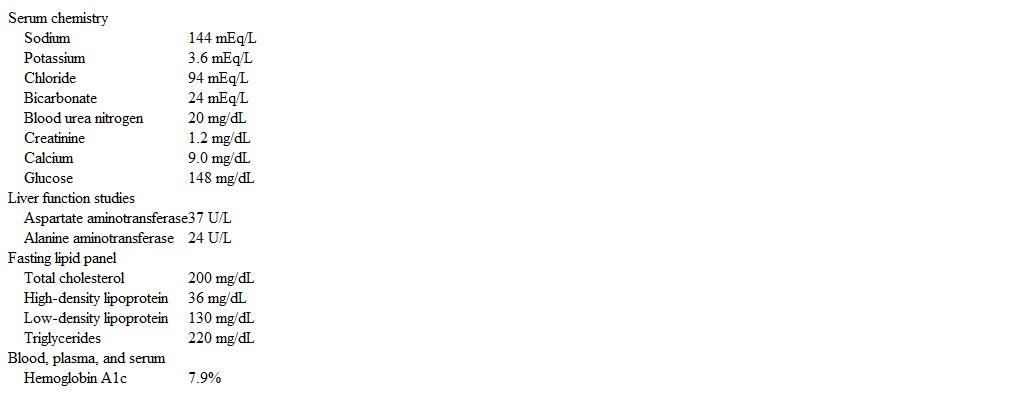 The patient's estimated 10-year risk of cardiovascular events (based on the Pooled Cohort Equations) is 20%.
Which of the following is the most appropriate intervention to reduce this patient's risk for coronary events?
A) Add clopidogrel
B) Add fenofibrate
C) Increase atorvastatin dose
D) Intensify antihypertensive regimen
E) Intensify diabetic regimen
Correct Answer:

Verified
Q196: A 76-year-old woman is brought to the
Q197: A 52-year-old woman comes to the office
Q198: A 24-year-old woman comes to the office
Q199: A 37-year-old woman comes to the physician
Q200: An 81-year-old woman is brought to the
Q202: A 29-year-old woman comes to the physician
Q203: A 34-year-old woman comes to the office
Q204: A 41-year-old woman comes to the office
Q205: A 54-year-old man comes to the physician
Q206: A 51-year-old woman comes to the office
Unlock this Answer For Free Now!
View this answer and more for free by performing one of the following actions

Scan the QR code to install the App and get 2 free unlocks

Unlock quizzes for free by uploading documents